
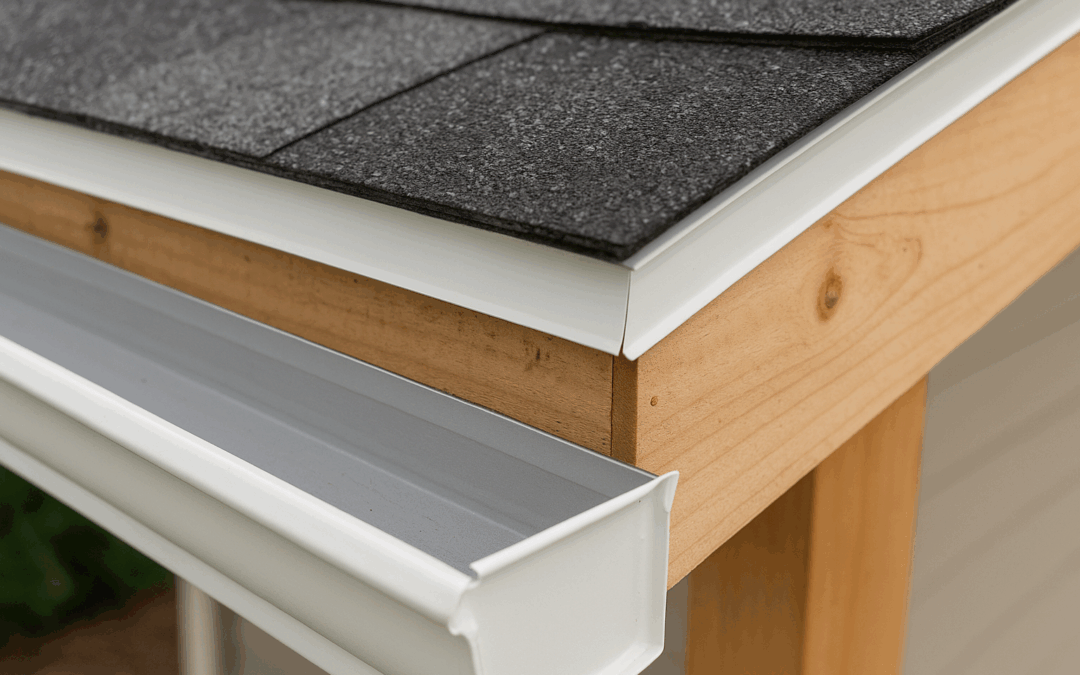
Among the components that make up a complete and well-functioning roofline water management system, drip edge may be the least discussed yet most consequential element that homeowners in Nashville and Knoxville, Tennessee rarely think about. Installed at the roof edge where shingles, fascia, and gutters all converge, drip edge performs a precise and important function: it guides water safely from the roof surface into the gutter system without allowing moisture to contact or infiltrate the structural wood components at the roofline. Big Orange Gutters recognizes that homeowners throughout Nashville and Knoxville deserve a thorough understanding of drip edge—what it is, how it works, why Tennessee’s climate makes its proper installation essential, and what damage accumulates when it is missing or incorrectly installed.
Defining Gutter Drip Edge
Drip edge is a formed metal flashing component installed along the edges of a roof at both eave locations (the lower, horizontal edges directly above gutters) and rake locations (the sloped edges at gable ends). Manufactured from corrosion-resistant metals including aluminum, galvanized steel, and copper, drip edge is formed into an angled profile—typically L-shaped or T-shaped—that positions one leg beneath the roofing material on the deck surface and extends the other leg downward over the exterior face of the fascia board.
The functional geometry of this installation is precise and intentional. By extending beneath shingles at the top and over the fascia at the bottom, drip edge creates a continuous metal surface at the roof edge that intercepts water flowing off the roof and directs it away from the fascia and wood decking edges, breaking the capillary action that would otherwise draw water back along the underside of the roof decking toward the fascia. The “drip edge” name directly describes this function—creating a defined edge from which water drips cleanly into the gutter below rather than migrating by surface tension into contact with structural wood components.
Several profile types exist for different applications. Type C drip edge provides a standard eave profile suitable for most residential roofline applications. Type D, sometimes called T-style drip edge, includes a wider horizontal flange that provides more complete coverage at the roof edge transition. Type L provides an extended vertical face suited to specific fascia and roofline geometries. Building codes across Tennessee and Kentucky increasingly require drip edge installation on both new construction and re-roofing projects, reflecting the building industry’s recognition of the protection drip edge provides.
How Drip Edge Integrates the Roof System
Drip edge occupies the precise intersection point where three separate roof system components—the roof deck and shingles, the gutter system, and the fascia board—must work together to manage water effectively. Correct drip edge installation ensures that each component performs its intended function without creating gaps or transitions through which water can find unintended pathways into structural materials.
At the eave, drip edge installation sequence relative to other components matters significantly. At this location, drip edge is installed on the roof deck before the underlayment—the drip edge goes on first, the underlayment goes over it, and the shingles go over the underlayment. This installation order ensures that water reaching the roof deck edge below the shingles encounters the metal drip edge surface and is directed outward and downward into the gutter rather than having access to the wood deck edge. The drip edge’s extension over the fascia face positions the water departure point directly above the gutter channel, maximizing the proportion of roof runoff captured by the gutter.
At the rake, the installation order reverses—the underlayment goes on first, and the drip edge is installed over it. This positions the rake drip edge as a barrier at the shingle edge, preventing wind-driven rain from pushing beneath shingles at this exposed location while directing water away from the rake board below.
Tennessee’s Climate and the Case for Proper Drip Edge
Nashville and Knoxville both sit within Tennessee’s humid subtropical climate zone, with annual precipitation averaging 47 to 48 inches respectively. Both cities experience active spring storm seasons delivering intense, high-volume rainfall events. Knoxville receives additional moisture enhancement from the Great Smoky Mountains’ orographic effects, and Nashville’s position in the Cumberland River basin creates its own storm-intensification geography. In both cities, roof surfaces regularly face high water flow rates during intense storms that test the precision of every water management component.
Tennessee’s warm temperatures and high ambient humidity create conditions where moisture infiltration at the roof edge has more severe biological consequences than in drier climates. Wood fascia, roof decking edges, and structural framing that receives moisture through gaps that drip edge would seal faces active fungal activity throughout most of the year. Wood-decaying fungi require sustained elevated moisture content to remain active—conditions that Tennessee’s warm, humid climate maintains readily once moisture reaches hidden wood surfaces. This means the deterioration consequences of missing or improperly installed drip edge develop faster and extend further in Tennessee’s climate than homeowners from drier regions might expect.
Tennessee’s severe weather events—including high-wind thunderstorms, squall lines during spring storm season, and occasional significant events drawing Gulf moisture northward—create wind-driven rain conditions that push water against roof edges from angles that gravity-directed drainage design does not fully account for. Drip edge at both eave and rake locations provides the physical barrier that resists this wind-driven moisture infiltration at the roof edge.
Consequences of Missing or Improperly Installed Drip Edge
Progressive Fascia Deterioration: Roof runoff repeatedly contacting fascia boards without drip edge direction creates chronic moisture exposure that leads to paint failure, wood rot, and eventual structural deterioration of the fascia. Once fascia integrity is compromised, gutter attachment fails—gutters sag, lose pitch, and eventually pull away from the roofline entirely. The consequential gutter failure from fascia rot frequently traces back to the absence or failure of drip edge as the initiating cause.
Roof Deck Edge Damage: Water migrating behind the fascia contacts roof decking edges directly. Plywood and OSB roof decking absorbs this moisture readily, swelling, delaminating, and eventually losing structural integrity at the roof edge. Repairing damaged roof deck edge sections requires removing shingles, cutting out and replacing decking, and re-roofing—significantly more expensive than drip edge installation would have been.
Hidden Eave Space Moisture: Moisture infiltrating the eave space through the roof edge creates sustained humidity in the soffit and eave area. This hidden moisture damages soffit materials, contributes to attic ventilation problems, and can establish mold growth in locations that are difficult to inspect and remediate without significant roofline disassembly.
Gutter System Bypass: When the roof edge geometry positions water’s departure point behind rather than above the gutter channel, a significant portion of roof runoff misses the gutter entirely regardless of gutter size or condition. Correct drip edge installation positions the water departure point precisely above the gutter back wall, ensuring that the gutter system captures the maximum proportion of roof runoff rather than allowing it to fall behind the gutter channel to the fascia below.
Shingle Edge Vulnerability: At the eave, drip edge provides physical support and backing for the first shingle course at the roof’s most exposed edge. Without this backing, shingles overhang unsupported decking, becoming vulnerable to wind lifting and physical damage that accelerates shingle wear and can create storm damage entry points at the most vulnerable roof edge location.
What Homeowners Can Observe
Nashville and Knoxville homeowners can identify potential drip edge issues through several observable indicators. Fascia paint failing or staining concentrated specifically at the upper fascia edge near the roofline—rather than uniform weathering across the fascia surface—suggests water is consistently contacting the fascia top, indicating the roof edge water is not being captured effectively by the gutter. Water staining on fascia surfaces below the roofline even when gutters appear intact suggests water is reaching the fascia through pathways other than gutter overflow. Any gap visible between the shingle overhang and the back wall of the gutter when viewed from below suggests roofline geometry issues worth professional evaluation.
Conclusion
Drip edge is a component that most Nashville and Knoxville, Tennessee homeowners will never notice—and that represents its success. When properly installed and integrated with the roofline system, it performs its water direction function silently and continuously, protecting fascia boards, roof deck edges, and eave spaces from moisture infiltration that would otherwise cause progressive structural damage. Big Orange Gutters understands that homeowners throughout Nashville and Knoxville benefit from understanding what drip edge is, how it integrates the roof surface, fascia, and gutter system into a continuous water pathway, and what damage develops when this precise but important component is absent or incorrectly installed. Drip edge is a small investment in the complete roofline system that delivers meaningful protection for Tennessee homes across every season and storm.