Across Nashville and Knoxville, Tennessee, wood soffit is a roofline component that performs quietly and goes largely unnoticed—until deterioration becomes advanced enough to demand attention. By the time most homeowners notice soffit problems, damage has frequently progressed well beyond what early intervention would have required to address. Big Orange Gutters believes that homeowners throughout Nashville and Knoxville benefit from a thorough understanding of wood soffit—what it is, what functions it serves, why Tennessee’s climate accelerates its deterioration, what warning signs indicate developing problems, and what practical knowledge helps homeowners protect this important component of their home’s exterior system.
Understanding Wood Soffit
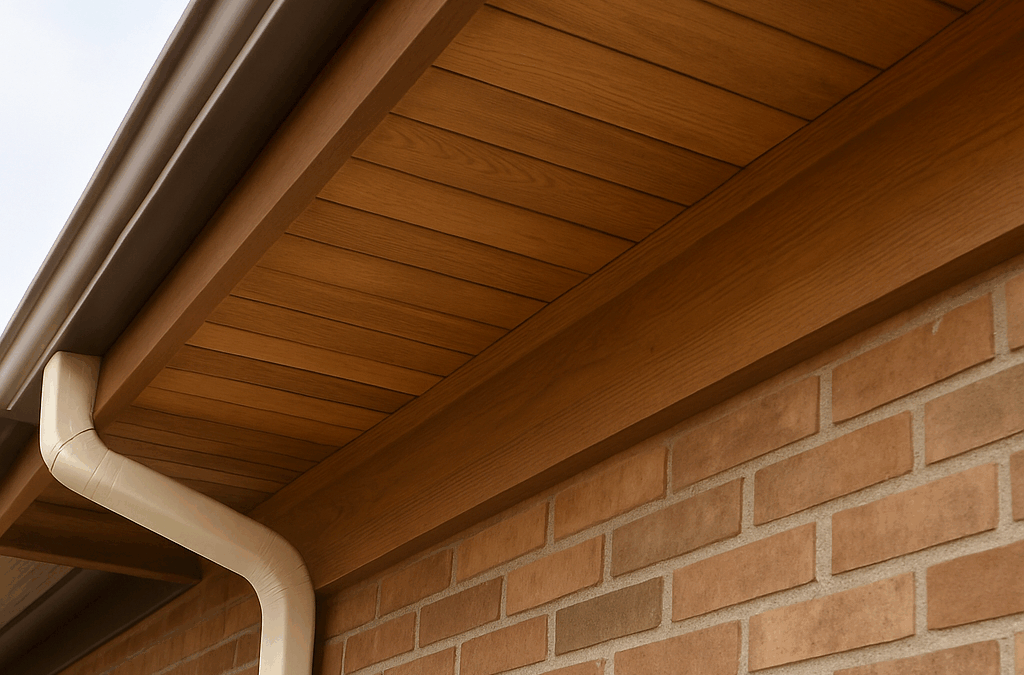
Soffit is the material covering the underside of the roof overhang—the horizontal surface visible beneath the eaves when standing near the home’s exterior wall. On homes constructed with wood soffit, this surface consists of wood panels, boards, or plywood installed between the exterior wall and the fascia board running along the outer roofline edge. Wood soffit encloses the eave space, creating a finished exterior appearance while serving several functional purposes that directly affect roof system health and home protection.
Attic ventilation is among the most critical soffit functions. Vented soffit panels allow outside air to enter the attic from below, creating the cross-ventilation that works together with ridge vents and other attic ventilation elements to move air through the attic space. This airflow prevents heat accumulation in Nashville and Knoxville’s hot summers—attic temperatures in unventilated spaces can reach extreme levels, accelerating shingle deterioration and dramatically increasing cooling loads. Ventilation also prevents moisture buildup in the attic during cooler months, protecting roof decking and framing from the condensation damage that inadequate attic airflow causes.
Wood soffit also serves as a physical barrier against animal and insect intrusion into the eave and attic space. Without this barrier, open rafter spaces at the eave would provide easy access for birds, squirrels, bats, wasps, and other wildlife seeking shelter. Maintaining soffit integrity is therefore part of the pest exclusion system protecting attic insulation, electrical components, and structural framing from wildlife damage.
Deterioration Causes Specific to Tennessee
Tennessee’s humid subtropical climate creates conditions where wood soffit faces sustained moisture exposure and biological activity that accelerate deterioration compared to drier climates. Nashville and Knoxville both receive approximately 47 to 48 inches of annual rainfall, and high ambient humidity—particularly in summer—means wood that absorbs moisture dries slowly between rain events.
The connection between gutter performance and soffit condition is particularly important in Tennessee. When gutters overflow—due to debris blockage, inadequate slope, or storm volumes exceeding drainage capacity—water runs over the fascia and contacts the soffit directly. In Tennessee’s climate, this repeated overflow moisture creates sustained wet conditions against soffit panels that fungal activity exploits progressively. Wood-decaying fungi require sustained wood moisture content above approximately 20 percent to remain active; Tennessee’s high humidity and frequent rainfall maintain soffit moisture at these levels readily when gutters are not performing correctly.
Tennessee’s active spring storm season delivers high-volume rainfall events that test gutter drainage capacity and frequently produce overflow even in well-maintained systems during peak intensity. These overflow events, repeated across multiple storm seasons without adequate soffit protection, progressively introduce moisture into wood panels and the eave space behind them. Knoxville’s elevated humidity from the Great Smoky Mountains’ orographic moisture enhancement creates particularly persistent moisture conditions affecting Knoxville-area homes’ exterior wood components.
UV exposure from Tennessee’s abundant sunshine degrades the paint and surface treatments protecting wood soffit from direct moisture contact. Paint films that fail allow moisture direct access to unprotected wood, dramatically accelerating the progression from surface exposure to structural rot. The combination of UV paint degradation, frequent rainfall providing moisture loading, and warm temperatures supporting biological activity creates year-round deterioration pressure on unprotected wood soffit.
Recognizing Soffit Deterioration
Surface Staining and Discoloration: Water staining, dark streaks from moisture channels, or green biological growth on soffit surfaces indicates chronic moisture exposure. These surface signs often precede structural deterioration but indicate conditions that will lead to it without intervention.
Paint Peeling or Bubbling: Paint separating from the soffit surface in bubbles or peeling sheets indicates moisture is migrating through the wood from behind, breaking adhesion. This pattern suggests moisture is entering the wood from the attic side or from eave space moisture rather than just surface exposure, indicating more significant moisture management problems.
Soft or Deteriorated Wood: Areas of soffit that feel soft, compress slightly under pressure, or show visible surface deterioration indicate active rot. Rot in wood soffit spreads through panel material progressively, and soft areas found during inspection typically represent the visible portion of more extensive underlying deterioration.
Gaps and Open Joints: Gaps at soffit panel edges, at joints between panels, or where soffit meets fascia or exterior wall create direct pest entry points. Tennessee’s active wildlife populations—birds, squirrels, and bats are common throughout Nashville and Knoxville—rapidly exploit even small eave openings.
Evidence of Pest Activity: Wasps building nests visible at soffit edges, bird nesting materials visible through gaps, bats emerging from eave areas at dusk, or audible activity within the eave space during quiet periods all indicate soffit integrity issues allowing wildlife access.
The Relationship Between Gutters and Soffit Health
Soffit deterioration is rarely isolated from the gutter and fascia system above it. Gutters that overflow frequently expose soffit to far more moisture than natural weather exposure alone would produce. Fascia boards that have developed rot create moisture pathways that transfer deterioration to adjacent soffit. Gutter systems that direct water behind rather than away from the fascia and soffit create conditions for chronic moisture infiltration that no amount of soffit repair can permanently resolve without addressing the gutter performance issues driving it.
Understanding this system relationship is important for homeowners facing soffit repair decisions. Repair or replacement that doesn’t address the moisture source causing deterioration simply exposes new materials to the same conditions that destroyed the original. Durable soffit repair requires identifying and resolving upstream moisture problems—gutter blockage, slope issues, failed gutter sealants, or fascia deterioration—as part of a comprehensive roofline restoration approach.
Conclusion
Wood soffit repair and replacement represent significant homeowner concerns in Nashville and Knoxville, Tennessee, where the combination of substantial annual rainfall, high humidity, warm temperatures supporting biological activity, and active wildlife populations creates demanding conditions for roofline wood components. Big Orange Gutters recognizes that Tennessee homeowners benefit from understanding the critical functions wood soffit performs, how Tennessee’s specific climate accelerates deterioration, and what warning signs indicate developing problems that warrant professional evaluation. Early attention to soffit condition, combined with addressing the gutter and moisture management factors that drive deterioration, protects not just the soffit panels themselves but the attic ventilation, structural integrity, and pest exclusion systems that every Nashville and Knoxville home depends on.