
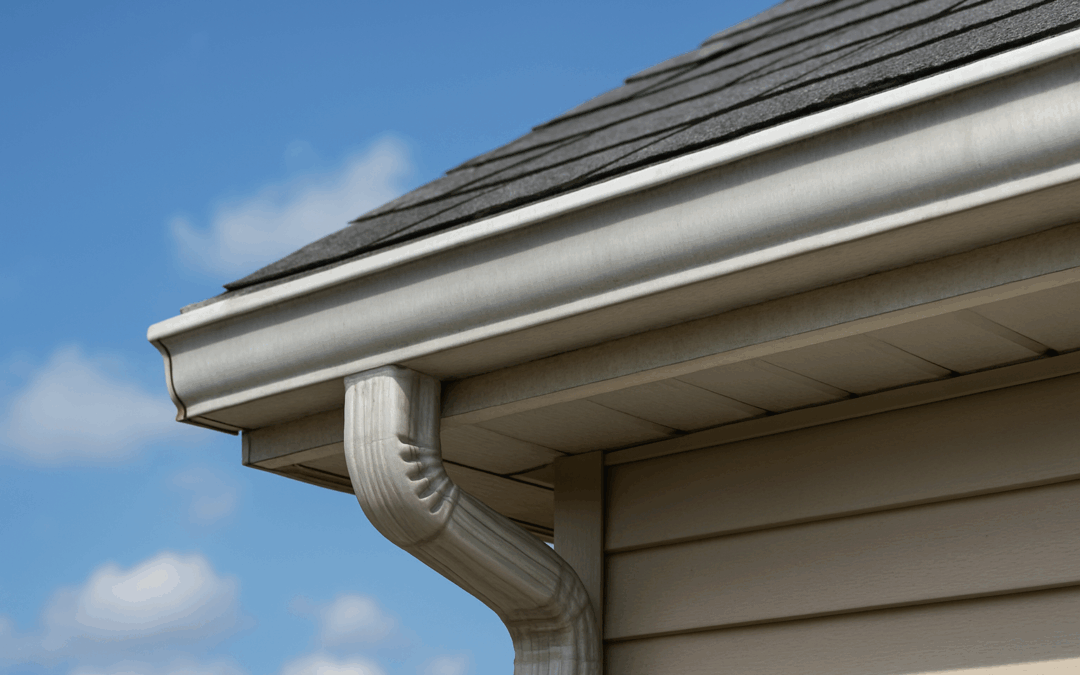
Gutters depend on more than their channels and downspouts to work properly. Behind every secure, properly draining gutter system is a network of hangers, brackets, screws, straps, and fasteners that keeps the channel attached to the roofline. These small components have a major responsibility: they support the weight of the gutter, preserve its drainage slope, and help prevent water from reaching the fascia, siding, foundation, and landscaping. When hangers loosen or fasteners fail, a gutter can sag, overflow, pull away from the fascia, or hold standing water. Big Orange Gutters believes Nashville and Knoxville homeowners benefit from understanding the purpose of gutter support systems, the reasons they can fail, and the signs that indicate a gutter may need closer inspection.
The Role of Hangers in Gutter Performance
A gutter hanger is a support device that secures the gutter channel along the roof edge. It is typically attached to the fascia board, roof structure, or another stable component near the eave. Hangers are installed at intervals along the gutter run so the weight of water and debris is distributed instead of concentrated at a few points.
The placement of hangers is important because gutters must maintain a gradual slope toward their downspouts. This slope allows water to travel through the channel. If the gutter loses support at one point, it may dip lower than the surrounding sections. That low area becomes a collection point for water, roofing granules, leaves, and sediment.
The problem can progress quickly. Standing water adds weight. The extra weight pulls more strongly on the nearby hangers. Leaves and debris settle into the low point, restricting flow. The restricted flow causes water to remain longer, and the gutter may begin to overflow during storms. A support issue that begins with one loose fastener can eventually affect drainage across an entire section.
Types of Gutter Hangers and Mounting Systems
Nashville and Knoxville homes may have several different types of gutter support systems, depending on the age and style of the gutter installation.
Hidden hangers are common in modern seamless K-style gutter systems. They sit inside the gutter channel and are usually secured with screws driven through the rear of the gutter into the fascia. They provide strong support while remaining mostly out of view.
Spike-and-ferrule systems are common on older gutter installations. A spike passes through the front of the gutter and into the fascia, while a tubular ferrule holds the gutter’s shape. These systems can work effectively when new, but the spikes may gradually loosen as the gutter expands and contracts or as moisture affects the fascia wood.
Half-round gutter brackets are often used on historic or architecturally traditional homes. They may attach directly to the fascia, roof edge, or rafter tails. Because half-round gutters have a different profile than K-style systems, their support brackets are generally more visible.
Roof straps may be used when fascia mounting is impractical or when specific gutter styles require overhead support. These straps extend beneath roofing materials or attach near the roof edge to support the gutter from above.
The best support method depends on the gutter profile, roof structure, fascia condition, and the amount of water and debris the system is expected to manage.
Why Gutter Supports Fail in Tennessee
Nashville and Knoxville experience a climate that places repeated stress on gutter systems. Both cities receive regular rainfall throughout the year, along with intense spring and summer thunderstorms that can send a large volume of water into gutters in a short amount of time.
In Nashville, heavy rain and wind can combine with mature tree canopy debris to create significant loading in gutter channels. Leaves, sycamore seed balls, twigs, and roof granules can gather near downspout inlets. When this material becomes saturated, its weight can strain hangers and screws.
In Knoxville, the Valley and Ridge landscape creates additional site-specific drainage demands. Homes on slopes may experience strong wind exposure or high volumes of rain during storms influenced by nearby Appalachian terrain. Wooded properties can also receive substantial branch and leaf debris. Gutter sections serving large roof planes or roof valleys may carry especially heavy runoff during intense storms.
Seasonal temperature changes contribute to gradual fastener movement in both cities. Aluminum gutters expand during hot Tennessee summers and contract during cooler weather. This movement is normal, but over many years it can stress older fasteners, joints, and mounting points.
Winter conditions are also relevant. While Tennessee winters are generally milder than those farther north, both Nashville and Knoxville can experience ice events. Water that remains in a sagging gutter may freeze, creating weight that bends hangers, pulls loose screws, or damages the fascia behind the system.
Signs That Hangers or Fasteners May Be Failing
Many gutter support problems can be recognized through a ground-level inspection. Homeowners should look along the roofline for changes in gutter alignment.
Common warning signs include:
- A gutter section that visibly sags between mounting points
- A gutter pulling away from the fascia board
- Protruding spikes or loose screws
- Water remaining in the gutter after a storm
- Overflow occurring from one low section of the channel
- A gutter that appears twisted, tilted, or wavy
- Staining or paint failure behind the gutter
- Bent or missing support brackets
- A downspout outlet that no longer aligns with the gutter properly
A sagging gutter may be especially noticeable after rainfall, when water remains in the low spot. If the same section overflows during multiple storms, support and slope should be considered alongside debris blockage.
A gap behind the gutter is another important sign. When the back of the gutter separates from the fascia, roof runoff may travel behind the channel. This can wet the fascia board and soffit instead of being directed into the gutter.
The Importance of Fascia Boards
The fascia board is the surface to which many gutter hangers and screws are attached. Its condition directly affects the strength of the mounting system.
Fascia boards may deteriorate when they experience chronic moisture exposure. Overflowing gutters, leaking seams, missing drip edge, or water running behind a pulled-away gutter can all expose fascia wood to repeated wetting. Over time, paint may peel, wood may soften, and fasteners may lose their ability to grip securely.
When a screw pulls out of fascia, tightening it in the same weakened hole may provide only a temporary improvement. The underlying wood may no longer have enough structural strength to hold the fastener under the weight of a water-filled gutter. In these cases, fascia condition is an important part of understanding the support problem.
Homeowners can look for peeling paint, dark stains, soft-looking areas, cracking, and separation behind the gutter. These signs suggest that water may have been reaching the fascia for some time.
Hanger Spacing and Heavy Debris Loading
Hanger spacing affects how much weight a gutter can carry without bending or losing slope. When hangers are widely spaced, the gutter can bow between them under the weight of water, leaves, or ice. Closer support spacing generally helps maintain the gutter’s shape and reduces deflection.
Homes beneath large trees may require more frequent inspection because wet debris can become very heavy. Nashville properties beneath sycamores, oaks, and maples may see substantial leaf and seed-ball accumulation. Knoxville properties surrounded by hardwoods and pines may experience a mix of leaves, twigs, needles, and branch debris.
Roof valleys are another area to watch. These locations direct water from multiple roof planes into one section of gutter. The added runoff volume can make any weakness in support, slope, or downspout capacity more noticeable during storms.
Why Support Problems Affect More Than the Gutter
Loose hangers and failing fasteners can create consequences beyond the gutter channel itself. Water that overflows from a sagging section may saturate landscaping, erode mulch, stain siding, or collect near the foundation.
If water repeatedly runs behind a gutter, it can affect fascia and soffit materials. If the downspout alignment shifts as the gutter moves, water may not enter the downspout correctly. If a support failure creates standing water, the added load can worsen the failure over time.
For homes with basements or crawl spaces, concentrated runoff near the foundation is particularly important to monitor. Gutters are one part of a complete drainage system, and their ability to remain secure and properly sloped affects how effectively roof water is kept away from the structure.
Conclusion
Gutter hangers and fasteners are small parts of a larger drainage system, but their role is essential. They support gutter channels, maintain drainage slope, resist the weight of water and debris, and help prevent roof runoff from reaching areas where it can create moisture concerns. For Big Orange Gutters and homeowners in Nashville and Knoxville, Tennessee, recognizing signs such as sagging, loose hardware, standing water, gutter separation, and fascia staining can help identify support issues before they become more significant. Regular observation after storms and seasonal debris loading gives homeowners a clearer understanding of whether their gutter system remains secure, aligned, and ready for Tennessee weather.