
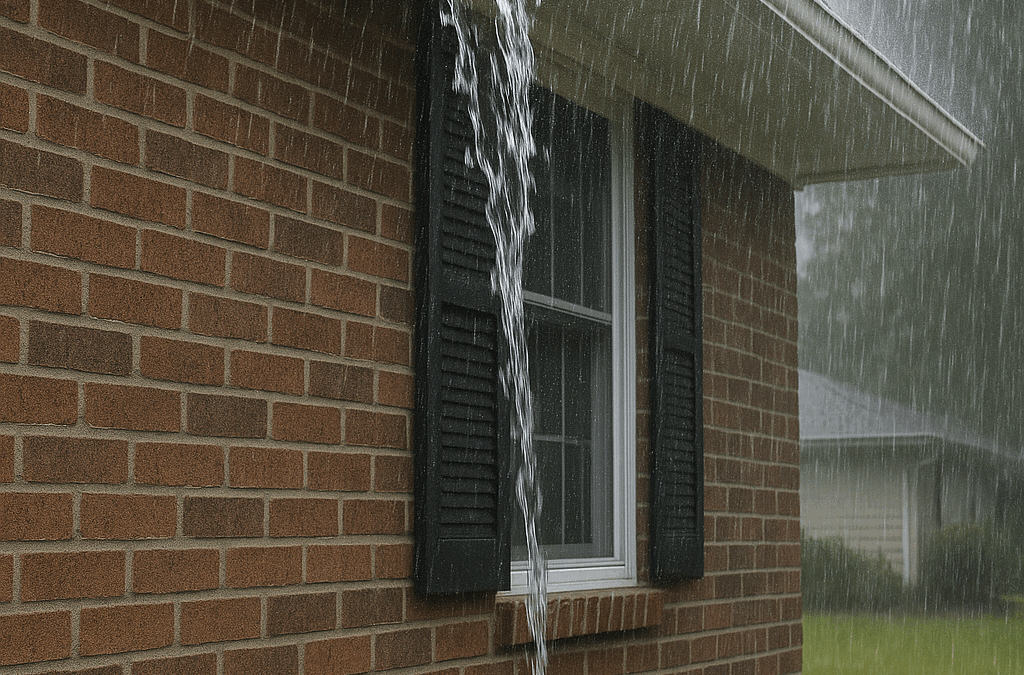
Severe weather is a familiar part of life in Middle and East Tennessee. Nashville and Knoxville homeowners may experience heavy thunderstorms, high winds, prolonged rainfall, hail, falling branches, and occasional winter weather throughout the year. After a storm, roof shingles and tree damage often receive immediate attention, but gutters and downspouts should be inspected as well. A gutter system is directly exposed to wind, debris, and concentrated roof runoff, which means even a storm that appears to cause little visible exterior damage can affect how the system drains. Big Orange Gutters believes Nashville and Knoxville homeowners benefit from understanding the most common forms of storm-related gutter damage and the practical steps involved in a safe post-storm inspection.
How Severe Weather Creates Gutter Problems
Gutters manage water only when their channels remain clear, secure, properly sloped, and connected to functioning downspouts. Storm conditions can interfere with any of those requirements.
Heavy rain can overwhelm a gutter that is already partly clogged with leaves, roofing granules, or seed pods. A system may perform adequately during routine rain but overflow when a Tennessee thunderstorm sends a high volume of water off the roof in a short time. Overflow often leaves evidence below the roofline, including splashed soil, washed-out mulch, water stains, and erosion near the foundation.
Strong wind can loosen hangers, pull fasteners from fascia boards, bend aluminum channels, or disconnect downspout elbows. A storm does not need to tear the gutter completely away from the house to create a meaningful drainage issue. Even a slight change in gutter slope can lead to standing water, which adds weight to the system and increases the possibility of overflow during the next rain event.
Falling limbs are another concern. Nashville’s mature neighborhood trees and Knoxville’s wooded Valley and Ridge landscape both create the possibility of branches landing on roof edges. A branch may dent the gutter, force it out of alignment, puncture a downspout, or damage the fascia board that supports the system.
Begin With a Ground-Level Inspection
Safety should come first after every major weather event. Homeowners should wait until lightning, strong winds, and standing-water hazards have passed before inspecting the exterior. Wet roofs and wet ladders are slippery, and storm debris may conceal unstable ground conditions or damaged electrical lines.
Start by walking around the home and looking upward at the gutter line. Gutters should appear straight and consistently attached. Notice whether a section looks lower than adjacent sections, bows outward, has a gap behind it, or appears to have pulled away from the fascia. These are common signs that hangers or fasteners have loosened.
Also inspect the downspouts from top to bottom. Look for sections that have separated at seams, shifted away from the siding, bent at elbows, or detached near the ground. A downspout that is only partly disconnected can still direct some water downward, but it may leak enough runoff onto the siding or foundation area to create repeated moisture exposure.
Look for Evidence of Overflow
The ground and wall surfaces around a home often reveal how the gutter system performed during a storm. Overflow may leave distinct signs, including:
- Mud splatter or vertical streaking on siding below the gutter line
- Eroded mulch or bare soil near the foundation
- Water channels carved through planting beds
- Pooled water below gutter corners
- Staining beneath gutter seams, miters, or end caps
- Washed-out areas at downspout discharge locations
If one location consistently shows these signs after storms, homeowners should consider the possible causes. The issue may be a blockage in the gutter or downspout, a sagging section that retains water, a leaking joint, insufficient downspout capacity, or a downspout extension that no longer directs water away effectively.
In both Nashville and Knoxville, sloped lots create an added drainage consideration. Water released from a downspout on an inward-sloping area can travel back toward the foundation even if the extension technically points away from the house. Post-storm observations help reveal the actual path of water across the property.
Check Gutter Hangers, Fascia, and Alignment
Gutter hangers are the components that hold the channel in position along the roof edge. High wind, heavy wet debris, and standing water can gradually loosen them. After a storm, check for visible sagging between hangers or a channel that no longer follows a steady line toward the downspout.
A sagging gutter can create a low point where water collects. That standing water adds weight, encourages debris to settle, and creates a cycle in which drainage becomes progressively worse. In winter, standing water can also freeze and create extra load on the gutter and fascia.
Fascia boards should be inspected at the same time. Look for peeling paint, darkened wood, soft areas, or stains behind the gutter. These signs may indicate that water has been running behind the channel rather than into it. A fastener that has pulled loose may point to deteriorated fascia wood rather than a simple hardware problem.
Inspect for Debris, Branches, and Shingle Granules
Storm debris is not always dramatic. A few leaves, twigs, and seed pods can gather at a downspout opening and form a blockage that affects an entire gutter run. In Nashville, large sycamore leaves and seed balls can be especially troublesome around downspout inlets. In Knoxville, wooded properties may experience branch fragments, pine needles, and leaf debris from the region’s diverse tree canopy.
Look for material visibly resting in the gutter channel or accumulating at roof valleys. Roof valleys carry a large volume of water to concentrated gutter locations, so debris at these points can quickly cause overflow during the next storm.
Shingle granules may also collect in gutters after rainfall. Some granule loss is common as asphalt shingles age, but a sudden or unusually large amount of granules after hail or wind may warrant a more complete roof evaluation. Granules help protect roofing materials from sun exposure, and heavy accumulation can be a sign that roofing surfaces have been affected.
Examine Joints, Corners, and End Caps
Gutter seams are common locations for storm-revealed leaks. Even seamless gutter systems have joints at corners, end caps, outlets, and downspout connections. Wind movement and thermal changes can stress sealant over time, while heavy rain exposes weak points by forcing water through small gaps.
Look for drips, rust-colored staining, mineral streaks, or dark marks beneath these connections. An end cap leak may seem minor, but repeated dripping can saturate the same small section of soil or planting bed during every rain event. A leaking miter at a corner can allow water to contact fascia and siding in a concentrated area.
Homeowners should also inspect the connection between gutter outlets and downspouts. If the outlet is loose or debris is caught at the opening, water can back up in the channel and overflow long before it reaches the downspout.
Confirm Proper Downspout Discharge
Storms can move or damage downspout extensions, especially flexible or hinged models. Check that every extension is intact, connected, and pointed away from the foundation. If an extension has been crushed by debris, disconnected from the elbow, or displaced by wind, water may be released immediately beside the home.
For homes using underground drainage piping, inspect the outlet location after rain. A pop-up emitter or outlet pipe that remains submerged, clogged with leaves, or blocked by sediment may prevent water from moving through the system. When the outlet is blocked, water can back up into the downspout and eventually into the gutter above.
Nashville’s rolling terrain and Knoxville’s ridge-and-valley topography make this step particularly important. Water should be observed after storms whenever possible, because the route water takes across a particular lot can be more revealing than the intended design of the drainage components.
When to Watch for Hidden Damage
Not all storm damage appears immediately. A gutter may look intact after a storm but later show signs of trouble during the next period of rainfall. Homeowners should watch for delayed symptoms such as:
- New dripping from a gutter joint
- A gutter section that holds water after rain stops
- New stains on fascia or siding
- A downspout that drains slowly or overflows at the top
- Water entering a basement or crawl space after rainfall
- Shifting or erosion near downspout discharge areas
Photographs taken after a storm can help track whether a gutter section has moved over time or whether a stain is new. Keeping a simple record of recurring overflow locations can also be useful when evaluating the system.
Conclusion
Storms can affect a gutter system through wind, debris, heavy rainfall, branch impact, and changes in drainage conditions. For Big Orange Gutters and homeowners in Nashville and Knoxville, Tennessee, a safe and thorough post-storm inspection is a practical way to identify loose hangers, clogged downspouts, bent sections, leaking seams, and drainage problems before they create repeated moisture exposure around the home. By observing how water moves after storms and checking the full system from roofline to ground-level discharge, homeowners can make more informed decisions about the condition of their gutters and the protection of their property.