
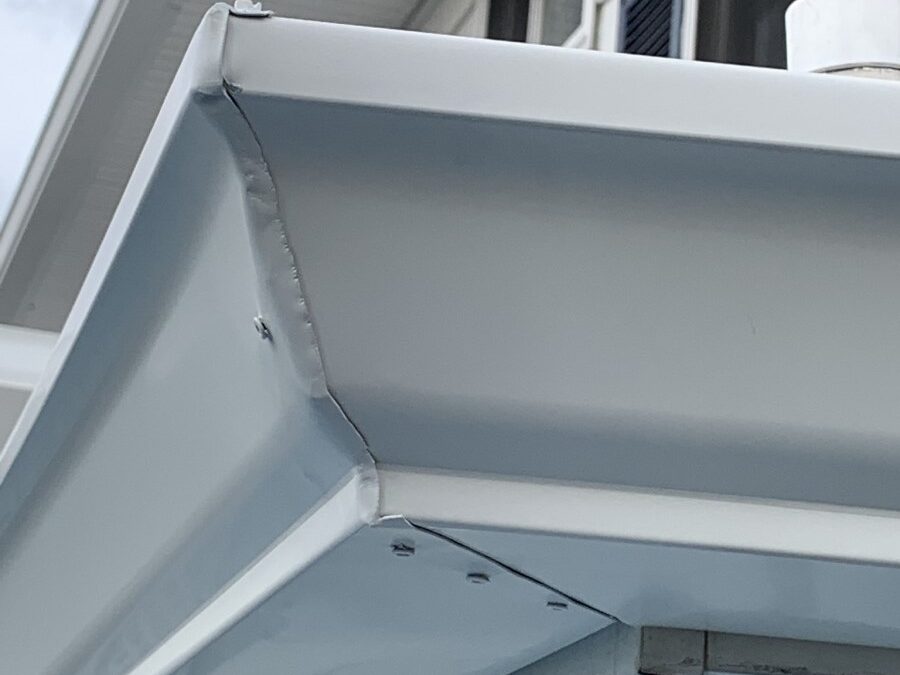
Gutter systems are designed to follow the shape of a home’s roofline, which means they often need to turn corners. The angled pieces that make these turns possible are called gutter miters. Although they are smaller than the gutter channels they connect, inside and outside miters are important because they guide roof runoff around corners while helping keep water inside the system. When a miter leaks, separates, becomes clogged, or loses support, water can escape near the roof edge and affect fascia, soffits, siding, landscaping, and foundation-adjacent areas. Big Orange Gutters believes homeowners in Nashville and Knoxville, Tennessee benefit from understanding how gutter miters work and why these corner connections deserve regular attention.
Understanding the Two Main Gutter Corner Types
A gutter miter is an angled connection that joins gutter sections when the roofline changes direction. The angle may be a standard 90 degrees or may be custom formed for a roof with a different layout.
An outside miter turns around an exterior corner that projects outward from the home. Outside miters are common on rectangular homes, bay windows, bump-outs, and corners where two outer walls meet.
An inside miter joins two gutter runs at an inward-facing corner. These are often found around additions, porches, roof transitions, and L-shaped portions of a house. Inside miters can manage substantial runoff because they frequently receive water from multiple roof surfaces.
Both miter types require proper alignment and sealing. Even seamless gutter systems have connection points at corners. A seamless run reduces the number of joints along a straight section, but corners, outlets, end caps, and downspout connections remain important areas to inspect.
Why Corners Experience More Stress
Gutter corners experience several types of stress that straight sections may not. First, water changes direction at the miter. During rain, especially a heavy Tennessee thunderstorm, runoff moves through the gutter with force and pushes against the angled connection.
Second, corners are more likely to collect debris. Leaves, twigs, roofing granules, seed pods, and other material can slow down as they reach a change in direction. If the gutter slope is inadequate or the downspout is partly restricted, debris may settle in the miter and create a blockage.
Third, gutter corners can be affected by movement. Aluminum expands and contracts with temperature changes. Nashville and Knoxville experience hot, humid summers, cooler winters, and periodic freeze events. Over time, this seasonal movement can stress sealant at corners. High winds and falling branches can also shift gutter sections or loosen nearby hangers.
Finally, support matters. If a corner is not properly supported or the fascia behind it is weakened by moisture, the gutter may flex near the miter. This movement can cause a sealed connection to pull apart gradually.
Inside Miters and Roof Valley Flow
Inside miters deserve special attention because they often occur near complex rooflines. An inside corner may receive runoff from a main roof, an adjacent wing, a porch roof, or a roof valley. During a heavy rain event, this concentrated flow can fill the gutter quickly.
In Nashville, intense spring and summer storms can produce short periods of very heavy rainfall. In Knoxville, hilly terrain and storm systems influenced by nearby Appalachian weather patterns can also produce substantial runoff. When water enters a gutter quickly near an inside miter, any existing debris, poor slope, or downspout restriction becomes more noticeable.
A homeowner may see water spilling over the front of the gutter at an inside corner. This is often assumed to be a miter leak, but several issues may be involved. The corner could have failed sealant, the gutter may be clogged, the downspout may be restricted, or roof-valley flow may exceed the channel’s available capacity during intense rain. Observing the pattern of overflow is useful because it helps distinguish between water escaping through a seam and water rising over the top of the gutter.
Outside Miters and Water Staining
Outside miters often create visible evidence when they leak. Because they wrap around outward-facing corners, water escaping from the seam may drip onto siding, brick, trim, or landscaping below.
Homeowners may notice dark streaks, white mineral deposits, algae growth, or washed-out mulch below an outside corner. A drip that appears minor during one rainstorm can become a recurring source of moisture exposure if it occurs every time the gutter fills.
Nashville and Knoxville homes located on sloped lots should pay particular attention to outside miter leaks and their effect on ground drainage. A concentrated drip at one corner can add water to a location where the grade already carries runoff toward the house. In this situation, the issue is not only the leak itself but also the direction water takes after it reaches the ground.
Common Signs of Miter Problems
Gutter miter issues may be visible before they become major leaks. Homeowners can inspect corners from the ground after rain and look for recurring evidence.
Signs may include:
- Water dripping directly from a corner seam
- Staining beneath an inside or outside miter
- Small gaps between gutter sections
- Cracked, missing, or separated sealant
- Water overflowing from a roof corner
- Debris packed into the gutter at a turn
- Sagging near a corner connection
- Peeling paint or softened fascia behind a gutter corner
- Washed-out mulch, soil, or landscaping below a miter
- Repeated dark algae or mildew streaks on the wall beneath the corner
A single drip may not identify the full cause. For example, a leak at an outside miter may occur because the sealant has failed, but it could also result from gutter movement caused by loose hangers. Looking at the alignment of the surrounding gutter sections helps homeowners understand whether the issue is isolated to the miter or connected to broader support or slope concerns.
Sealant, Alignment, and Surface Preparation
Miter joints are usually sealed to prevent water from escaping through the connection. Sealant performance depends on more than the product itself. The gutter sections should be properly aligned, and surfaces should be clean and dry before sealing.
Old sealant may crack or separate with age. Organic debris, oxidation, moisture, and roof granules can prevent new sealant from adhering well if they are not removed. Applying sealant over a wet, dirty, or moving joint may provide a temporary barrier but may not address the reason the joint failed.
Homeowners should also understand that sealant cannot correct a badly misaligned gutter. If the corner is pulling apart because the gutter is sagging or fascia is deteriorated, the support problem should be considered along with the sealant condition.
Debris and Gutter Corners in Tennessee
Both Nashville and Knoxville have mature tree canopy that can create substantial gutter debris. Nashville homes may receive leaves and seed balls from sycamores, maples, oaks, and other established neighborhood trees. Knoxville properties often experience a mixture of hardwood leaves, pine needles, twigs, and branch debris from wooded lots.
Gutter corners can act as collection points for this material. Debris may become trapped at a miter before moving toward the downspout. When wet, it compacts and can reduce the flow capacity of the channel. A blocked corner can cause water to rise and overflow even if other areas of the gutter appear clear.
Cleaning should include careful inspection of all corners, especially inside miters located below roof valleys. Removing only visible debris from the middle of a gutter run may leave a compacted obstruction at a corner or outlet.
How Miter Issues Affect the Roofline and Ground Below
A leaking or overflowing miter can affect several connected parts of the home. Water may run behind the gutter and wet the fascia board. It may reach the soffit below. It may stain siding or brick. At ground level, repeated dripping can erode mulch, displace soil, or contribute to persistent wetness near the foundation.
For homes with basements, crawl spaces, or retaining walls, controlling concentrated roof runoff is particularly important. The gutter system is only one part of drainage management, but corner leaks can undermine the system by releasing water before it reaches the downspout and extension.
Conclusion
Inside and outside gutter miters are essential corner connections that allow gutters to follow a home’s roofline and carry water safely toward downspouts. For Big Orange Gutters and homeowners in Nashville and Knoxville, Tennessee, these small components are worth monitoring because they can become leak points, debris traps, and locations of concentrated overflow. By watching for drips, staining, sagging, failed sealant, blocked corners, and erosion below roofline turns, homeowners can better understand how their gutter system is performing through Tennessee’s changing weather conditions and heavy rainfall events.