
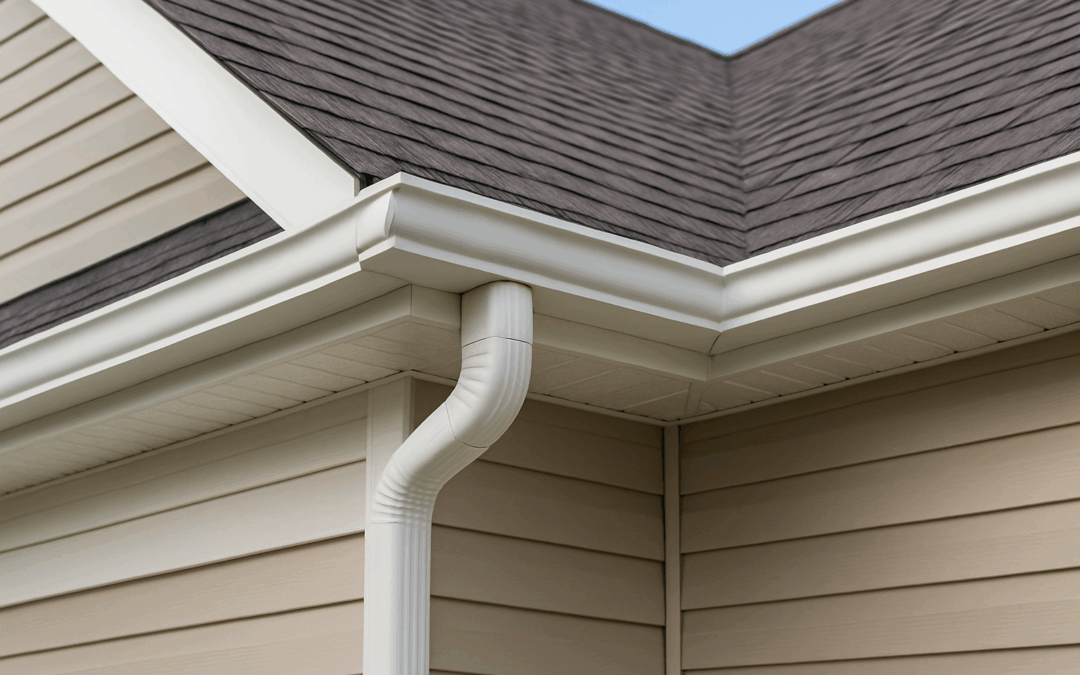
In any conversation about residential gutter systems in Nashville or Knoxville, Tennessee, the gutter channel — the horizontal trough collecting roof surface runoff along the roofline — receives most of the discussion. Downspouts, the vertical pipes that carry water collected by the gutter channel from the roofline to ground level, are equally important to the complete system’s performance yet frequently receive less attention than their role deserves. A gutter system with improperly sized, poorly placed, or inadequately maintained downspouts cannot effectively protect the fascia, foundation, and structure from water damage regardless of gutter channel quality. Big Orange Gutters recognizes that homeowners throughout Nashville and Knoxville benefit from a detailed understanding of downspouts — their function, sizing requirements, placement principles, material options, common failure modes, and maintenance needs in Tennessee’s specific climate environment.
The Function of Downspouts in the Gutter System
Downspouts serve as the drainage outlet for the gutter channel, receiving water collected along the horizontal gutter run and conveying it vertically from the roofline elevation to ground level where it can be directed away from the structure. This function sounds straightforward, but it is the critical link between collection and dispersal in the gutter system’s complete water management chain. Without adequate downspout capacity and effective ground-level discharge management, even a perfectly designed and maintained gutter channel cannot fulfill its protective role — collected water that cannot drain quickly enough simply overflows the gutter, reaching all the surfaces the gutter was designed to protect.
Downspouts also play several secondary but important roles. They establish the drainage endpoint that determines the effectiveness of the gutter channel’s slope — gutters slope toward downspout outlets, and the downspout’s drainage capacity determines whether this slope actually moves water out of the channel or simply concentrates it at a partially blocked outlet. They concentrate dispersed roof runoff into specific discharge points whose location can be deliberately managed to direct water away from foundations, toward drainage features, and away from sensitive landscape areas. And they provide the exit path through which debris flushed during gutter cleaning leaves the system — a function relevant to cleaning effectiveness in Nashville’s and Knoxville’s debris-rich tree canopy environments.
Sizing Downspouts for Tennessee’s Rainfall
Downspout sizing — the cross-sectional area of the downspout opening — must be adequate to drain water from the roof area served at the rainfall intensity rates the local climate produces. Undersized downspouts create a drainage bottleneck that causes gutter overflow during heavy rainfall regardless of debris conditions or gutter slope adequacy. This sizing relationship is practically relevant for Nashville and Knoxville homeowners because both cities experience intense spring thunderstorm events capable of delivering one to two or more inches of rainfall per hour.
Standard residential downspout sizing options include 2×3 inch and 3×4 inch rectangular profiles and 3 or 4 inch diameter round profiles. The appropriate size for a specific installation depends on the roof area served by each downspout, the local design rainfall intensity, and the gutter profile. General guidance relates downspout cross-sectional area to roof drainage area: larger roof sections draining to a single downspout require larger downspout sizing or multiple downspout outlets to provide adequate drainage capacity.
For Nashville and Knoxville homes, where spring storm events create peak rainfall intensity well above annual average rates, sizing downspouts for peak flow conditions rather than average conditions provides more reliable overflow prevention during the storm events that matter most. Homeowners observing consistent gutter overflow during heavy but not extreme rainfall events despite clean gutters and adequate slope may have downspouts undersized for their roof drainage area — a system design issue rather than a maintenance issue.
Downspout Placement Principles
Where downspouts are positioned along gutter runs affects drainage efficiency, discharge location management, and the visual character of the home’s exterior. Several principles inform appropriate placement.
Spacing Along Gutter Runs: Industry standards generally recommend downspout placement at maximum intervals of 30 to 40 feet along gutter runs, though specific roof geometry, drainage area, and local rainfall intensity inform the appropriate spacing for individual applications. Gutter runs serving large roof areas, or runs in climates with high rainfall intensity like Nashville and Knoxville, benefit from downspout spacing at the closer end of standard ranges.
End and Corner Placement: Long gutter runs are often configured with downspouts at or near the ends of runs, with the gutter channel sloped toward these endpoints. Corner downspouts — positioned at inside or outside corners of L-shaped or complex roof plans — serve multiple run sections simultaneously and require sizing adequate for the combined drainage area. Complex roof plans with multiple converging run sections may require careful downspout placement and sizing analysis to ensure every section drains adequately.
Foundation Discharge Management: Downspout placement determines where roof runoff enters the ground-level environment. Nashville’s varied topography — from flat basin areas to rolling hillside neighborhoods — and Knoxville’s proximity to Tennessee River valley terrain create diverse site drainage contexts that affect how downspout discharge should be positioned and extended to move water away from foundations effectively. Discharge should be directed to areas where grade carries water away from the structure, avoiding foundation perimeters, window wells, crawl space vents, and HVAC equipment.
Aesthetic Integration: In Nashville’s and Knoxville’s architecturally diverse residential neighborhoods — from historic Victorian homes in East Nashville to Craftsman bungalows in Knoxville’s Fourth and Gill neighborhood to new construction in suburban developments — downspout placement and finish selection affect exterior appearance meaningfully. Downspouts positioned at interior corners or in less visually prominent locations, and finished in colors matching the gutter and trim, integrate more effectively into the home’s architectural character than poorly placed or mismatched downspouts.
Downspout Extensions and Discharge Management
Effective downspout performance requires not just adequate vertical conveyance from roofline to ground but effective management of discharged water at ground level. Several extension and discharge management options address this final step in the downspout system’s function.
Surface Extensions: Rigid or flexible extensions attach to the downspout outlet and direct discharge horizontally away from the foundation before water contacts soil. Extensions should carry discharge a minimum of several feet from the foundation — greater distances provide more positive foundation moisture protection, particularly for Nashville homes on Nashville Basin limestone soils and Knoxville homes in the Valley and Ridge geological context where drainage behavior varies significantly by site.
Splash Blocks: Concrete or plastic splash blocks placed beneath downspout outlets redirect discharge away from the foundation and distribute water’s impact energy to reduce soil erosion at discharge points. Splash blocks should be positioned with sufficient slope to carry water away from the foundation rather than pooling at the discharge location.
Underground Drainage Systems: Buried downspout drainage systems connect downspout outlets to underground pipes that carry discharge to remote emitters, storm drainage connections, or infiltration features. Underground systems are effective for Nashville and Knoxville homes where surface grade does not provide adequate slope for surface extensions, where landscape design makes surface extensions impractical, or where maximizing foundation perimeter protection argues for carrying discharge well away from the structure entirely.
Rain Barrels and Cisterns: Downspout diverters can direct a portion of roof runoff into rain barrels or cisterns for landscape irrigation use — a practice relevant in both cities’ growing environmental awareness context and one that reduces the discharge volume reaching the foundation perimeter during moderate rainfall events.
Common Downspout Problems in Tennessee’s Environment
Debris Blockages: In Nashville’s and Knoxville’s tree-rich environments — Nashville’s urban canopy of oaks, Bradford pears, and maples, and Knoxville’s Appalachian-influenced diversity of hardwood species — downspout inlets at the gutter outlet are vulnerable to blockage by organic material too large to pass through the transition from gutter channel to downspout opening. Blocked downspouts cause gutter overflow even when channels are relatively debris-free, misdirecting the problem diagnosis toward gutter maintenance when the actual issue is the downspout inlet.
Joint and Seam Separation: Tennessee’s temperature range — from winter lows below freezing to summer highs in the 90s Fahrenheit — creates significant thermal cycling in downspout systems. Joints between downspout sections and at elbow connections can work loose through repeated expansion and contraction, creating gaps that direct water onto wall and fascia surfaces at locations not visible from ground level during casual inspection. Joint separation behind the downspout — between the downspout back and the fascia or wall surface — is particularly problematic because it directs water precisely onto the structural materials the downspout is meant to protect.
Ice Blockage in Winter: Both Nashville and Knoxville experience winter conditions cold enough to freeze water in downspouts, particularly in downspout sections that pass through cold exterior wall cavities or run exposed on north-facing wall surfaces. Ice blockage prevents drainage during moderation periods when roof ice melts, causing gutter overflow that may be misattributed to other causes. Downspout designs that minimize horizontal sections where ice can accumulate and that ensure adequate thermal exposure help reduce winter ice blockage risk.
Crushed or Damaged Sections: Downspout sections running near grade are vulnerable to damage from lawn equipment, vehicle contact, and soil movement. Crushed sections reduce flow capacity and can create joint separations that direct discharge onto wall surfaces. Regular inspection of downspout condition at grade-level sections identifies physical damage before it causes water management failures.
Maintenance Practices for Nashville and Knoxville Downspouts
Effective downspout maintenance integrates with overall gutter system maintenance but includes downspout-specific practices that gutter channel cleaning alone does not address. Flushing downspouts with water during gutter cleaning confirms that each outlet is clear and flowing at designed capacity. Physical inspection of all joints and elbows — particularly after summer’s thermal cycling and after winter freeze events — identifies separations and damage. Checking that discharge extensions and splash blocks remain properly positioned and unobstructed by soil movement, plant growth, or leaf accumulation maintains the ground-level dispersal function. Confirming that underground drainage system outlets are open and discharging freely ensures these systems are performing their intended function.
Conclusion
Downspouts are as essential to gutter system performance as the gutter channel itself, completing the water management chain from roofline collection through vertical conveyance to ground-level discharge management. Big Orange Gutters recognizes that Nashville and Knoxville, Tennessee homeowners benefit from understanding how downspouts function within the complete gutter system, how sizing and placement affect performance during Tennessee’s intense spring storm events, what materials and discharge management options are available, what failure modes are most common in Tennessee’s climate, and what maintenance practices keep downspouts performing effectively year-round. Treating downspouts as a complete system — from the gutter outlet through vertical runs, elbows, and ground-level discharge extensions — gives homeowners throughout Nashville and Knoxville the knowledge to evaluate, maintain, and understand the complete gutter system protecting their homes.