
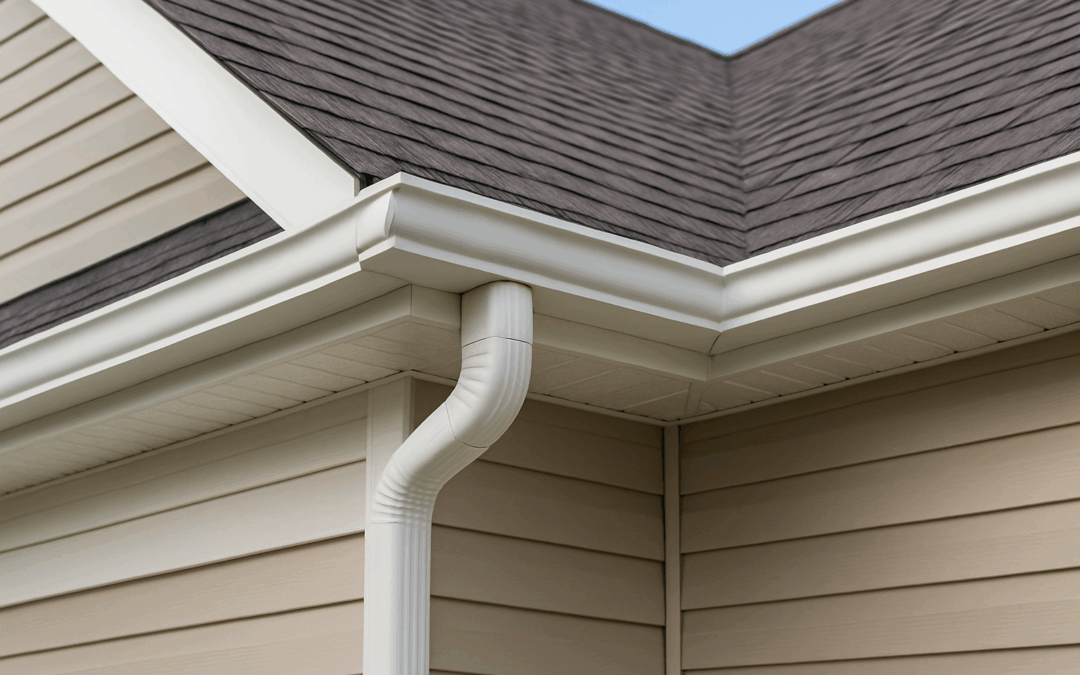
For homeowners throughout Nashville and Knoxville, Tennessee, a deteriorating gutter system eventually presents a decision that deserves careful evaluation rather than automatic assumption in either direction: should the existing gutters be repaired, or has the system reached the point where full replacement is the more practical and cost-effective answer? The right answer depends on the specific nature and extent of the deterioration, the overall age and condition of the system, the state of the fascia boards supporting it, and how Tennessee’s demanding climate has affected the system’s components over time. Big Orange Gutters believes that homeowners throughout Nashville and Knoxville benefit from understanding the specific conditions and indicators that distinguish repair-appropriate gutter problems from situations where replacement delivers better long-term value and protection.
How Tennessee’s Climate Shapes Gutter Lifespan
Nashville and Knoxville both experience Tennessee’s humid subtropical climate, receiving approximately 47 to 48 inches of annual precipitation alongside high summer humidity, active spring storm seasons, UV-intense summers, and winter freeze-thaw cycling. These conditions create a gutter deterioration environment that is more demanding than the national average, and homeowners evaluating their systems benefit from understanding how Tennessee’s climate has been working on those components over time.
Summer heat in both cities accelerates sealant degradation — the compounds used to seal joints, corners, and end caps harden and crack under repeated thermal cycling between hot afternoons and cooler nights. UV radiation from Tennessee’s long, sunny summers degrades paint and protective coatings on gutter exteriors, reducing corrosion protection. High humidity means any moisture that reaches wood fascia through gutter system failures creates rapid biological deterioration rather than the slow drying that would occur in drier climates.
Knoxville’s Great Smoky Mountains proximity adds orographic moisture enhancement that gives East Tennessee some of the state’s highest ambient humidity, making moisture exposure consequences for fascia and soffit more severe in Knoxville than in areas with equivalent rainfall but lower humidity. Nashville’s position in the Cumberland basin creates storm-intensification geography that delivers high-volume spring events with regularity, subjecting gutter systems to peak loading conditions more frequently than in less storm-active environments.
Both cities’ abundant and diverse tree canopies — Nashville’s urban forest of oaks, Bradford pears, and ornamental species, and Knoxville’s Appalachian-influenced hardwood diversity — produce debris loading across multiple seasons that contributes to corrosion-accelerating organic acid accumulation in gutters that are not maintained with adequate frequency.
When Repair Is the Right Answer
Several gutter conditions are legitimately and durably addressable through targeted repair when the overall system is in sound condition.
Individual Leaking Joints: Sealant failures at specific mitered corners, end caps, or outlet connections — producing leaks at those locations during rainfall — are appropriate repair targets when the surrounding gutter material is sound and the rest of the system performs adequately. Removing deteriorated sealant, cleaning the joint surfaces thoroughly, and applying fresh appropriate sealant restores the joint’s function for additional years. This repair is cost-effective when leaking is truly isolated to one or a few joints in an otherwise sound system.
Localized Sagging from Loose Hangers: Gutter sections sagging at specific points where hangers have loosened or pulled from the fascia can be corrected through hanger adjustment or replacement when the fascia board at those locations retains adequate structural integrity. If the fascia is sound — not softened by prior moisture exposure — new or adjusted hangers restore the slope and attachment security that the sagging section has lost. This repair is appropriate when sagging is isolated and the fascia is sound.
Downspout Component Replacement: Separated downspout joints, damaged elbows, blocked inlets, and inadequate extensions are all component-level issues addressable through targeted replacement or addition without requiring any work to the gutter channel itself. Downspout component repair and replacement is generally cost-effective and straightforward when the gutter channel is in sound condition.
Minor Isolated Damage: Small holes or cracks from physical impact — falling branches, hail, or ladder contact — in otherwise sound gutter channel material can be patched effectively when the surrounding material is structurally sound and not thinned by corrosion. The patch repair’s durability depends on sound surrounding material and appropriate patching technique and material selection.
When Replacement Is the More Appropriate Answer
Several conditions indicate that repair is unlikely to provide durable results and that full replacement delivers better long-term value.
Systemic Joint Failure Throughout the Run: When multiple joints along a sectional gutter run are leaking — or when re-sealed joints re-fail within a season or two of repair — the system has reached a stage of general deterioration where joint sealant throughout the run has exceeded its service life. Repair addresses individual joints but cannot arrest the progression of a system whose sealant is uniformly aged and failing. Replacement with seamless gutters eliminates the joint frequency that makes aging sectional systems progressively more maintenance-intensive.
Corrosion and Material Thinning: Aluminum gutter channel material that has developed visible pitting, surface oxidation progressing through the material thickness, or small holes through the channel bottom or back wall has exhausted its service life. Corrosion in aluminum gutters advances from the interior surface outward, often progressing faster than exterior inspection reveals, particularly in gutters with heavy organic debris accumulation that creates acidic standing water. Patches on corroded material are not durable because the corrosion continues in surrounding areas, making replacement the appropriate response.
Fascia Requiring Replacement: When gutter removal is necessary to replace deteriorated fascia boards, reinstalling the original gutters over new fascia perpetuates the cycle of moisture damage unless those gutters are in genuinely good condition. In most cases where fascia has deteriorated significantly, the gutter system contributing to that deterioration through leaking joints, overflow, or failed sealant is itself not in sound condition, making combined fascia and gutter replacement a more complete and durable response than fascia replacement alone.
Widespread Sagging and Attachment Failure: Gutter systems sagging at numerous locations along runs, with hangers pulling from fascia in multiple sections, are exhibiting systemic attachment failure rather than isolated hanger problems. When fascia moisture damage is widespread — softening the wood throughout the gutter run and preventing new hangers from engaging sound material — repair is not feasible until fascia is replaced, and the combination of fascia and gutter replacement at that point is more practical than attempting to restore attachment in compromised fascia.
Persistent Sizing Inadequacy: Gutters that consistently overflow during moderate to heavy rainfall despite being clean, properly sloped, and free of blockages may be undersized for the roof area they serve and Tennessee’s rainfall intensity. Older residential installations commonly used 5-inch K-style gutters that are undersized relative to current understanding of appropriate sizing for many roof plans and rainfall profiles. Replacement with correctly sized 6-inch gutters addresses a design limitation that repair cannot correct.
System Age Beyond Service Life: Aluminum gutters in moderate climates typically serve 20 to 30 years before requiring replacement. In Tennessee’s more demanding climate — higher rainfall, humidity, debris loading, and thermal cycling than in milder regions — service life toward the lower end of this range is realistic for systems without consistent maintenance history. Systems approaching or exceeding their expected service life with developing multi-point deterioration are candidates for replacement rather than continued repair investment.
Nashville and Knoxville Considerations for Replacement Decisions
Nashville homeowners in historic neighborhoods — East Nashville, Sylvan Park, Germantown — may encounter older homes where original sectional gutters are of a profile or material that has long been discontinued. Replacement in these contexts should consider profile selection that maintains the home’s architectural character while providing improved performance. Knoxville homeowners near the University of Tennessee area and in historic districts like Fourth and Gill similarly benefit from replacement selection that respects the architectural context of established neighborhoods.
Both cities’ active spring storm seasons and the severe weather events that Tennessee experiences during convective seasons make replacement timing consideration practical: completing replacement before spring’s peak rainfall season ensures that the new system enters its highest-demand period in new condition rather than during the disruption and exposure that mid-season replacement creates.
The Seamless Gutter Advantage in Tennessee Replacements
When replacement is the appropriate decision, seamless aluminum gutters formed on-site to the exact dimensions of each roof run offer compelling advantages for Tennessee homes. Eliminating the numerous joints that make aging sectional systems progressively maintenance-intensive removes the primary leak point category that accelerates resealing costs and fascia moisture damage over time. Seamless gutters’ exact-length fabrication produces better fit, alignment, and slope consistency than sectional installation typically achieves. In Tennessee’s climate, where the conditions that cause sectional gutter joint failure — thermal cycling, debris loading, and high rainfall volume — are consistently present, the maintenance reduction that seamless gutters provide is a lasting benefit throughout the system’s service life.
Conclusion
The repair-versus-replacement decision for gutter systems is not a binary judgment but a condition-specific evaluation that considers the nature and extent of existing problems, the overall age and material condition of the system, the state of the supporting fascia, and the climate-specific deterioration pressures that Nashville’s and Knoxville’s Tennessee environments create. Big Orange Gutters recognizes that homeowners throughout Nashville and Knoxville benefit from understanding what conditions support targeted repair as a cost-effective response, what conditions indicate that continued repair investment is unlikely to deliver durable results, and how Tennessee’s humid subtropical climate affects the timeline and trajectory of gutter system deterioration. This understanding supports maintenance and replacement decisions that provide the most effective and lasting protection for every home throughout both of Tennessee’s great cities.