
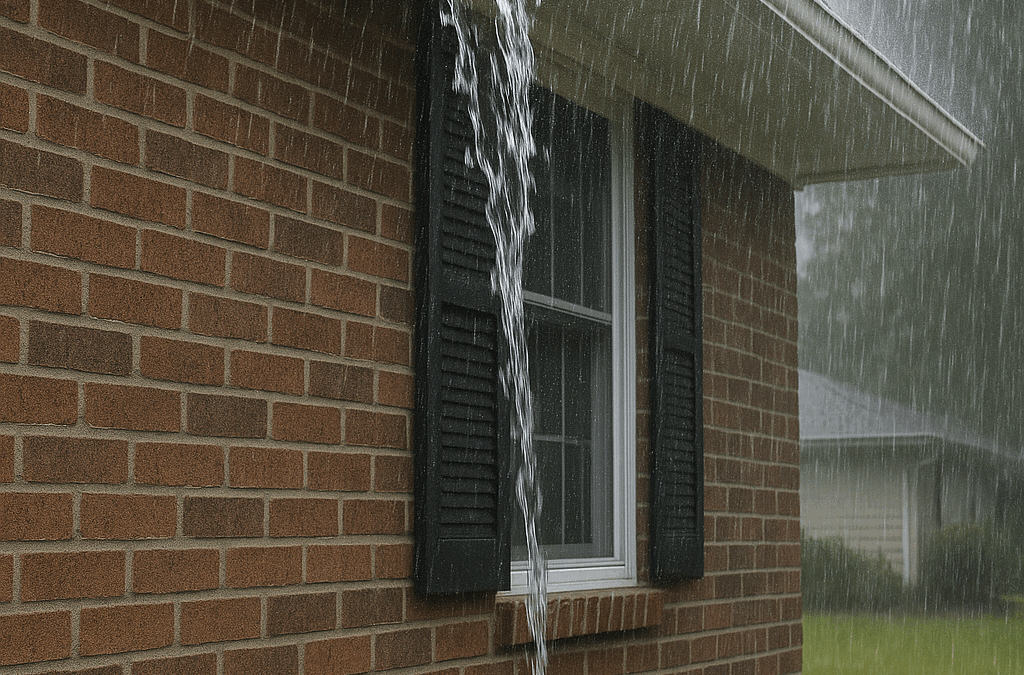
Tennessee’s varied geography creates two distinct but equally demanding climate environments for residential gutter systems in the state’s two largest non-Memphis cities. Nashville, positioned in the Cumberland River basin at the heart of Middle Tennessee’s rolling terrain, and Knoxville, situated at the edge of the Great Smoky Mountains in East Tennessee’s valley and ridge province, both experience Tennessee’s humid subtropical climate while facing unique local weather patterns shaped by their respective geographies. Big Orange Gutters recognizes that homeowners throughout Nashville and Knoxville benefit from a detailed understanding of how their cities’ specific climates affect gutter system performance, what seasonal demands each location creates, and what the practical consequences of gutter neglect look like in Tennessee’s demanding environment.
Nashville’s Climate and Gutter System Demands
Nashville receives approximately 47 inches of average annual precipitation distributed throughout the year without a well-defined dry season. The city’s position in the Cumberland basin creates a climate corridor that draws significant moisture from both Gulf systems moving northward and frontal systems tracking through the Ohio Valley. Nashville’s spring season — Tennessee’s most rainfall-intensive period — regularly delivers high-volume thunderstorm events that can produce one to two inches of rain within short periods, creating peak roof surface runoff that challenges gutter drainage capacity, downspout flow rates, and the integrity of every connection in the gutter system.
Nashville’s spring storm season is particularly relevant to gutter performance because it coincides with the period of maximum debris accumulation from winter and early spring organic material deposits. Gutters that enter March and April with accumulated winter debris face peak rainfall demand with compromised drainage capacity — a combination that produces overflow events even in gutter systems that would perform adequately with clean, unobstructed channels. Nashville’s diverse urban and suburban tree coverage — featuring oaks, maples, Bradford pears, Eastern redbuds, and a wide range of ornamental species in neighborhoods from Belle Meade to East Nashville — produces debris throughout multiple seasons that requires consistent gutter management.
Nashville’s summer climate brings continued rainfall alongside extreme heat and humidity that affect gutter system materials directly. High summer temperatures cause expansion of aluminum gutter runs, stressing the sealants at joints and end caps that prevent water from escaping behind the fascia. UV intensity from Nashville’s abundant summer sunshine hardens and eventually cracks these sealants, creating leak points that manifest as water staining on fascia boards or water visible running behind gutters during rain events. Sealant maintenance — identifying and replacing failed joint sealants before they allow chronic fascia moisture exposure — is a practical maintenance consideration that Nashville’s summer climate makes recurring.
Nashville’s winters bring occasional snow events and more frequent ice and freezing rain that create specific gutter challenges. Ice accumulation in gutters — particularly in gutters that retain debris and therefore standing water that freezes readily — adds substantial weight loading stress on gutter fasteners and the fascia boards they engage. Nashville homeowners with gutters that sag or pull away from the roofline after winter may find that ice loading during cold events accelerated the failure of fascia that was already compromised by prior moisture damage.
Knoxville’s Climate and Its Unique Gutter Implications
Knoxville occupies a position at the edge of the Great Smoky Mountains that gives it a distinct climate character within Tennessee’s broader humid subtropical pattern. The city receives approximately 47 to 48 inches of annual precipitation, but its proximity to the Smokies creates orographic moisture enhancement — the mountains force moisture-laden air upward, cooling it and producing additional rainfall that gives Knoxville and the surrounding East Tennessee valley a humidity profile that is among the highest in the state.
This elevated humidity is the defining climate characteristic for Knoxville gutter systems. Any moisture that reaches wood components at the roofline — fascia boards, roof deck edges, soffit panels — through gutter overflow, failed sealants, or inadequate drainage encounters a high-humidity environment where drying occurs slowly. Wood maintaining elevated moisture content in Knoxville’s humid conditions supports biological activity over extended periods, meaning that the deterioration consequences of gutter overflow or failed gutter components develop faster in East Tennessee’s humid mountain-influenced climate than in less humid locations receiving equivalent rainfall.
Knoxville’s position also places it in a corridor for winter weather events coming over the mountains from the east and cold air intrusions from the north. The city experiences more variable winter conditions than Nashville — snow events, ice storms, and rain-over-freeze events all occur with meaningful frequency across Knoxville’s winter season. Ice accumulation in Knoxville gutters, particularly debris-blocked gutters retaining water that freezes readily, creates the ice dam conditions that force water beneath shingles and cause interior moisture damage. The Smokies’ geography that elevates Knoxville’s precipitation generally also tends to extend the duration of winter precipitation events, creating more sustained ice loading conditions than brief ice events produce.
Knoxville’s Great Smoky Mountains proximity also creates a distinct tree debris profile. The rich biological diversity of the Appalachian ecosystem includes a wider variety of tree species than most mid-South cities, with mixed hardwood forests including oaks, hickories, tulip poplars, sourwoods, and numerous Appalachian species producing diverse debris in gutters throughout the growing and dormant season transitions. This biodiversity creates a debris management challenge that extends through multiple seasons rather than concentrating in a single autumn leaf fall event.
Shared Tennessee Climate Factors Affecting Both Cities
Humid Subtropical Conditions: Both Nashville and Knoxville share Tennessee’s humid subtropical climate foundation, with warm temperatures supporting biological activity throughout most of the year. This means that wood components exposed to moisture through gutter overflow or failed sealants face active deterioration pressure for more months of the year than in cooler climates, and the consequences of gutter maintenance neglect develop faster than homeowners from northern climates might expect.
Spring Storm Season: Tennessee’s active spring weather pattern — driven by the collision of warm Gulf air masses and cold continental systems in the mid-South — creates both cities’ most demanding gutter performance period. High-volume spring storms test every aspect of gutter system performance simultaneously: drainage capacity, joint integrity, downspout flow rates, and ground-level water dispersal. Maintaining gutters at maximum capacity entering spring is the most consequential seasonal maintenance investment for both Nashville and Knoxville homes.
Autumn Debris Loading: Tennessee’s deciduous tree canopy — exceptionally rich in both Nashville and Knoxville — creates annual autumn debris loading events that must be addressed before winter creates conditions for ice dam formation in debris-blocked gutters. The timing of this cleaning matters: cleaning too early, before defoliation is complete, requires a second cleaning; cleaning after the first significant ice event means removing a combination of debris and ice that is more difficult and potentially hazardous to manage.
UV and Heat Effects on Gutter Materials: Both cities experience Tennessee’s intense summer heat and UV radiation that degrade gutter sealants, accelerate paint and coating oxidation, and stress the thermal expansion behavior of gutter systems. Annual inspection of joint sealants, end caps, and gutter hangers after summer provides an opportunity to identify deterioration before autumn rainfall and winter conditions reveal it through active leaking or structural failure.
Foundation and Landscape Consequences
Both Nashville and Knoxville sit on varied geological foundations — Nashville on the limestone karst topography of the Nashville Basin and Knoxville on the mixed soils of the Valley and Ridge province. Both geologies create moisture management considerations at the foundation perimeter that make gutter performance directly relevant to structural health. Gutter overflow that deposits roof surface runoff at the foundation perimeter rather than directing it away from the structure through properly functioning downspout extensions contributes to soil saturation, hydrostatic pressure on foundation walls, and basement or crawl space moisture intrusion that affects home structures across both cities.
Conclusion
Nashville and Knoxville, Tennessee present homeowners with gutter maintenance environments shaped by the shared demands of Tennessee’s humid subtropical climate and the unique characteristics of each city’s geographic position — Nashville’s Cumberland basin storm corridor and Knoxville’s mountain-influenced humidity and winter precipitation patterns. Big Orange Gutters recognizes that homeowners throughout both cities benefit from understanding how their specific local climate patterns affect gutter system performance across every season, what the consequences of inadequate gutter maintenance look like in Tennessee’s particular environment, and why seasonal maintenance timing aligned with Tennessee’s weather patterns delivers better protection outcomes than generic annual schedules. Understanding the relationship between Tennessee’s climate and gutter performance is foundational knowledge for every Nashville and Knoxville homeowner managing the ongoing demands of home exterior maintenance.