
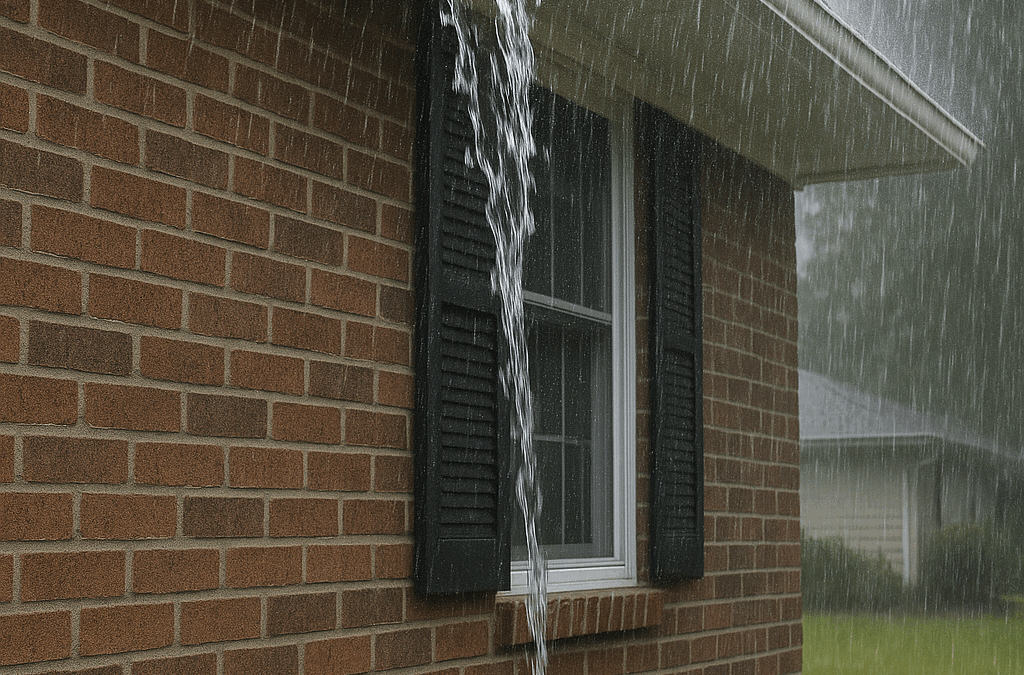
The foundation is the most structurally fundamental component of any residential building — everything else the home contains rests upon it, and its stability determines the stability of everything above. Foundation repair, when it becomes necessary, is among the most expensive and disruptive remediation work that homeowners encounter. Yet a significant portion of the foundation damage that homeowners in Nashville and Knoxville, Tennessee experience is not the result of unforeseeable geological events or unpreventable structural failure — it is the product of water. Specifically, of the chronic, concentrated deposition of roof surface runoff at the foundation perimeter that occurs when the gutter system designed to prevent it is not performing its function adequately. Big Orange Gutters believes that Nashville and Knoxville homeowners benefit from understanding in specific terms how gutters protect foundations, what happens to foundation health when gutters fail, and why Tennessee’s geological and rainfall environments make this connection between gutter performance and foundation integrity a genuinely important topic for homeowners across both cities.
The Volume of Water a Roof Generates
The scale of the moisture management challenge that gutters address is best understood by considering the volume of water that a typical home’s roof surface generates during rainfall. A home with 2,000 square feet of roof surface area generates approximately 1,245 gallons of runoff per inch of rainfall. Nashville receives approximately 47 inches of annual precipitation; Knoxville receives approximately 49 inches. Over a full year, the roof of a typical Tennessee home generates tens of thousands of gallons of runoff — water that the gutter system must intercept at the eaves and convey away from the foundation.
When gutters are functioning — collecting all roof surface runoff, draining it through clear channels and downspouts, and discharging it through properly positioned extensions away from the foundation — this volume is managed safely. When gutters are not functioning — overflowing from debris blockage, discharging at the foundation perimeter without extensions, or missing entirely — this volume is deposited in concentrated streams directly adjacent to the foundation with every significant rainfall event. The cumulative effect of this concentrated deposition, repeated across Nashville’s and Knoxville’s active rainfall seasons, is the moisture cycling that drives the foundation damage mechanisms specific to each city’s geological context.
Nashville’s Geological Context and Foundation Moisture Sensitivity
Nashville’s foundation moisture sensitivity is shaped by two geological factors that interact to make perimeter water management particularly consequential for Middle Tennessee homes.
Limestone Karst Bedrock: Nashville sits on Middle Tennessee’s limestone karst formation — soluble bedrock that has been dissolved over geological time into a complex subsurface landscape of cavities, conduits, and variable rock surfaces. The karst bedrock creates variable foundation bearing conditions and, in some areas, subsurface drainage pathways that can direct water in unexpected directions once it penetrates the soil layer. The practical implication for Nashville homeowners is that surface water management at the foundation perimeter — including gutter discharge management — affects not only the soil moisture immediately adjacent to the foundation but potentially the pathways through which that water moves in the subsurface, making the management of where and how much water reaches the soil near the foundation a particularly consequential consideration.
Variable Soil Conditions: Nashville’s surface soils vary across the metropolitan area, with clay-bearing soils prevalent throughout much of the suburban and urban residential landscape. Clay soils respond to moisture fluctuations with the shrink-swell behavior — expanding when wet and contracting when dry — that creates lateral and vertical pressure on foundation elements and drives the differential settlement that manifests as cracking, door and window binding, and uneven floors in homes subjected to repeated soil moisture cycling. Gutters that prevent concentrated foundation perimeter saturation from roof overflow directly reduce the amplitude of this clay soil moisture cycling and the cumulative foundation stress it generates.
Knoxville’s Geological Context and Foundation Moisture Sensitivity
Knoxville’s Valley and Ridge geological setting creates its own foundation moisture dynamics that make gutter performance a relevant consideration for homeowners throughout the East Tennessee metropolitan area.
Ridge and Valley Topography: The alternating ridges and valleys of the Valley and Ridge province create residential sites with varied topographic drainage characteristics — some sites on ridge slopes with natural drainage moving away from the foundation, others in valley positions where natural drainage patterns may converge toward the foundation from adjacent slopes. For Knoxville homes in valley or lower-slope positions, surface water management through functional gutters and proper discharge extensions is a more critical foundation moisture management factor than for homes on ridge sites with strong natural drainage away from the structure.
Residual Soils Over Alternating Rock Units: Knoxville’s soils develop over the alternating limestone, dolomite, shale, and sandstone units of the Valley and Ridge sequence, creating variable soil characteristics across short distances. Clay-bearing residual soils developed over limestone and shale units are common throughout the Knoxville area and share the shrink-swell characteristics that make foundation perimeter moisture management consequential. The combination of variable topography and clay-bearing residual soils creates site-specific foundation moisture sensitivity that gutter performance affects directly.
The Mechanisms of Gutter-Related Foundation Damage
Whether in Nashville’s karst limestone environment or Knoxville’s Valley and Ridge setting, the mechanisms through which inadequate gutter performance contributes to foundation damage follow consistent pathways.
Concentrated Perimeter Saturation: Overflowing gutters deposit the entire rainfall collection of the roof surface as concentrated streams at the foundation perimeter. This concentrated deposition saturates the soil in direct contact with foundation walls and footings far more severely than dispersed natural precipitation on the adjacent ground surface. The severity and repetition of this saturation drives the moisture cycling that creates shrink-swell stress in clay soils and hydrostatic pressure in soils adjacent to basement walls.
Hydrostatic Pressure Development: Soil saturated by concentrated gutter overflow adjacent to basement walls exerts hydrostatic pressure against the wall — pressure that works through cracks, mortar joints, and construction interfaces to drive moisture into the below-grade space. Nashville’s older neighborhoods include significant populations of homes with stone, brick, and block basement walls whose mortar joint conditions are particularly susceptible to hydrostatic pressure moisture intrusion when adjacent soils are chronically saturated by gutter overflow.
Crawl Space Humidity Elevation: For the significant portion of Nashville’s and Knoxville’s housing stock built on crawl space foundations, foundation perimeter saturation from gutter overflow elevates soil moisture content and humidity within the crawl space. In Tennessee’s warm, humid growing season, elevated crawl space humidity creates active biological deterioration conditions for the wood floor framing — joists, sill plates, girders, and subfloor sheathing — that form the structural floor system above. The connection between gutter overflow, foundation perimeter saturation, crawl space humidity, and floor framing deterioration is a pathway of progressive damage that begins with a maintenance deficiency at the gutters and ends with structural wood deterioration that requires remediation at significantly greater cost.
Differential Settlement from Uneven Moisture Distribution: Concentrated gutter overflow at specific downspout locations creates zones of higher soil moisture saturation adjacent to those locations compared to areas between downspouts receiving less concentrated discharge. This uneven moisture distribution creates differential clay soil shrink-swell behavior beneath the foundation — some portions of the foundation perimeter soil cycling more dramatically than others — which produces the differential foundation movement that results in diagonal wall cracks, racking of door and window frames, and uneven floor levels that homeowners in both Nashville and Knoxville frequently attribute to age or settling but that are often driven by chronic uneven moisture conditions at the foundation perimeter.
Soil Erosion and Bearing Capacity Reduction: High-velocity concentrated discharge from gutters without adequate extensions erodes the soil at the discharge location, removing material that provides bearing support to the foundation footings above and adjacent to the erosion zone. Progressive erosion at downspout discharge points creates voids and reduced-density soil zones that contribute to differential foundation settlement.
Indicators of Gutter-Related Foundation Stress
Nashville and Knoxville homeowners can monitor for signs that gutter performance may be contributing to foundation moisture stress at their specific property.
Diagonal and Stair-Step Cracks: Diagonal cracks in drywall or plaster, or stair-step cracks in brick or block exterior walls, moving from corners of windows and doors toward the top or bottom of the wall, are common indicators of differential foundation movement — foundation settling or shifting unevenly beneath different parts of the structure. While multiple factors contribute to these crack patterns, their correlation with wet seasons and their appearance or worsening in conjunction with other moisture indicators warrant evaluation of surface drainage management as a contributing factor.
Seasonal Door and Window Behavior: Doors or windows that stick, bind, or develop gaps seasonally — worse during or after wet periods and improving during dry periods — indicate seasonal foundation movement consistent with clay soil shrink-swell cycling driven by moisture fluctuations at the foundation perimeter. This seasonal pattern is a meaningful diagnostic indicator of moisture-driven foundation movement in homes on clay-bearing soils in both Nashville and Knoxville.
Basement Wall Staining and Moisture: White mineral deposits, water staining, or recurring dampness on basement wall surfaces — particularly at lower wall elevations and at wall-floor junctions — indicate water movement through the wall from saturated exterior soil. For Nashville’s older basement homes, this type of moisture evidence in correlation with wet seasons and the absence of adequate gutter discharge management is a strong indicator of gutter-related foundation perimeter moisture contribution.
Crawl Space Biological Growth: Mold, mildew, or biological staining on crawl space framing or subfloor sheathing surfaces indicates elevated chronic humidity in the crawl space consistent with foundation perimeter moisture from surface drainage deficiencies. For the many Nashville and Knoxville homes with crawl space foundations, this crawl space evidence represents both a structural deterioration concern and a diagnostic indicator of the surface drainage conditions contributing to it.
The Complete System: Gutters, Extensions, and Grading
The foundation protection that gutters provide is realized only through the complete system — gutters that collect all roof runoff, downspouts that convey it to grade, extensions that direct discharge away from the foundation, and foundation grading that ensures soil adjacent to the foundation slopes away from the structure rather than toward it.
Any weak link in this complete system compromises foundation protection. Clean, well-maintained gutters that discharge at the foundation perimeter through missing or inadequate extensions provide incomplete foundation protection. Properly extended downspouts that discharge to grade where inward-sloping foundation grading redirects the discharged water back toward the foundation perimeter provide incomplete protection. Foundation protection in Nashville’s and Knoxville’s rainfall environments requires the complete system — from roof collection through discharge extension to graded dispersal — to be functional simultaneously.
Conclusion
The role of gutters in protecting Nashville and Knoxville home foundations is direct, mechanistic, and consequential. Functional gutter systems prevent the concentrated foundation perimeter saturation that drives clay soil shrink-swell cycling, hydrostatic basement wall pressure, crawl space humidity elevation, and soil erosion in both cities’ geological contexts. Gutter systems that are failing — through neglect, blockage, inadequate discharge management, or missing components — expose Tennessee foundations to the concentrated moisture conditions that translate into the cracking, settling, moisture intrusion, and structural deterioration that foundation remediation addresses at significantly greater cost than the gutter maintenance that would have prevented it. Big Orange Gutters recognizes that Nashville and Knoxville homeowners who understand the direct connection between gutter performance and foundation health — and who maintain complete, functional gutter systems with the consistency that Tennessee’s active rainfall seasons require — are making a foundational investment in the structural integrity and long-term value of their homes.