When Nashville and Knoxville homeowners think about gutter problems, overflowing gutters, clogged downspouts, and visible damage typically come to mind. What many Tennessee property owners don’t consider is a more subtle but equally consequential factor: gutter slope. The deliberate downward angle at which gutters must be installed determines whether water flows correctly toward downspouts or sits stagnant inside the gutter channel causing progressive damage. Big Orange Gutters believes that Tennessee homeowners throughout Nashville and Knoxville deserve a thorough understanding of gutter slope and pitch—what these terms mean, why they matter in Tennessee’s specific climate, what problems arise when slope is incorrect, and how proper installation and maintenance preserve this critical performance characteristic over a gutter system’s lifetime.
Defining Gutter Slope and Pitch
Gutter slope refers to the intentional downward angle built into a gutter run from its high end to its low end where the downspout is positioned. A properly installed gutter is not level—it tilts gradually downward so that gravity moves water consistently toward the drainage outlet. Without this slope, water has no directional motivation to move toward downspouts, resulting in poor drainage and standing water.
The accepted industry standard for gutter slope is one-quarter inch of vertical drop per 10 linear feet of horizontal gutter run. For a 30-foot gutter section, this means the downspout end sits approximately three-quarters of an inch lower than the opposite end. For a 50-foot run, the difference approaches one and a quarter inches. While these measurements sound trivial, they represent the difference between a gutter system that drains promptly and completely after rainfall and one that retains standing water causing structural and biological damage.
It is worth distinguishing gutter slope from roof pitch, as the terms are sometimes confused. Roof pitch describes the steepness of the roof surface—how many inches of vertical rise occur per horizontal foot of roof length. Roof pitch affects how quickly water leaves the roof surface and enters gutters. Gutter slope describes the angle of the gutter channel itself, independent of roof steepness. Both factors influence overall drainage system performance, and professional installers account for both when designing gutter systems for specific homes.
Tennessee’s Climate and the Importance of Correct Slope
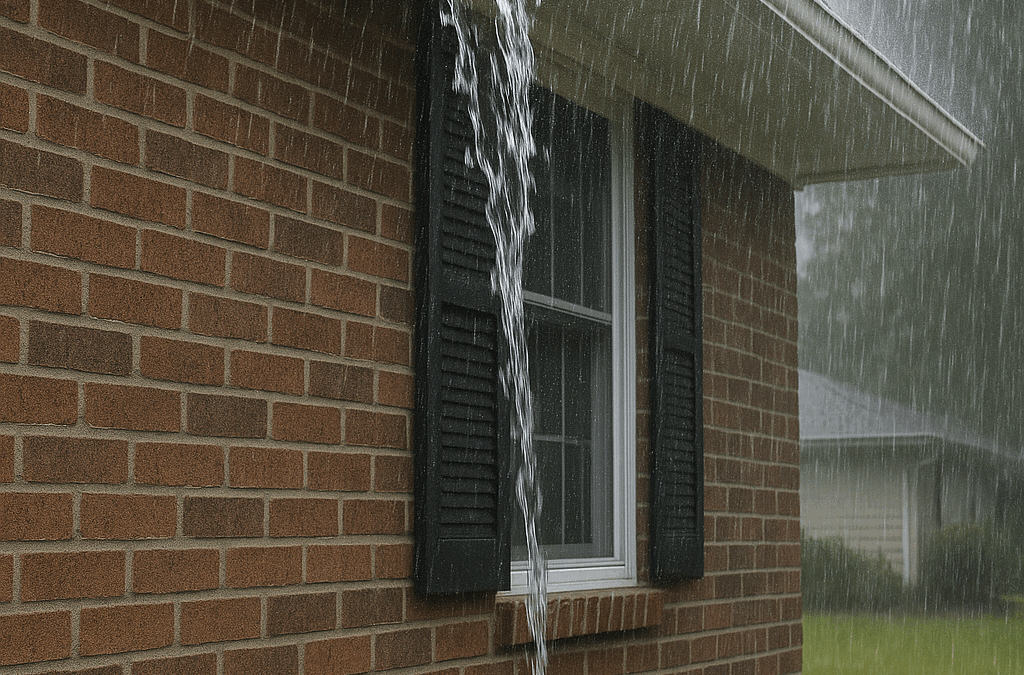
Nashville receives approximately 47 inches of annual rainfall and Knoxville around 48 inches, with precipitation distributed relatively evenly throughout the year and intensifying during spring thunderstorm seasons. Both cities experience storm events capable of delivering rainfall at extremely high rates over short periods—conditions that place maximum demand on gutter drainage capacity. A gutter system with inadequate slope cannot move water toward downspouts quickly enough during these intense events, causing overflow that sends water directly against the home’s exterior components.
Tennessee’s humid subtropical climate means that any water failing to drain from gutters remains in a warm, humid environment ideal for biological growth and accelerated material deterioration. Wood fascia boards exposed to chronic overflow or splash-back from poorly draining gutters deteriorate rapidly in Tennessee’s climate. Unlike drier regions where occasional moisture intrusion might evaporate before causing lasting damage, Tennessee’s persistent humidity ensures that any water reaching wood components stays long enough to promote rot, mold, and structural weakening.
Both Nashville and Knoxville experience periodic winter freezing that creates additional consequences for slope-related drainage problems. Water pooling in inadequately sloped gutters during a winter freeze expands as ice, placing significant stress on gutter hardware, bending metal profiles, and potentially damaging roof edge materials. Proper drainage slope ensures gutters empty completely during rainfall, reducing water present when temperatures drop.
Tennessee’s active spring storm season delivers not just rain but high winds, hail, and sometimes tornado conditions. These severe weather events can physically displace gutters from properly installed positions, alter slope through impact forces, and damage the fascia boards providing the structural attachment point that maintains gutter alignment. Understanding how these weather events affect slope helps homeowners recognize when post-storm inspection and potential realignment may be necessary.
Consequences of Improper Gutter Slope
Persistent Standing Water: Gutters without adequate slope retain water between and after rainfall events. This standing water accelerates corrosion in aluminum and steel gutters, degrades the sealant compounds at joints and end caps, and creates ideal conditions for debris decomposition. As organic material decomposes into fine sediment, it progressively restricts water flow, compounding drainage problems in a self-worsening cycle.
Mosquito and Pest Problems: Standing water in residential gutters provides perfect mosquito breeding habitat. Female mosquitoes require only small amounts of still water to lay egg rafts, and even modestly pooled water in gutters can support significant mosquito populations. Tennessee’s warm climate extends the active mosquito season substantially, making standing water in gutters a persistent public health concern throughout much of the year.
Gutter Sagging and Fastener Failure: The combined weight of standing water and accumulated debris creates loads that exceed what gutter hangers are designed to support continuously. Water weighs approximately 8.3 pounds per gallon, and even a modest pool of standing water in a gutter section creates substantial force on fasteners. Repeated loading and the progressive loosening of fasteners through thermal expansion and wood movement cause gutters to sag, lose slope, and eventually pull away from fascia entirely.
Fascia Deterioration and Structural Damage: Gutters overflowing due to slope-related drainage failure repeatedly expose fascia boards to concentrated water that the system should be routing away. In Tennessee’s humid climate, wood fascia exposed to this chronic moisture develops rot progressively from the outer face inward, often remaining hidden behind gutters until the damage has become extensive and expensive to repair.
Foundation Moisture Intrusion: Water that overflows poorly draining gutters concentrates at the home’s perimeter rather than being carried away through downspouts and appropriate drainage channels. This perimeter moisture creates hydrostatic pressure against foundation walls, contributes to crawl space moisture problems, and can lead to basement water intrusion in homes where the foundation sits below grade.
Why Gutter Slope Changes Over Time
Gutters that were correctly sloped when originally installed can lose proper pitch through several mechanisms. Fascia boards, which provide the attachment surface for gutter hangers, absorb moisture and undergo seasonal dimensional changes as wood naturally expands and contracts with humidity and temperature variations. Over years, this movement cumulatively shifts hanger positions and alters gutter alignment.
The physical weight of debris accumulation bends gutter profiles and stresses hanger connections. As hangers pull slightly away from their original positions under persistent load, gutters develop low spots where slope reverses direction—creating water collection points opposite from downspout locations. These reversed-slope areas collect standing water and debris that worsen over time without intervention.
Ice formation in gutters during winter freezes can physically deform gutter profiles. As water expands when freezing, it exerts outward pressure on gutter walls and downward pressure on the gutter’s bottom profile, gradually deforming the cross-section. Repeated freeze-thaw cycles cause progressive deformation that affects both water-carrying capacity and slope consistency.
Identifying Slope Problems
Tennessee homeowners can identify potential slope problems through observable symptoms. Visible sagging—gutter sections that bow downward in the middle of runs or at locations away from downspouts—indicates hanger failure and slope loss. Water marks on exterior walls below gutter locations suggest chronic overflow attributable to inadequate drainage. During and after rainfall, water should move visibly and relatively quickly toward downspout locations; water sitting still or moving very slowly indicates slope deficiency.
After rainfall ends, gutters should drain completely within a short period. Water sounds continuing long after rain stops—dripping from joints, gurgling in downspout connections—suggest standing water draining slowly due to insufficient slope. Mosquito presence near rooflines during warm months, particularly without other obvious standing water sources nearby, can indicate gutter standing water providing breeding habitat.
The Role of Professional Installation and Assessment
Achieving and maintaining correct gutter slope requires professional expertise and appropriate tools. Installation requires careful measurement, proper reference points, and precise hanger placement to achieve the quarter-inch-per-10-feet standard consistently throughout each gutter run. Long gutter runs require intermediate reference points to prevent accumulated installation error from creating slope inconsistencies.
Professional assessment of existing gutters includes visual inspection for sagging, physical measurement of slope using levels and measuring tools, and practical drainage testing to identify locations where water pools or flows incorrectly. Corrective measures depend on the nature and severity of slope problems—minor adjustments may involve repositioning individual hangers, while significant slope loss may require more extensive realignment or reinstallation.
Conclusion
Gutter slope and pitch represent foundational performance factors that determine how effectively a gutter system protects Nashville and Knoxville, Tennessee homes from the consequences of the region’s substantial annual rainfall. Big Orange Gutters recognizes that Tennessee homeowners benefit from understanding why this seemingly minor installation detail has major consequences for home protection, from preventing fascia deterioration and foundation moisture problems to eliminating mosquito habitat and avoiding gutter structural failure. The combination of Tennessee’s significant precipitation, humid climate, and seasonal weather extremes makes correct gutter slope particularly critical—and makes recognizing slope-related problems an important skill for homeowners invested in protecting their properties from progressive water damage.