
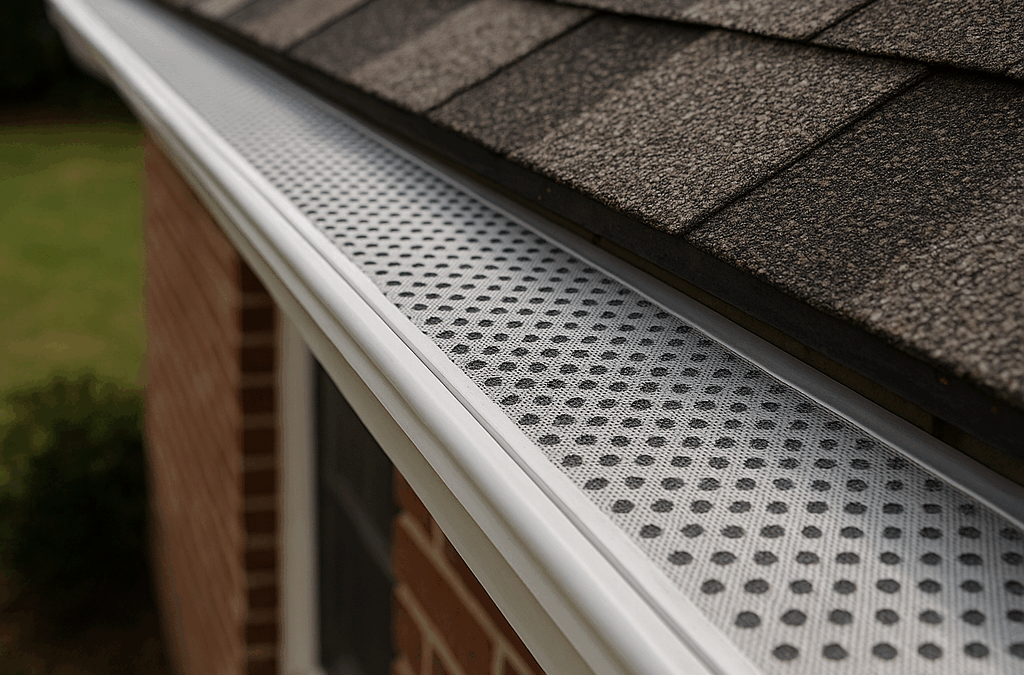
Homeowners throughout Nashville and Knoxville, Tennessee face a familiar seasonal challenge—gutters filling with leaves, pine needles, seed pods, and debris from the region’s substantial tree coverage. Clogged gutters lead to water overflow, fascia damage, foundation issues, and a host of expensive repairs that proper drainage would prevent. Gutter guards have emerged as a widely discussed solution promising to reduce maintenance burdens while keeping gutters functional year-round. Big Orange Gutters recognizes that Tennessee homeowners deserve honest, thorough information about what gutter guards actually are, how different types function, what realistic benefits they provide, and what limitations homeowners should understand before making purchasing decisions for their Nashville or Knoxville properties.
Understanding Gutter Guards
Gutter guards describe a broad, diverse category of products sharing one fundamental goal—allowing rainwater to enter gutter channels while preventing or minimizing debris accumulation that causes blockages and drainage failures. Despite this shared objective, gutter guard products differ enormously in their design principles, materials, construction quality, installation requirements, and actual real-world effectiveness. This variation means that making informed choices requires understanding the fundamental differences between product categories rather than treating gutter guards as a single uniform product type.
The gutter guard marketplace contains products ranging from simple DIY screens costing less than a dollar per foot to elaborate professionally installed systems costing $20-$30 per linear foot or more. This price range reflects genuine differences in materials, engineering, and likely performance outcomes rather than simply marketing variation. Understanding what drives these differences helps homeowners evaluate options appropriately for their specific circumstances.
The Main Types of Gutter Guard Systems
Micro-Mesh Guards represent arguably the most effective category for Tennessee conditions. These systems use extremely fine mesh material—often stainless steel with openings measured in microns—stretched over aluminum frames that span the gutter opening. Water passes through the mesh via surface tension while even very fine debris including pine needles, seed pods, and shingle granules cannot penetrate the tiny openings. Premium micro-mesh systems feature angled designs that encourage debris to slide off rather than accumulate. The primary limitation involves periodic cleaning of the mesh surface itself, as fine organic material and pollen eventually clog micro openings, requiring rinsing or brushing to restore water flow.
Screen Guards use larger mesh openings than micro-mesh systems, blocking leaves and large debris while allowing water passage. These systems vary significantly in construction quality—basic plastic or aluminum screens with openings of several millimeters represent the most affordable option, while premium screen systems feature more durable construction with smaller, more uniform openings. Standard screens work well blocking large debris but allow smaller material including pine needles, shingle granules, and seed debris to pass through into gutters. They represent a reasonable middle-ground option for properties without heavy fine debris production.
Reverse Curve Systems operate through surface tension principles rather than filtration. Water flowing off roofs clings to the curved upper surface of these guards, following the curve into the gutter opening below while debris—theoretically—fails to adhere to the curved surface and falls to the ground. These systems often feature substantial construction and attractive appearance, typically requiring professional installation. Their performance can be sensitive to roof pitch and installation angle, and very heavy rainfall sometimes overcomes surface tension, causing water to overshoot gutters rather than entering the channel. Nashville and Knoxville’s intense spring and summer thunderstorms make this rainfall-overshooting limitation worth careful consideration.
Foam Inserts fill the gutter channel with porous polyurethane foam that water can flow through while debris theoretically sits on top. These products are inexpensive and simple to install, making them attractive to budget-conscious homeowners. However, real-world performance in Tennessee’s environment reveals significant limitations—seeds germinate readily in the foam material, roots penetrate and permanently damage foam inserts, fine debris fills foam pores reducing water flow, and the foam material degrades with UV exposure over time. Cleaning foam inserts often proves more difficult than cleaning open gutters.
Brush Systems use cylindrical brushes similar to large pipe-cleaning brushes inserted into gutter channels. Water flows through the bristles while debris collects on top. Like foam systems, brush inserts work reasonably well initially but collect debris within bristles over time requiring removal and cleaning. They represent a temporary partial solution rather than a comprehensive long-term maintenance reduction strategy.
Solid Hood Systems cover the gutter entirely except for a narrow water-entry slot at the front edge, using surface tension to direct water around the hood and through the slot while debris sheds off the smooth surface. Better-designed versions handle moderate rainfall well, but like reverse curve systems, can struggle during the intense rainfall events common to Tennessee’s climate.
Tennessee’s Specific Gutter Guard Challenges
Nashville and Knoxville’s environments create specific challenges affecting gutter guard performance. Both cities feature substantial tree populations including oak species producing heavy acorn and leaf fall, maple trees releasing distinctive winged seed pods called samaras that can penetrate many guard types, pine trees producing needles that challenge even fine-mesh systems, and various species producing blossoms and small debris throughout spring. This diversity of debris types means no single guard design handles all debris challenges equally well.
Tennessee’s humid subtropical climate means organic debris rarely fully dries and blows away—it remains moist, heavy, and prone to biological activity. Debris accumulating on guard surfaces decomposes into fine organic material that eventually clogs micro-mesh openings and fosters biological growth. Seeds germinate readily in any accumulated organic material on guard surfaces given Tennessee’s warm temperatures and adequate moisture. These conditions mean even high-quality guards require periodic maintenance attention rather than truly operating maintenance-free.
Seasonal weather patterns create varying demands on gutter systems. Spring brings heavy rain combined with pollen, blossoms, and seed debris from multiple tree species. Summer thunderstorms deliver intense high-volume rainfall testing water-handling capacity. Autumn produces heavy leaf falls requiring serious debris management. Winter ice events, though relatively infrequent in Nashville and Knoxville, can interact with guard systems in ways that vary by product type.
Realistic Benefits Worth Considering
Despite limitations, quality gutter guards provide genuine practical benefits. Frequency of required cleaning typically decreases significantly with well-matched quality systems—homeowners who previously cleaned gutters three or four times annually often find once or twice sufficient with effective guards installed. This reduction in required maintenance translates to real time and money savings, particularly for homeowners with multiple stories, steep roofs, or physical limitations making ladder work challenging or dangerous.
Guards reduce pest harborage by limiting standing water and debris accumulation that attract mosquitoes for breeding, birds seeking nesting material, and various insects. Some guard types reduce ice formation at gutter edges during winter freezes by preventing the debris accumulation that holds water in place during freezing conditions. Quality guards protect gutter material from direct debris impact and the constant moisture of standing debris, potentially extending overall gutter system lifespan.
Guards also reduce the risk of complete gutter blockages causing sudden overflow events. While guards don’t eliminate maintenance needs, they generally prevent the complete channel blockages that cause water to pour over gutter edges during storms, protecting fascia boards, foundations, and landscaping from sudden concentrated water damage.
Understanding the Limitations
Homeowners should approach gutter guard marketing with healthy skepticism. Claims of completely maintenance-free performance rarely match real-world results, particularly in Tennessee’s environment. Any system will eventually require some cleaning or inspection. The practical question is whether reduced maintenance frequency and intensity justifies system cost and whether specific products perform adequately under local conditions.
Installation quality significantly affects performance. Products installed incorrectly—even premium products—frequently underperform expectations. Proper installation requires attention to gutter condition, appropriate slope, secure attachment, and correct positioning relative to roof shingles. Pre-existing gutter problems including poor slope, damage, or improper sizing should be corrected before guard installation to ensure the complete system functions properly.
Making Informed Selection Decisions
Selecting appropriate gutter guards requires evaluating specific property conditions honestly. Tree species surrounding the property determine debris types and volumes requiring management. Roof configuration including pitch, valleys, and dormers affects water flow volumes and directions. Existing gutter size and condition affect which systems can be properly installed. Budget parameters influence the realistic product quality available.
Stainless steel micro-mesh systems with aluminum frames consistently receive the strongest performance reputation from independent reviewers and contractor experience, though they represent higher initial costs. Researching specific products thoroughly, reading independent reviews rather than manufacturer claims, and consulting with experienced local contractors familiar with Tennessee conditions helps homeowners make decisions aligned with their specific circumstances.
Conclusion
Gutter guards represent a diverse product category offering varying levels of maintenance reduction for Nashville and Knoxville homeowners dealing with Tennessee’s substantial debris production and demanding climate conditions. Big Orange Gutters believes Tennessee homeowners benefit from approaching gutter guard decisions with realistic expectations, thorough understanding of different product types and their genuine performance characteristics, and honest evaluation of specific property conditions that determine which systems might provide meaningful value. The combination of Tennessee’s varied tree canopy, humid climate, and intense rainfall creates specific performance demands that make product selection, quality, and installation approach critically important factors in whether gutter guards deliver genuine long-term value for individual properties.