
Throughout Nashville and Knoxville, Tennessee, many homeowners focus their exterior maintenance attention on roofing, siding, and gutters while giving little thought to the horizontal surfaces tucked beneath their roof overhangs. These components, called soffits, play crucial roles in protecting homes from weather, pests, and structural deterioration. Big Orange Gutters frequently educates Tennessee homeowners about wood soffit—what it is, why it matters, and how regional climate conditions affect this important architectural element. A thorough understanding of wood soffit empowers property owners to recognize problems early and make informed maintenance decisions.
What Wood Soffit Is and Why It Exists
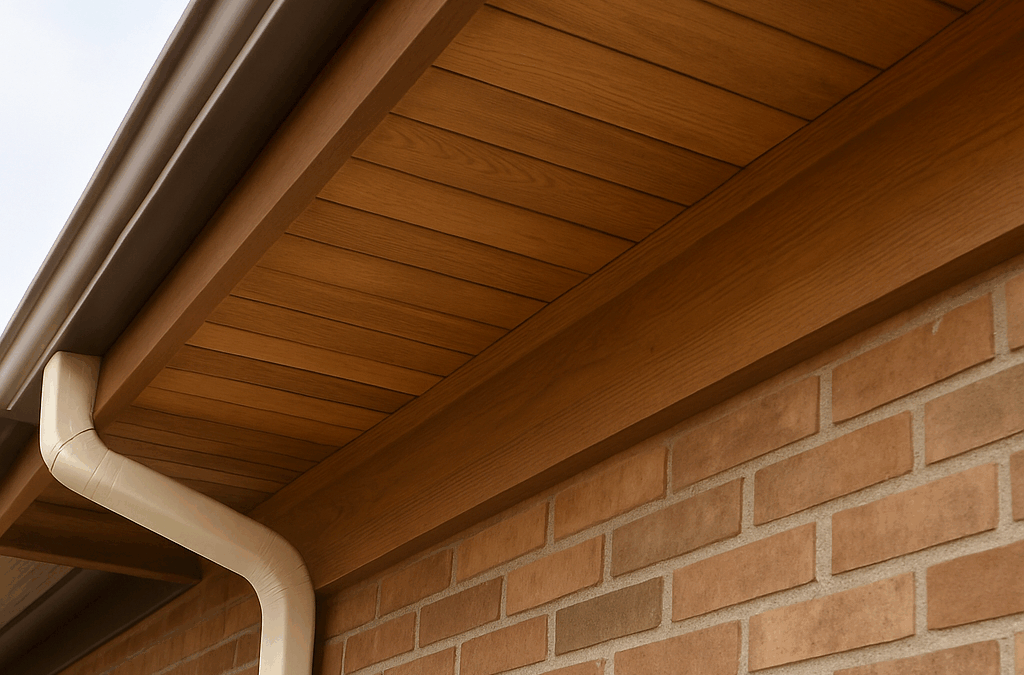
Soffit describes the exposed surface beneath any overhanging roof eave or similar architectural projection. Standing outside your home and looking upward at where the roof extends past exterior walls, the horizontal material spanning from the wall to the fascia board is the soffit. When this component consists of lumber products—whether solid wood boards, plywood panels, or engineered wood materials—it’s classified as wood soffit.
Architecturally, soffit serves multiple purposes essential to building function and appearance. Aesthetically, it creates a finished look by covering the underside of roof framing members and decking that would otherwise remain visibly exposed. This contributes to the home’s curb appeal and architectural completeness. More importantly, soffit provides functional benefits critical to long-term home health.
Soffit seals the transition between roof structures and exterior walls, closing gaps that would otherwise allow wildlife access to attic spaces. Without proper soffit, birds construct nests in eaves, squirrels invade attics through open rafters, and insects colonize unprotected spaces. Soffit also facilitates controlled attic ventilation through perforated or vented sections. These vents allow fresh air to enter the attic at eaves while hot air escapes through ridge or gable vents, creating circulation that reduces heat buildup, controls moisture, and extends roof system lifespan.
Wood soffit appears in various configurations depending on home age and style. Traditional installations use individual tongue-and-groove boards running perpendicular to the home’s wall. Panel systems employ plywood or oriented strand board sheets cut to fit between wall and fascia. Some wood soffits feature decorative elements like beadboard patterns that add visual interest and complement architectural styles prevalent in Tennessee’s historic neighborhoods.
Tennessee Climate Challenges for Wood Soffit
Both Nashville and Knoxville experience humid subtropical climates that present specific challenges for wood soffit durability. Summers bring heat and high humidity—Nashville averages around 78°F in July with humidity frequently exceeding 70%, while Knoxville experiences similar conditions. Winters are generally mild compared to northern states but include freezing temperatures, precipitation, and freeze-thaw cycles. Annual rainfall reaches approximately 47 inches in Nashville and 48 inches in Knoxville, meaning wood soffit faces regular moisture exposure.
Wood’s natural hygroscopic properties mean it continuously absorbs and releases moisture in response to environmental humidity changes. In Tennessee’s humid climate, wood soffit absorbs atmospheric moisture during humid periods, causing dimensional expansion. When drier conditions arrive or indoor climate control reduces ambient humidity, wood releases this moisture and contracts. This perpetual expansion-contraction cycling gradually weakens wood structure, loosens fastening systems, and creates cracks or separations.
Sustained moisture exposure creates conditions for biological deterioration. Mold and mildew colonies establish themselves on damp wood surfaces, creating discoloration and gradually breaking down wood fibers. Wood-decay fungi represent more serious threats—these organisms colonize moisture-saturated wood and decompose cellular structures, causing rot that destroys material integrity. Tennessee’s combination of moisture and moderate temperatures provides ideal conditions for these decay organisms.
Insect threats compound climate-related challenges. Carpenter bees are common throughout Tennessee, boring characteristic round holes into soffit wood to create nesting tunnels. Termites, prevalent in both Middle and East Tennessee, can infest wood soffit when moisture damage creates conducive conditions. Wood-boring beetles and other insects similarly exploit vulnerable wood components, creating additional damage pathways and accelerating deterioration.
Maintaining Wood Soffit Effectively
Preserving wood soffit requires consistent attention to both protective coatings and underlying material condition. Regular inspection forms the basis of effective maintenance programs. Tennessee homeowners should examine soffit at least annually—preferably in spring or fall when moderate weather makes inspection comfortable. Look for coating deterioration, discoloration patterns, warping, pest holes, or any signs suggesting moisture damage. Focus particular attention on areas below gutters where water exposure is greatest.
Protective coating maintenance significantly extends wood soffit lifespan. Quality exterior paints or solid stains create moisture barriers when properly applied and maintained. Most coatings require renewal every 5-10 years depending on product quality, exposure severity, and application technique. Recoating projects involve thorough surface cleaning, scraping loose or failing paint, sanding rough areas, priming any bare wood exposed, and applying finish coats according to manufacturer recommendations.
Cleaning removes biological growth and prevents staining from becoming permanent. Gentle washing with mild detergent solutions and soft brushes effectively removes mold, mildew, dirt, and other contaminants without damaging wood or finishes. Pressure washing offers efficient cleaning but requires care—excessive pressure can damage wood grain, force water behind soffit into attic spaces, or strip paint aggressively. If using pressure washers, maintain low pressure settings, use wide spray patterns, and avoid directing spray upward into ventilation openings.
Ventilation maintenance ensures continuous air circulation through vented soffit sections. Vent openings can become obstructed by insect nests, accumulated dust, spider webs, or inadvertent paint coverage during recoating. Blocked vents reduce attic airflow, increasing heat and moisture accumulation that accelerates roof system aging and promotes wood decay. Periodically verify that soffit vents remain clear and functional.
Addressing minor damage promptly prevents progression to major problems. Small cracks benefit from filling with exterior-grade wood fillers or flexible caulks. Loose boards should be refastened using corrosion-resistant screws or nails. Isolated areas of early-stage rot can sometimes be treated with wood consolidants that harden remaining sound material, then filled and refinished, though extensive rot generally necessitates replacement.
Repair Versus Replacement Decision Factors
Determining whether to repair or replace deteriorated wood soffit depends on damage extent, overall system condition, and cost considerations. Limited damage affecting only a few boards often makes selective replacement the practical choice. Widespread deterioration throughout the soffit system typically makes complete replacement more cost-effective and ensures uniform appearance and performance.
Replacement projects require decisions about materials. Matching existing wood profiles maintains original appearance but may prove challenging for older homes with custom or discontinued millwork. Some homeowners opt for replacement using modern alternatives like vinyl or aluminum soffit that offer superior weather resistance and minimal maintenance, though this changes the home’s character and appearance.
Proper installation proves critical for replacement success. Soffit must be adequately fastened to prevent wind damage, properly ventilated to support attic airflow, and correctly flashed where it meets walls and fascia to prevent water infiltration. Soffit replacement frequently coordinates with related projects—gutter replacement, fascia repair, or roofing work—since these systems interconnect. Addressing all related components simultaneously ensures comprehensive protection and may reduce costs compared to separate projects.
Comparing Wood to Alternative Soffit Materials
Understanding wood soffit benefits from comparison with alternative materials. Vinyl soffit provides excellent moisture resistance, requires no painting, and resists biological decay and insect damage. However, vinyl can become brittle over time, may crack if impacted, and offers limited color selections that cannot be changed. Aluminum soffit delivers durability, fire resistance, and longevity but costs more initially and can dent from hail or impact. Fiber cement soffit combines attractive appearance with superior weather resistance but weighs considerably more than other options and costs significantly more than wood.
Wood soffit, despite maintenance demands, offers aesthetic warmth and authentic character that synthetic materials cannot perfectly duplicate. For Tennessee historic properties or homes where maintaining original architectural integrity matters, properly maintained wood soffit preserves authenticity that modern alternatives might compromise.
Conclusion
Wood soffit serves essential protective and aesthetic functions on Nashville and Knoxville area homes, yet often receives insufficient attention until problems become obvious. Big Orange Gutters knows that Tennessee homeowners equipped with understanding of wood soffit’s purpose, climate-related vulnerabilities, and maintenance needs can better preserve this critical architectural component. While wood soffit demands more attention than modern synthetic alternatives, appropriate maintenance practices, timely intervention when damage appears, and informed decisions about repair versus replacement enable property owners throughout Middle and East Tennessee to protect their investments while maintaining the character and integrity that wood architectural elements provide to homes across the region.