
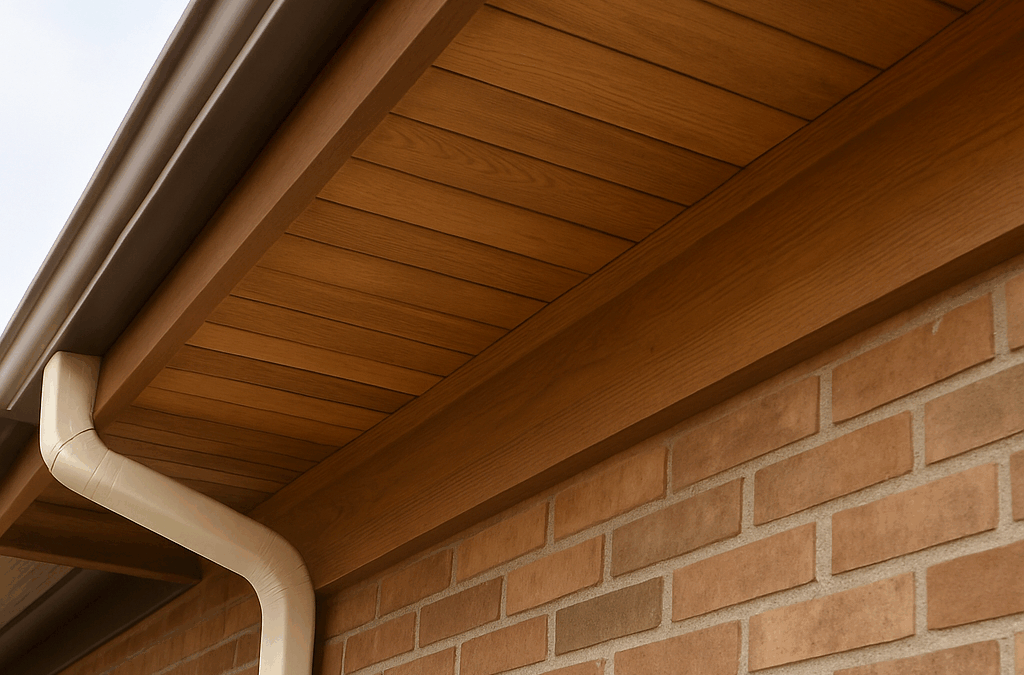
Wood soffits serve essential protective and aesthetic functions for residential structures, yet many Nashville and Knoxville homeowners remain unaware of the specific vulnerabilities these components face in Middle Tennessee’s humid climate until visible damage manifests as rot, warping, staining, or pest infestation. Understanding what wood soffits are and why they matter, the particular environmental factors in Middle Tennessee that accelerate wood deterioration, common damage patterns and their underlying causes, indicators signaling repair or replacement needs, and practical considerations involved in restoring compromised soffit systems provides homeowners with knowledge necessary for protecting roof structures and maintaining home value. Big Orange Gutters, serving both Nashville and Knoxville, TN, presents this comprehensive educational guide explaining wood soffit fundamentals, deterioration mechanisms specific to regional climate conditions, repair versus replacement decision factors, and essential information homeowners should understand about wood soffit maintenance and restoration.
Wood Soffit Fundamentals and Critical Functions
Soffits are the exposed horizontal surfaces beneath roof overhangs—the underside panels visible when looking upward at eaves where roofing extends beyond exterior walls. Wood soffits specifically consist of natural wood materials including solid wood boards, plywood panels, or engineered wood products rather than vinyl, aluminum, or fiber cement alternatives. Many Nashville and Knoxville homes built before the 1970s and 1980s feature original wood soffits that may now be forty to seventy years old, and understanding how these materials perform and deteriorate helps homeowners make informed maintenance and replacement decisions.
Wood soffits fulfill several essential functions for building performance and longevity. Aesthetically, they provide finished appearance to roof overhangs, creating visual transition between roofing systems and exterior walls while concealing structural framing members that would otherwise be exposed to view. More importantly from a structural perspective, soffits protect roof framing including rafters, roof sheathing edges, and trim boards from direct weather exposure including wind-driven rain, moisture infiltration, and environmental deterioration that would accelerate structural lumber decay.
The ventilation function represents perhaps the most critical yet least appreciated soffit role. Properly designed soffits incorporate perforations, screened openings, or ventilation channels that allow continuous air circulation into attic spaces. This ventilation serves multiple purposes including moderating attic temperatures during summer to reduce cooling loads and prevent premature shingle deterioration, removing moisture-laden air before condensation occurs on cold surfaces during winter, preventing ice dam formation in climates with freezing temperatures, and maintaining air quality by preventing stagnant conditions that promote mold growth.
Inadequate attic ventilation creates cascading problems including excessive summer heat buildup that radiates into living spaces and degrades asphalt shingles, winter condensation on roof sheathing that causes wood rot and insulation damage, elevated energy costs from climate control systems working against superheated or moisture-saturated attic conditions, and potential structural damage from chronic moisture exposure. Properly functioning wood soffits with adequate ventilation openings work in conjunction with ridge vents or other exhaust ventilation to create continuous air movement that prevents these problems.
Wood as a soffit material offers advantages including natural aesthetic appeal particularly appropriate for traditional architectural styles, ease of field modification for repairs or alterations, compatibility with paint and stain finishes that can be periodically refreshed, and workability using standard carpentry tools and techniques. However, wood also presents inherent vulnerabilities particularly problematic in humid climates like Middle Tennessee, where moisture exposure, biological decay organisms, and environmental conditions accelerate deterioration compared to drier or more temperate regions.
Middle Tennessee Climate Factors Accelerating Wood Deterioration
Nashville and Knoxville’s humid subtropical climate creates environmental conditions particularly challenging for wood building components including soffits. Understanding these specific regional factors helps explain why wood soffits in Middle Tennessee face more aggressive deterioration than similar materials in other climates.
High relative humidity throughout much of the year—particularly during summer months when humidity regularly exceeds seventy percent—means wood soffits rarely dry completely between moisture exposure events. Wood is hygroscopic, naturally absorbing and releasing moisture in response to surrounding humidity levels. In persistently humid environments, wood maintains elevated moisture content that promotes fungal growth, bacterial decay, and gradual structural degradation even without direct rainfall contact.
Substantial annual precipitation—Nashville averaging nearly fifty inches and Knoxville slightly more—creates frequent direct moisture exposure for soffit systems, particularly when gutter systems overflow, leak, or become debris-clogged. When gutters fail to effectively channel water away from roof edges, water cascades directly against fascia boards and soffits, creating saturation conditions that dramatically accelerate wood decay. Even brief overflow events during intense spring or summer thunderstorms can deliver sufficient moisture to initiate decay processes in vulnerable wood, especially if protective paint or stain finishes have deteriorated.
Temperature cycling between hot humid summers with temperatures regularly exceeding ninety degrees and cool damp winters with periodic freezing creates expansion and contraction stresses that open joints between soffit panels, crack protective paint films, and create entry points for moisture infiltration. Summer heat combined with direct solar exposure on south and west-facing elevations can produce surface temperatures exceeding one hundred twenty degrees, while winter temperatures regularly drop into the twenties or teens. This thermal cycling—particularly when moisture is present—progressively damages wood cellular structure and degrades protective coatings.
Biological organisms including wood-decay fungi, carpenter ants, termites, and wood-boring beetles thrive in Middle Tennessee’s warm humid environment. Wood-decay fungi require four conditions—moisture, moderate temperatures, oxygen, and wood cellulose as food source—all readily available in Nashville and Knoxville for extended periods annually. Once fungal colonization begins in wood maintaining moisture content above twenty percent, decay progresses rapidly with visible deterioration appearing within one to three years depending on wood species, moisture levels, and specific fungal species involved.
Carpenter ants are attracted to wood already compromised by moisture-related decay, excavating extensive galleries that further undermine structural integrity. Subterranean termites, endemic throughout Middle Tennessee, can infest soffits that contact soil, mulch beds, or other moisture sources, causing extensive hidden damage before visible evidence appears. Powder post beetles and other wood-boring insects also attack softened or decaying wood, creating additional deterioration pathways.
Inadequate attic ventilation—often resulting from soffit ventilation openings becoming painted over during refinishing, blocked by insulation pushed too close to eaves, or eliminated during previous repairs—creates moisture accumulation within attic spaces that attacks soffits from interior surfaces. When warm moisture-laden air from living spaces rises into inadequately ventilated attics during heating season, it contacts cold roof sheathing and soffit panels, condensing into liquid water that saturates wood and initiates decay from the hidden interior side.
Common Wood Soffit Damage Patterns and Warning Signs
Recognizing damage indicators enables homeowners to identify problems before they progress to structural failure or create additional damage to roof framing, insulation, or building interiors.
Wood Rot and Decay
Wood rot manifests as darkened, softened, or crumbling wood that has lost structural integrity due to fungal decay organisms. Early-stage rot may appear as subtle dark staining or discoloration without obvious structural compromise, while advanced rot produces wood that feels spongy when probed with a screwdriver, crumbles easily under pressure, or has deteriorated into fibrous pulp. Rot typically initiates at joints between soffit panels, locations where soffits meet fascia boards, around ventilation screen penetrations, or anywhere moisture can accumulate. Once established, rot spreads progressively through adjacent wood as fungal mycelia colonize new material.
Paint Failure and Peeling
Paint peeling, blistering, bubbling, or flaking indicates underlying moisture problems often before wood shows visible decay. Paint protects wood by creating a moisture barrier preventing direct water absorption, and when this barrier fails, wood becomes vulnerable to rapid moisture uptake. Peeling typically begins at horizontal surfaces where water ponds, at joints between boards where moisture accumulates, or at locations receiving minimal solar exposure where surfaces remain damp longer. Widespread paint failure across entire soffit sections suggests either inadequate surface preparation during previous painting, use of incompatible paint products, or chronic moisture conditions overwhelming the paint’s protective capacity.
Warping and Dimensional Distortion
Wood warping—including cupping where boards curve across their width, bowing where boards bend along their length, or twisting where boards rotate along their axis—results from uneven moisture absorption causing differential expansion between wood surfaces or opposite sides. Warped soffit boards create gaps allowing additional moisture infiltration, pest and wildlife entry, and insect access while creating unsightly irregular appearance. Warping indicates wood has experienced repeated wetting and drying cycles, and warped boards rarely return to original flat profiles even after complete drying.
Staining and Discoloration
Water staining appears as darkened streaks, irregular patches, or overall discoloration distinct from the soffit’s original finish color. Staining indicates active or historical moisture exposure and frequently precedes more serious structural deterioration. Black or dark green staining typically indicates mold or mildew colonization. Brown or rust-colored staining may result from tannin leaching from certain wood species or rust from corroding fasteners. Persistent staining that returns despite cleaning suggests ongoing moisture problems requiring investigation and correction.
Sagging or Separation from Framing
Soffits that sag visibly away from fascia boards or roof framing indicate fastener failure, wood structural deterioration, or damage to underlying support components. Sagging creates gaps allowing wildlife and insect entry while permitting rain infiltration that accelerates further deterioration. Severe sagging suggests advanced deterioration requiring prompt attention to prevent complete panel failure and potential safety hazards from falling materials.
Evidence of Pest Infestation
Carpenter ant presence including visible insects or sawdust-like frass beneath damaged areas, termite mud tubes extending from ground to soffit areas, wood-boring beetle exit holes appearing as small round perforations, or visible insect activity indicates active pest infestation causing ongoing progressive damage. Pest damage compounds and accelerates moisture-related deterioration and can rapidly compromise structural integrity once infestations become well established.
Interior Attic-Side Damage
Damage visible from attic spaces including mold growth, water staining, or deterioration on soffit interior surfaces indicates moisture problems related to ventilation deficiencies, roof leaks, or condensation issues. Interior damage often progresses more extensively than exterior damage before detection because it’s hidden from routine casual observation during normal exterior home maintenance.
Contributing Factors Accelerating Wood Soffit Deterioration
Several specific factors accelerate wood soffit damage in Nashville and Knoxville homes.
Gutter System Failures
Clogged gutters filled with leaves and debris, leaking gutter seams or holes, improperly sloped gutters creating standing water, or undersized gutters unable to handle rainfall volumes all result in overflow that delivers concentrated water directly against fascia and soffit systems. This creates localized saturation conditions that rapidly initiate and accelerate decay. Proper gutter maintenance represents perhaps the most effective single preventative measure for protecting wood soffits from moisture damage.
Inadequate Roof Overhang Depth
Homes with minimal roof overhang—twelve inches or less from exterior wall to roof edge—provide limited protection for soffits from wind-driven rain and direct weather exposure compared to deeper overhangs of eighteen to thirty-six inches that effectively shield soffit areas from most weather conditions.
Poor Paint and Finish Maintenance
Deteriorated, cracked, or completely absent paint finishes leave wood unprotected from moisture absorption. Bare or inadequately sealed wood absorbs water readily, maintaining elevated moisture levels that promote fungal decay. Paint should be maintained through periodic inspection and recoating every five to ten years depending on exposure and climate.
Ventilation System Inadequacies
Blocked soffit vents from paint accumulation, insulation pushed against vent openings, debris accumulation, or complete absence of ventilation openings creates moisture accumulation in attic spaces. This trapped moisture condenses on cold surfaces during winter, attacks soffits from interior surfaces, and creates ideal conditions for mold growth and wood decay.
Previous Improper Repairs
Past repairs using inappropriate materials like untreated lumber, incorrect installation methods that don’t address water drainage, or partial fixes addressing visible symptoms without resolving underlying moisture sources typically fail prematurely and may actually create new problems by trapping moisture or creating new infiltration pathways.
Original Wood Species and Quality
Initial construction using low-grade lumber, moisture-sensitive wood species like pine without preservative treatment, or wood installed without proper sealing deteriorates more rapidly than premium materials with appropriate protective treatments. Higher-grade cedar or redwood with natural decay resistance performs better but requires proper finish maintenance.
Repair Versus Replacement Decision Factors
Determining whether damaged wood soffits warrant repair or complete replacement depends on damage extent, underlying cause resolution capability, material availability, and long-term cost-effectiveness.
When Repair Is Appropriate
Limited localized damage affecting small isolated sections—perhaps ten to twenty percent of total soffit area—can often be successfully repaired by cutting out deteriorated portions, addressing identified moisture sources, treating remaining sound wood with preservatives, installing new matching wood sections, and refinishing to blend with existing soffits. Repairs make economic sense when damage is confined, underlying causes can be identified and corrected, remaining soffit material is structurally sound, and matching materials are available.
When Replacement Is Indicated
Widespread deterioration affecting multiple panels, entire building elevations, or more than thirty to forty percent of total soffit area typically indicates systemic problems where piecemeal repairs won’t provide lasting cost-effective solutions. Complete replacement becomes more economical than extensive repairs when damage is widespread, when addressing underlying problems requires work that would disturb existing soffits anyway, when homeowners prefer transitioning to lower-maintenance alternative materials, or when architectural updates are desired.
Material Options for Replacement
Replacement material choices include new wood for maintaining original appearance and architectural authenticity particularly important for historic homes, vinyl for minimal ongoing maintenance and superior moisture resistance, aluminum for exceptional durability and complete pest immunity, or fiber cement for dimensional stability and rot resistance with paintable surfaces. Each material presents specific advantages, cost considerations, aesthetic characteristics, and maintenance requirements that should align with homeowner priorities, architectural style, and budget parameters.
Importance of Addressing Underlying Causes
Successful wood soffit repair or replacement requires identifying and correcting root causes of damage rather than simply replacing deteriorated materials. If gutter problems, ventilation deficiencies, roof leaks, or other moisture sources aren’t resolved, new soffits will deteriorate as rapidly as those being replaced, resulting in wasted investment and recurring problems. Comprehensive assessment should identify all contributing factors and ensure their correction as part of any soffit restoration project.
Conclusion
Wood soffit deterioration represents a common challenge for Nashville and Knoxville homeowners due to Middle Tennessee’s humid subtropical climate, substantial annual precipitation, biological decay organism activity, and temperature cycling that collectively create demanding conditions for wood building materials. Big Orange Gutters, serving both Nashville and Knoxville, TN, encourages homeowners to understand the critical protective and ventilation functions wood soffits perform, recognize the specific regional environmental factors that accelerate wood deterioration, identify warning signs indicating repair or replacement needs, and appreciate that successful soffit restoration requires addressing underlying moisture sources and ventilation deficiencies in addition to replacing damaged materials. Regular inspection of soffit conditions, prompt attention to early damage indicators, diligent gutter system maintenance, adequate attic ventilation, and proper paint maintenance represent essential practices for extending wood soffit service life and protecting roof structures from moisture-related damage. This educational overview is provided to inform homeowner understanding of wood soffit systems without implying specific repair capabilities or service commitments.