Throughout Nashville and Knoxville, Tennessee, many homes feature traditional wood soffit—the wooden material covering the underside of roof overhangs. While wood soffit has served residential construction for generations, it faces particular challenges in Tennessee’s humid climate where moisture, insects, and weather exposure cause progressive deterioration requiring professional repair or replacement. Big Orange Gutters regularly encounters Tennessee properties where wood soffit damage has progressed from minor cosmetic issues to serious structural concerns affecting not just the soffit itself but adjacent fascia boards, roof edges, and even attic spaces. Understanding what causes wood soffit deterioration, recognizing when professional evaluation becomes necessary, and appreciating why proper repair or replacement requires specialized expertise helps Tennessee homeowners protect their properties from extensive damage and expensive emergency repairs.
The Role and Vulnerabilities of Wood Soffit
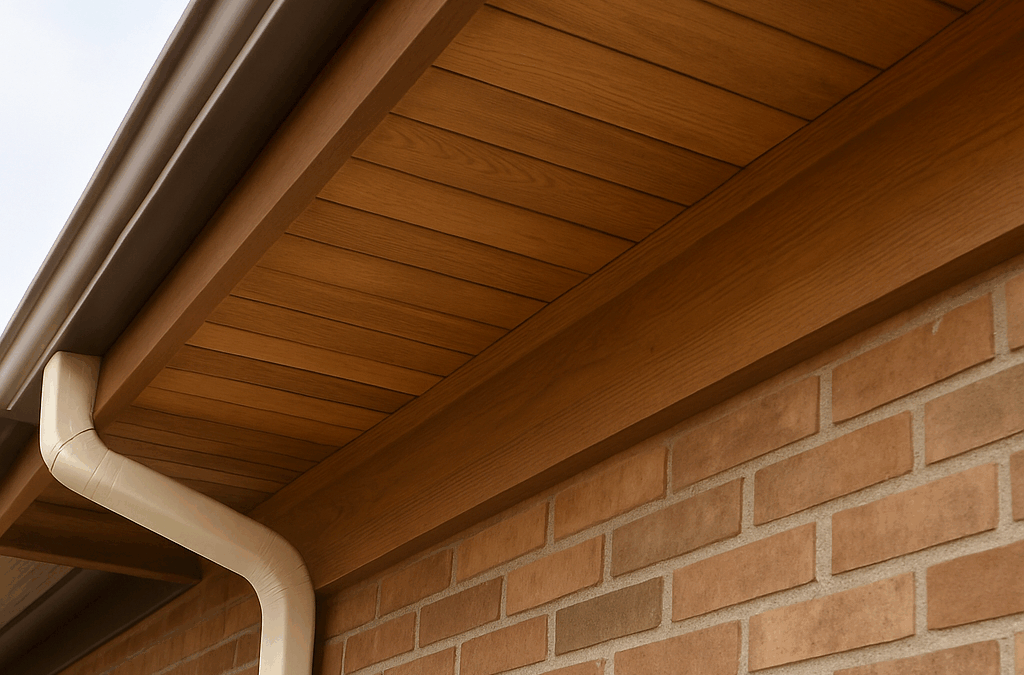
Wood soffit describes the wooden boards or panels installed beneath roof eaves where rooflines project beyond exterior walls. This component serves multiple critical functions—it creates finished appearance concealing structural roof framing, blocks pest access to attic spaces, and provides essential attic ventilation when properly designed with screened vents. Traditional wood soffit materials include pine, cedar, fir, plywood, and various engineered wood products, all selected for workability, availability, and initial cost-effectiveness.
Despite its widespread historical use, wood soffit remains inherently vulnerable to deterioration mechanisms Tennessee’s climate accelerates. Unlike modern synthetic alternatives engineered specifically for weather resistance, natural wood absorbs atmospheric moisture, provides nutrition for wood-decay fungi, attracts wood-destroying insects, and gradually breaks down through ultraviolet exposure and thermal cycling. When wood soffit fails, consequences extend beyond appearance—compromised soffit allows pest infiltration into attic spaces, reduces ventilation effectiveness creating heat and moisture problems, permits water entry damaging insulation and roof structures, and indicates potential deterioration of adjacent fascia and roof edge components.
Tennessee’s building stock includes substantial numbers of homes constructed when wood represented the default soffit material, meaning many current homeowners face decisions about repairing or replacing deteriorating wood soffit systems showing decades of accumulated weather exposure and biological attack.
How Tennessee’s Climate Causes Wood Soffit Damage
Nashville and Knoxville’s humid subtropical climate creates particularly challenging conditions for wood soffit longevity. Both cities receive substantial precipitation—Nashville approximately 47 inches annually, Knoxville about 48 inches—with elevated humidity levels frequently exceeding 70 percent. This persistent moisture exposure keeps wood soffit in elevated moisture content ranges that promote fungal colonization and decay. Tennessee’s warm temperatures accelerate biological processes, with fungal growth proceeding rapidly during extended warm, humid periods.
Summer thunderstorms characteristic of Tennessee deliver intense rainfall that wind conditions drive upward into soffit areas rather than simply running off roofs. Inadequate gutter systems or roof edge flashing allow water to reach soffit repeatedly, overwhelming wood’s limited moisture resistance. High ambient humidity between precipitation events prevents thorough drying, maintaining conditions ideal for wood-decay fungi that require sustained moisture for growth. Once fungal colonization establishes in damp wood, decay proceeds progressively, with fungi breaking down wood cellular structure and causing rot that spreads through adjacent material.
Tennessee’s temperature patterns contribute additional stress. Warm summers promote rapid biological activity including not just fungal decay but also insect reproduction and feeding. Mild winters rarely bring sustained freezing that might slow deterioration processes, meaning wood breakdown continues year-round. Occasional freeze-thaw cycles cause dimensional changes in wood containing elevated moisture, progressively damaging cellular structure and accelerating deterioration.
Insect threats pose significant additional risks to Tennessee wood soffit. Carpenter bees, extremely common throughout Tennessee, bore perfectly round half-inch holes into exposed wood, creating extensive tunnel networks for nesting. These tunnels compromise structural integrity while providing entry points for moisture and decay fungi. Termites, active throughout both Nashville and Knoxville regions, readily attack accessible wood including soffit areas, particularly when moisture has already begun weakening wood structure. Carpenter ants colonize wood already suffering decay, accelerating damage. These biological threats work synergistically—moisture damage attracts insects, insect damage facilitates moisture infiltration, and combined effects dramatically accelerate total deterioration.
Recognizing Wood Soffit Damage Requiring Professional Attention
Multiple visible indicators suggest wood soffit has sustained damage necessitating professional evaluation and intervention. Paint failure including peeling, bubbling, or flaking typically signals moisture problems, with water vapor escaping through paint films or moisture infiltration lifting paint away from wood surfaces. Discoloration or dark staining indicates water exposure and possible fungal growth beginning decay processes. Visible cracks, splits, or board separation shows structural breakdown from moisture cycling, wood shrinkage, or insect damage.
Soft spots detected when pressing against soffit surfaces indicate advanced wood rot where decay fungi have substantially degraded wood structure, compromising strength and integrity. Visible holes—particularly the distinctive round holes carpenter bees create—confirm active or past insect infestation requiring attention. Sagging soffit sections indicate structural failure where deteriorated wood can no longer support its own weight or where mounting systems have failed. Visible fungal growth including shelf fungi, surface mold, or actual mushrooms signals serious moisture problems and advanced decay.
From attic interiors, water staining on soffit undersides or adjacent framing indicates moisture infiltration through soffit systems. Daylight visible through soffit suggests board separation, warping, or complete failure creating gaps. Evidence of insect activity including termite mud tubes, carpenter ant frass, or active insect presence confirms pest problems requiring immediate professional response.
Homeowners frequently overlook early damage signs because soffit occupies peripheral vision areas receiving minimal attention during normal property use. By the time damage becomes obvious from ground level, deterioration has typically progressed extensively, often affecting not just soffit but also fascia boards, roof decking edges, rafter tails, and sometimes even attic insulation and framing—damage requiring far more extensive and expensive repairs than early professional intervention would have necessitated.
Why Professional Expertise Proves Essential
While wood soffit work might appear to be straightforward carpentry suitable for DIY approaches, proper repair and replacement involves substantial complexities requiring professional capabilities. Accurate damage assessment represents the critical foundation—professionals must determine deterioration extent, identify root causes, and evaluate whether adjacent components require attention. This assessment demands experience recognizing damage patterns and indicators, knowledge of building system interactions, and often exploratory investigation removing sections to examine hidden conditions. Homeowners typically lack training, tools, and perspective to accurately evaluate damage scope, commonly underestimating problems and attempting repairs that prove inadequate.
Safe access to soffit areas requires specialized equipment homeowners rarely possess. Soffit work involves operating at heights typically 12 to 25 feet while reaching overhead to work on horizontal surfaces—activities requiring stable scaffolding systems, properly configured ladder arrangements, or lift equipment. Working overhead while simultaneously managing tools, fasteners, and materials creates significant fall hazards. Professional contractors maintain appropriate access equipment, implement fall protection protocols, and carry comprehensive insurance protecting property owners from liability when accidents occur.
Proper material selection demands professional knowledge. Wood species selection affects moisture resistance, dimensional stability, paint adhesion, insect resistance, and longevity. Product grade, thickness, and grain orientation impact performance. Ventilation requirements must be calculated correctly, balancing adequate attic airflow against weather protection. Flashing integration with adjacent roof edges and fascia boards must be executed properly to prevent moisture infiltration. Finish products must suit exterior soffit applications, with proper surface preparation ensuring adhesion and durability. These technical considerations substantially exceed typical homeowner knowledge and experience.
Addressing underlying problems often proves more important than replacing visible damage. When moisture has caused soffit deterioration, simply installing new boards without correcting moisture sources guarantees premature new material failure. Professionals investigate and address inadequate roof flashing, improperly functioning gutters, insufficient attic ventilation, condensation sources, or other moisture causes before installing replacement soffit. This comprehensive approach prevents the recurring failures that plague homeowner attempts focused solely on replacing obviously damaged material.
Repair or Replacement Determinations
Deciding whether damaged wood soffit can be effectively repaired or requires complete replacement involves professional judgment based on damage extent, underlying causes, remaining serviceable material condition, and long-term performance expectations. Limited localized damage—perhaps a single section damaged by specific impact or isolated leak—may suit repair approaches if surrounding soffit remains sound and causes have been corrected. Repair involves carefully removing damaged material, addressing any structural problems, installing matching replacement sections, and refinishing for appearance consistency.
However, extensive deterioration affecting large areas or multiple scattered locations typically indicates systemic problems making complete replacement more practical and cost-effective than attempting piecemeal repairs. When inspection reveals widespread hidden damage beyond obviously failed visible sections, attempting to preserve marginally acceptable areas proves false economy—these sections will likely fail within months or few years, requiring additional work. Complete replacement allows installing uniform new material throughout, ensuring consistent appearance, matched performance, and predictable extended service life.
Many homeowners facing substantial wood soffit damage choose replacement with modern alternative materials rather than installing new wood. Vinyl soffit offers maintenance-free performance, complete moisture immunity, and pest resistance. Aluminum soffit provides exceptional durability and fire resistance. Fiber cement soffit combines authentic wood-like appearance with superior weather resistance. These alternatives eliminate the recurring maintenance, regular painting, and eventual premature replacement wood requires in Tennessee’s challenging climate. Professional contractors guide these decisions, comparing options based on specific property conditions, architectural character, aesthetic preferences, and budget parameters.
Consequences of Delayed Intervention
Postponing necessary wood soffit repair or replacement allows progressive damage affecting far more than soffit boards alone. Deteriorated soffit permits pest access to attic spaces where rodents, insects, birds, and bats cause extensive insulation damage, contamination, and structural harm. Compromised soffit reduces attic ventilation effectiveness, causing heat and moisture accumulation that damages roof decking, accelerates shingle deterioration, and increases cooling expenses. Moisture entering through failed soffit deteriorates fascia boards and rafter tails, eventually requiring expensive structural repairs.
Water infiltration through damaged soffit reaches interior spaces in severe cases, causing ceiling staining, insulation saturation, and wall damage as water migrates along framing members. Mold growth in moisture-affected attic spaces creates health concerns and expensive remediation requirements. What initially appears as relatively minor soffit damage progressively worsens, with repair costs escalating dramatically as deterioration spreads to adjacent building components that expensive repairs must address.
Professional intervention costs increase substantially as damage progresses. Early-stage problems might require limited replacement of a few damaged boards. Advanced deterioration necessitates extensive work including structural repairs, complete fascia replacement, roof edge reconstruction, and remediation of consequential damage to insulation, roof decking, and interior finishes. Cost differentials between early professional repair and delayed emergency response commonly exceed 400-600 percent when including consequential damage repairs.
Value of Professional Assessment
Professional wood soffit assessment provides comprehensive evaluation homeowners cannot replicate without training and experience. Qualified contractors systematically inspect complete soffit systems, identifying obvious damage, probing for hidden deterioration, evaluating ventilation adequacy, examining adjacent fascia and roof edges, checking attic spaces for moisture evidence, and investigating underlying causes. This thorough evaluation produces accurate understanding of actual conditions and necessary work scope.
Professional assessments include detailed documentation through photographs, written descriptions, and often moisture measurements. This documentation proves valuable for insurance claims involving storm damage or sudden failures. Records also support property sale transactions, demonstrating disclosed conditions and professional evaluation rather than hidden problems discovered during buyer inspections creating negotiation conflicts.
Assessments include recommendations with options suited to varying budgets and priorities. Professionals explain trade-offs between temporary repairs extending existing material life, partial replacement addressing critical damage, and complete system replacement or upgrades. Access to experienced professional guidance prevents costly mistakes from inadequate repairs or inappropriate material choices.
Long-Term Planning Considerations
Wood soffit in Tennessee’s climate represents ongoing maintenance commitments. Even properly installed and maintained wood soffit requires regular inspection, periodic refinishing, and eventual replacement as deterioration inevitably occurs despite best care. Homeowners must realistically assess willingness and capability to provide this continuing maintenance when making repair decisions.
Many property owners view substantial wood soffit damage as opportunity for permanent solutions through modern alternative materials. While initial costs exceed basic wood replacement, long-term value through eliminated maintenance, superior durability, and extended service life makes alternatives attractive financially. Professional contractors assist analyzing life-cycle costs comparing material options over expected service periods rather than focusing solely on immediate installation expenses.
Conclusion
Wood soffit repair and replacement throughout Nashville and Knoxville, Tennessee requires professional expertise for accurate damage assessment, safe work execution, proper material selection, and correction of underlying problems causing deterioration. Big Orange Gutters recognizes that Tennessee homeowners facing wood soffit damage benefit from professional evaluation determining appropriate repair strategies or replacement necessity, and whether modern alternative materials offer superior long-term value compared to traditional wood in Tennessee’s humid climate. The combination of persistent moisture exposure, aggressive biological threats including fungi and insects, and year-round deterioration processes makes wood soffit particularly vulnerable throughout Tennessee, with professional intervention necessary to properly address existing damage, prevent progressive deterioration affecting adjacent building components, and implement effective solutions providing reliable long-term protection for homes against water intrusion and pest infiltration problems.