
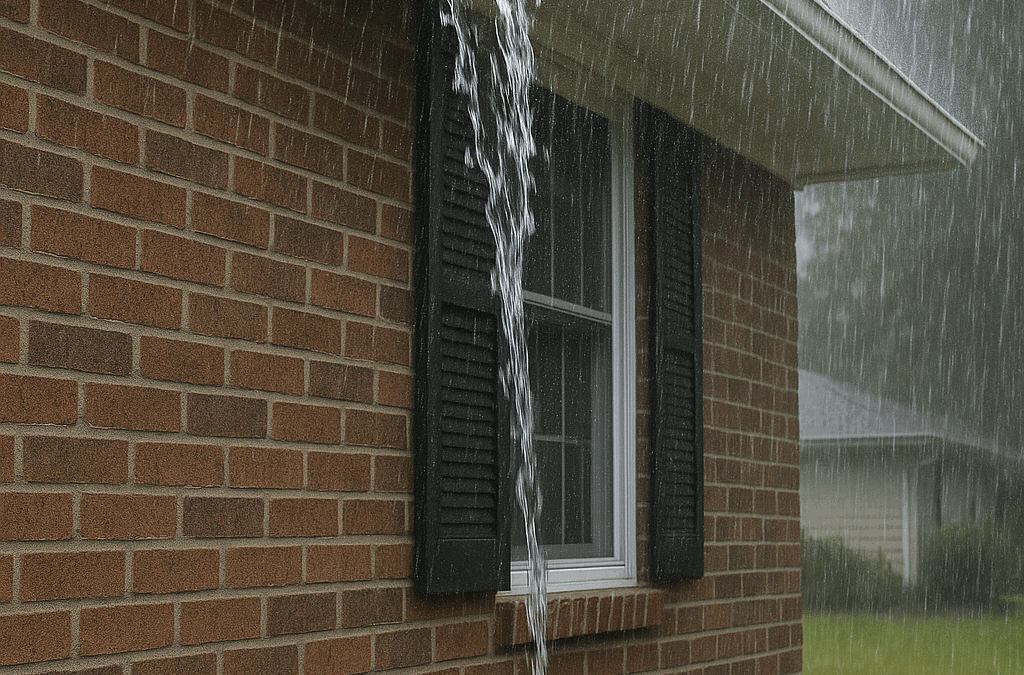
A damp gutter on a fall morning may raise an immediate question: did water leak from the system, or did moisture form on the outside? Both are possible. Tennessee humidity can produce dew on cool metal, while rainwater can escape at a joint, cross the gutter edge, or travel behind the channel.
The difference usually becomes clearer when the wet area is compared with the weather, time of day, and nearby surfaces.
The Connection Between Dew Point and Metal Gutters
Water vapor remains invisible in the air until conditions allow it to condense. When a gutter cools to the dew point, vapor can become liquid droplets on its surface. Metal changes temperature relatively quickly, so it may be wet while the air itself feels merely cool.
Clear, calm nights often allow exposed roofline surfaces to lose heat. Nashville humidity and Knoxville’s varied elevation and sheltered terrain can create different dew patterns, even within the same broader weather system. Conditions also vary from one side of a house to another.
Dew is an atmospheric event, not water leaking through the gutter wall. Its presence does not confirm anything about the channel’s interior condition.
What Condensation Often Looks Like
Morning condensation commonly appears as fine beads or a uniform damp film. It may extend along several feet of gutter and continue onto a downspout. Cars, patio furniture, grass, or other exposed objects nearby may also be wet.
Sun exposure helps explain uneven drying. An east-facing run may dry shortly after sunrise while a shaded north-facing section stays damp. This difference can make condensation look localized later in the morning even if it began across a larger area.
Moisture that forms without overnight rain and fades as the surface warms is consistent with dew. It should still be treated as an observation rather than a conclusive diagnosis.
Signs More Closely Associated With Flowing Rainwater
Rain-related moisture usually has a source and route. A drip may start at a corner, end cap, outlet, or downspout connection. It may appear only once the rain becomes heavy enough or continue for a short period after the roof stops shedding water.
The shape of the wet area can be useful. A narrow trail below one joint differs from evenly distributed beads. Water behind the gutter, on the fascia, or along the soffit also follows a different path from condensation on an exposed front face.
Old marks do not necessarily show current activity. Surface dirt can collect along previous water paths, and weathering can leave discoloration that remains visible on dry days.
When Overflow Creates a False Leak Impression
Overflow can wrap around the gutter’s front edge and drip from the bottom. From the yard, that may look as though water is passing through the channel. Debris, a downspout restriction, concentrated runoff below a valley, and rainfall intensity can all influence the pattern.
Nashville and Knoxville storms may change quickly. A system can appear quiet during light rain and show front-edge flow during a downpour. That difference does not identify one cause by itself, but it helps separate constant dripping from a symptom tied to water volume.
Gutter and downspout cleaning addresses accumulated material within the drainage path. It is relevant only when debris or restricted flow is part of the observed condition; it does not prevent outdoor condensation.
Why More Than One Moisture Source May Be Present
A roofline can experience dew and rain-related leakage on different days. It can even begin a day with condensation and encounter rain before the gutter has fully dried. The existing moisture then makes a small water path harder to follow.
Comparisons are more useful than a single inspection. Observe the same location after a clear night, during a dry afternoon, and during rain. If the dampness consistently begins at one connection only when water is flowing, that pattern differs from moisture distributed across multiple cool surfaces.
Observe Without Climbing
Take ground-level photographs at similar angles and times. Zoom in on joints, corners, and outlets, but also include enough of the roofline to compare nearby sections. Note the recent weather and whether other outdoor surfaces carry dew.
During rain, stay under cover and watch where the first drip appears. Look for water crossing the front, running behind the gutter, or emerging below a fitting. If the downspout outlet is visible, note whether discharge changes as the symptom begins.
Wet roofs, sloped ground, and ladders create fall hazards. A gutter should not be used to steady a ladder, and observation near overhead wires should remain at a safe distance.
Use Timing and Pattern Together
For Nashville and Knoxville homeowners, a wet gutter is best understood in context. Broad morning beading after a clear, humid night points toward condensation. A repeated rain-only drip at one connection points toward a water-flow issue. Overflow and wind-driven rain can produce additional patterns.
No single droplet identifies the source. Tracking when moisture appears, how it is distributed, and what happens as conditions change provides a clearer distinction between fall dew and gutter leakage.