
Tennessee fall weather often combines warm sunshine, cool evenings, passing cold fronts, and rapid shifts between dry and rainy conditions. Aluminum gutters respond to those temperature changes by expanding slightly when warm and contracting when cool.
The movement is a normal property of metal. It becomes relevant when homeowners are evaluating seasonal sounds, sealed joints, long gutter runs, or support points that already show wear. Nashville and Knoxville homes may experience the same process in different daily patterns because sun exposure, elevation, shade, and roof design vary.
Small Changes Add Up Across a Long Gutter
The dimensional change in a short piece of aluminum is difficult to notice. Across a long run, however, the combined movement is greater.
Seamless gutters reduce the number of joints along straight roof edges, but they still have end caps, miters, outlets, and downspout connections. Those transition points need to remain aligned while the metal responds to temperature.
Movement does not automatically create a gap or leak. It may reveal an existing weak point where sealant has aged, a fastener is loose, or the supporting fascia is no longer stable.
Nashville and Knoxville Have Different Exposure Patterns
Both cities experience four-season temperature changes, but individual properties matter more than a citywide average. A Nashville gutter facing an open western sky may receive strong afternoon sun. A Knoxville home near wooded slopes may have long shaded runs and cooler evening conditions.
South- and west-facing roof edges often heat differently from north-facing or tree-covered areas. One elevation may therefore produce occasional metal sounds while another remains quiet.
This variation is normal. It becomes informative when the same location also shows leakage, movement, or a changing drainage pattern.
Sealant Must Flex at Connection Points
Corners, end caps, and outlets often depend on sealant to remain watertight. The sealant and the aluminum do not age in exactly the same way.
Flexible material may accommodate ordinary movement. Older sealant can become brittle, lose adhesion, or separate at an edge. A tiny gap may be visible only after repeated warm-and-cool cycles.
Rain intensity and debris also affect whether that gap leaks. A joint may remain above the water line in a light rain but become submerged when an outlet is partially restricted.
Fasteners Hold the System in Position
Hangers and screws support the gutter while allowing the channel to maintain its intended route toward downspouts. When these attachment points are secure, ordinary temperature movement may occur without a visible change in alignment.
A loose hanger can create a different situation. The gutter may shift, sag, or pull slightly away from the fascia. Wet fall debris then adds weight at the same weakened point.
The metal’s movement is only one contributor. Support spacing, fascia condition, channel load, and existing distortion all influence the outcome.
Why Gutters Sometimes Pop or Tick
Aluminum can make short sounds as it warms in the sun or cools after sunset. Downspouts, trim metal, and other exterior components can produce similar noises.
A single tick during a temperature change is different from a repeated rattle caused by wind. It is also different from a hollow knock created by water striking a downspout elbow.
Timing helps. Homeowners can note whether the sound occurs on dry evenings, during gusts, or only while rain is moving through the system.
Dark Finishes and Direct Sun Increase Surface Heating
Color and exposure influence how warm a gutter surface becomes. Darker finishes and direct afternoon sun may produce a larger surface-temperature change than shade and a light finish.
Roofing material and overhang depth can also affect how much sun reaches the gutter. A long porch eave may remain shaded while a nearby garage run heats fully.
These differences explain why thermal sounds or sealant stress may be localized. They do not establish that a particular color or orientation will cause a problem.
Autumn Debris Changes the Conditions Inside the Channel
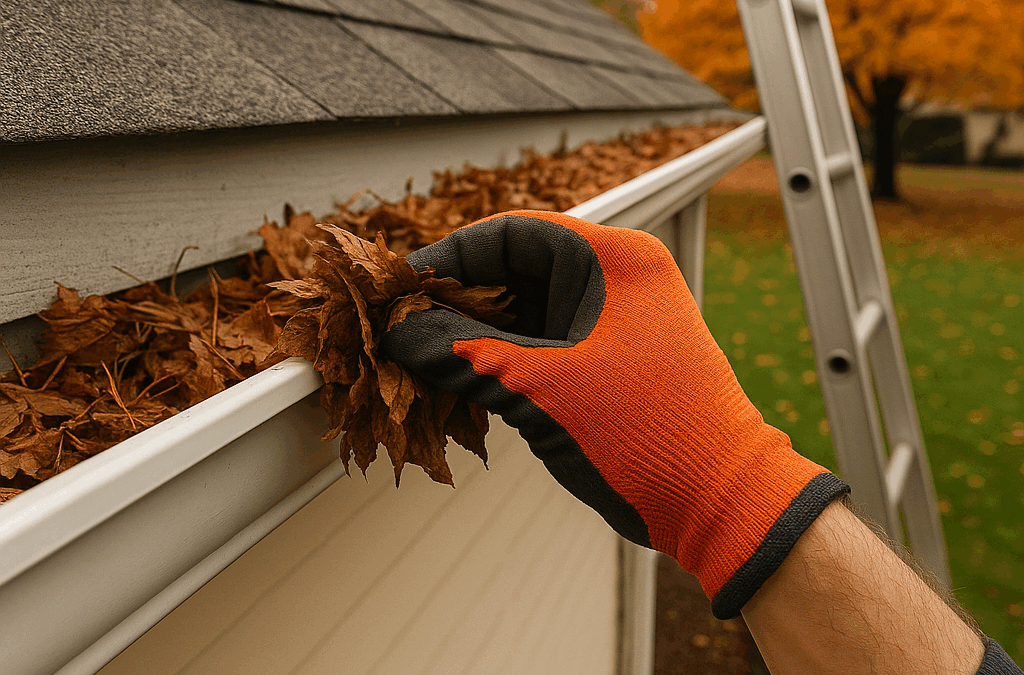
Leaves, pine needles, seed pods, and sediment often collect while daily temperatures are becoming more variable. This material can retain moisture, cover joints, and add weight.
Debris near an outlet may raise the water level during rain, allowing water to contact seals that normally remain above the flow. A sagging section may also hold water as the temperature drops overnight.
Gutter and downspout cleaning addresses this debris-related part of the picture. It does not change the thermal properties of aluminum, but a clear channel makes drainage behavior easier to observe.
Freeze-Thaw Conditions Add Water Expansion
Later in the season, retained water may freeze during cold nights. Aluminum contraction and water freezing are separate processes, although they can occur at the same time.
Ice occupies more space than liquid water and may add weight within a low or obstructed section. A clear, properly draining path reduces the amount of water available to remain, but no outdoor gutter can be assumed to stay completely dry in all weather.
Ground-Level Signs Worth Recording
Nashville and Knoxville homeowners can watch for:
- Repeated dripping at the same corner or end cap
- A visible split or gap in old sealant
- A gutter section moving away from the fascia
- A new low point that holds water
- Dry-weather ticking during rapid cooling
- Wind-related movement at a strap or downspout joint
- Stains beneath a connection that appear after multiple rains
Photos taken from a safe location can help compare the condition over time. Ladders and wet roofs add unnecessary risk during active weather.
Separating Ordinary Movement From a Recurring Pattern
Aluminum’s response to temperature is expected. Long gutter runs, corners, outlets, and hangers are arranged to function while the material moves slightly.
A brief sound without leakage may reflect normal adjustment. Recurring drips, visible gaps, sagging, or separation offer stronger evidence that another condition is present.
By considering temperature, sun exposure, debris, and support together, Nashville and Knoxville homeowners can interpret fall gutter changes without assuming that every seasonal sound means the system has failed.