
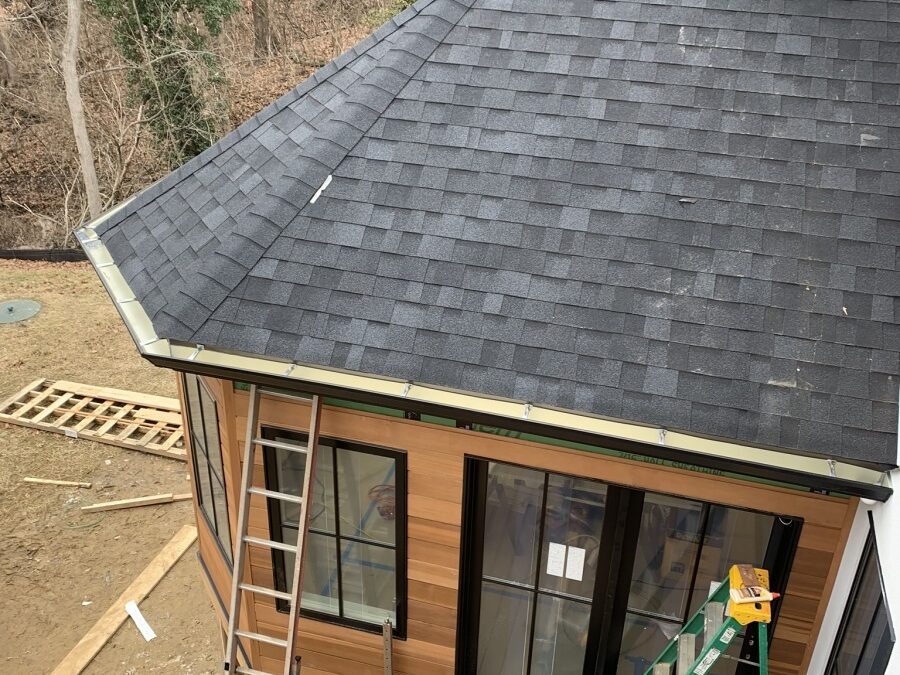
Homeowners throughout Nashville and Knoxville evaluating gutter options encounter seamless gutters as the predominant recommendation for new installations and replacements, yet many don’t fully understand what distinguishes seamless systems from traditional sectional gutters or why this difference significantly impacts performance and longevity. For properties in Middle Tennessee, where spring storms deliver intense rainfall and seasonal weather creates demanding conditions for drainage systems, understanding seamless gutter technology, construction methods, and performance advantages provides the foundation for informed decisions about home protection investments. Big Orange Gutters, serving both Nashville and Knoxville, TN, presents this detailed educational resource explaining what seamless gutters are, how they’re manufactured, why they outperform sectional alternatives, and what homeowners should understand about this proven gutter technology.
Understanding Seamless Gutter Construction
Seamless gutters, also known as continuous gutters, are formed from a single piece of material custom-fabricated to the precise length required for each individual run along a home’s roofline. Unlike traditional sectional gutters that consist of pre-cut segments joined together with connectors and sealed with caulk, seamless gutters have no joints or seams along their horizontal runs—seams exist only at corners and downspout outlets where they’re structurally unavoidable.
The fabrication process uses specialized gutter-forming machines that shape continuous gutter profiles from coiled metal stock. These machines—typically portable units brought directly to job sites—feed aluminum, copper, or steel coil through a series of progressive rollers that gradually bend and form the flat material into familiar K-style or half-round gutter profiles. Because fabrication occurs on-site using exact measurements from the specific home, each gutter section can be as long as needed for a particular roof edge, with installations frequently featuring single continuous runs exceeding fifty, seventy, or even one hundred feet without a seam.
Material options for seamless gutters mirror those available for sectional systems—predominantly aluminum in various thicknesses (.027, .032, or heavy-duty .040 gauge), with copper and steel as premium alternatives for specific applications. The critical difference lies not in material composition but in how the gutter is formed and installed, creating fundamentally different performance characteristics that affect leak resistance, structural integrity, and maintenance requirements.
Traditional sectional gutters, by contrast, are manufactured in standard lengths at factories, transported to distribution centers, and then cut and assembled on-site by installers who join sections using slip connectors, union joints, or overlapping seams sealed with gutter caulk or sealant. Every connection point represents a potential weakness where leaks can develop as sealants degrade from UV exposure, temperature cycling, and continuous water contact—a vulnerability seamless systems largely eliminate.
Middle Tennessee Climate Factors Favoring Seamless Construction
Nashville and Knoxville’s weather patterns create conditions where seamless gutters’ advantages become particularly pronounced. Both cities receive substantial annual precipitation—Nashville averaging nearly fifty inches and Knoxville slightly more—with spring and summer thunderstorms capable of producing rainfall rates exceeding two to three inches per hour during peak intensity. These high-volume rain events subject gutter systems to maximum stress, and any weak points—particularly the numerous seams in sectional gutters—face tremendous water pressure and flow rates that exploit even minor sealant deterioration.
Regional humidity and temperature extremes accelerate sealant breakdown in sectional systems. The caulks and sealants joining sectional gutter pieces are organic compounds that degrade over time from UV radiation exposure, thermal cycling between cold winter nights and hot summer days, and constant moisture contact. In Middle Tennessee’s climate, sealants that might provide fifteen-year service life in arid regions may begin failing within five to eight years, creating leak points that compromise system effectiveness and require ongoing maintenance.
Summer heat regularly pushes temperatures into the nineties, with direct sun exposure causing metal gutters to reach even higher surface temperatures. This heating causes material expansion, followed by contraction during cooler nighttime or winter conditions. Sectional gutters experience stress at each seam as materials expand and contract, gradually working joints loose and degrading sealant bonds. Seamless gutters eliminate most of these stress concentration points by having no mid-run seams to separate or leak.
Severe weather common to the region—including high winds from thunderstorms, occasional hail, and rare tornado activity—creates forces that can pull poorly sealed sectional gutters apart at seam locations. Wind-driven rain also tends to find and infiltrate any gaps or imperfections in sectional gutter seams, forcing water behind the system where it damages fascia boards and roof edge components. Seamless systems’ continuous construction provides superior resistance to both wind forces and water penetration.
The area’s freeze-thaw cycles during winter months stress gutter seams as water that has seeped into joints freezes, expands, and progressively widens gaps. This freeze-expansion cycle can quickly transform minor seam imperfections into significant leaks, a problem largely avoided with seamless construction that has minimal seam locations.
Primary Advantages of Seamless Gutter Systems
Seamless gutters deliver multiple performance and practical benefits that establish them as the preferred choice for most residential applications, particularly in demanding climates like Middle Tennessee.
Dramatically Reduced Leak Potential
The most significant advantage seamless gutters offer is substantially reduced leak risk. By eliminating mid-run seams that require sealant, seamless construction removes the most common failure points in residential gutter systems. While corners and downspout outlets still require proper sealing, reducing total potential leak locations from dozens in a typical sectional system to perhaps four to eight in a seamless system dramatically improves long-term reliability. For Nashville and Knoxville homes where effective water management protects foundations, prevents basement moisture, and preserves landscaping, this leak resistance provides critical performance value.
Superior Structural Integrity
Seamless gutters offer enhanced structural strength compared to sectional alternatives. Continuous material without interruptions distributes stress more uniformly along the gutter length and eliminates weak points where sections connect. This structural advantage proves particularly important during heavy rainfall when gutters carry maximum water weight, and during occasional ice events when frozen accumulation can load systems beyond normal capacity.
Enhanced Visual Appeal
From an aesthetic perspective, seamless gutters provide cleaner, more refined appearance than sectional systems. The absence of visible seams, connectors, and caulk lines creates uninterrupted flowing lines that complement architectural elements rather than introducing visual clutter. For homeowners prioritizing curb appeal and exterior appearance, seamless gutters deliver distinctly more polished aesthetics that enhance property presentation.
Lower Maintenance Demands
Ongoing maintenance requirements decrease with seamless gutters because there are no mid-run seams to inspect, monitor, or periodically recaulk. While seamless gutters still require regular cleaning to remove leaves and debris—particularly important in tree-rich Nashville and Knoxville neighborhoods—the reduced number of potential failure points means less inspection frequency and preventative maintenance compared to sectional systems that may need periodic seam resealing.
Custom Fit to Specific Dimensions
Because seamless gutters are fabricated on-site to exact measurements for each home, they provide perfect dimensional fit without requiring field modifications, cuts, or additional joints to accommodate actual roof measurements. This custom fabrication ensures optimal performance and appearance while eliminating the compromises sometimes necessary when adapting standard-length sectional gutters to real-world building dimensions that rarely align perfectly with ten or twenty-foot increments.
Extended Service Life
Elimination of seam-related failure points typically translates to longer overall system lifespan. While gutter materials themselves have similar longevity whether formed as seamless or sectional products, seamless construction prevents the premature system failures common in sectional gutters when seams begin leaking after years of sealant degradation. Many properly installed and maintained seamless gutter systems provide twenty-five to thirty-five years of reliable service, compared to sectional systems that often require significant repairs or replacement within fifteen to twenty years.
Material Choices for Seamless Gutters
Seamless gutters are available in several material options, each offering distinct performance characteristics and aesthetic qualities.
Aluminum Seamless Gutters
Aluminum dominates seamless gutter installations, offering excellent balance of performance, affordability, and longevity. The material resists rust completely, maintains relatively light weight that minimizes stress on fascia mounting points, and is available in numerous factory-applied colors with durable finishes that resist fading and chalking. Different aluminum gauges provide options ranging from economy . 027-inch thickness to premium heavy-duty .040-inch that offers enhanced dent resistance and structural strength. For most Middle Tennessee applications, .032-gauge aluminum delivers optimal performance-to-cost balance with adequate strength and durability.
Copper Seamless Gutters
Copper seamless gutters represent the premium choice, delivering exceptional aesthetics and outstanding longevity often exceeding fifty years. The material develops a distinctive patina over time—ranging from rich brown to blue-green verdigris—that many homeowners find attractive, and copper’s natural antimicrobial properties inhibit biological growth. Primary considerations include significantly higher material cost compared to aluminum and the requirement for specialized installation techniques to prevent galvanic corrosion when copper contacts dissimilar metals.
Steel Seamless Gutters
Galvanized or galvalume steel seamless gutters offer maximum strength and impact resistance, making them suitable for locations subject to falling branches, severe hail, or other physical hazards. Steel is considerably heavier than aluminum, requiring robust fascia attachment and support, and will eventually corrode if protective coatings are compromised by scratches or abrasion. Steel gutters are less common than aluminum but may be preferred for specific high-durability applications.
Installation Process and Requirements
Proper seamless gutter installation involves specialized equipment and expertise that distinguish it from sectional gutter installation.
On-Site Custom Fabrication
Seamless gutter installation requires bringing gutter-forming equipment to the property, necessitating accessible work areas around the building perimeter. Machine operators measure each gutter run precisely, then feed the calculated length of coil material through the forming machine to create custom-length gutter sections. This on-site fabrication means installation cannot proceed during inclement weather and requires adequate clearance and level surfaces for equipment operation.
Precise Measurement and Planning
Accurate measurement is absolutely critical since each gutter section is custom-formed to specific dimensions without the adjustment flexibility inherent in sectional systems. Experienced installers carefully measure each run, accounting for fascia irregularities, calculating proper slopes for drainage, and determining optimal positioning relative to roof drip edges. Measurement errors that might be easily accommodated in sectional installations—where an extra connector provides adjustment capability—become problematic with seamless systems where each piece is cut-once, custom-length.
Professional Installation Requirement
While motivated homeowners with basic carpentry skills can install sectional gutters using readily available tools, seamless gutter installation requires professional-grade equipment and trained expertise. Gutter-forming machines represent significant capital investments typically owned only by professional installers, and proper machine operation requires training and experience. Additionally, safely handling long continuous gutter sections without damaging them demands multiple workers and proper techniques—forty or fifty-foot gutter sections are unwieldy and easily damaged during installation without proper handling.
Slope and Mounting Standards
Like all gutter systems, seamless gutters require appropriate slope toward downspouts—typically one-quarter inch vertical drop per ten feet of horizontal run—to ensure complete water drainage without standing water that promotes corrosion and biological growth. Mounting hangers or brackets must be spaced according to manufacturer specifications (typically every sixteen to twenty-four inches) and securely fastened to sound fascia boards to support gutter weight plus anticipated water and debris loads.
Considerations and Limitations
While seamless gutters offer numerous advantages, homeowners should understand certain limitations and practical considerations.
Higher Initial Investment
Seamless gutter installation typically costs more initially than comparable sectional gutter systems due to specialized equipment requirements, mandatory professional installation, and custom on-site fabrication. However, this higher upfront investment is frequently offset over time by reduced maintenance expenses, fewer repairs, and extended service life that delays eventual replacement.
Repair Complexity
If a section of seamless gutter sustains damage—from falling tree limbs, ladder impacts, vehicle collisions, or severe hail—repair can be more involved than with sectional systems. Depending on damage location and severity, entire continuous runs may require replacement rather than the simple section swaps possible with sectional gutters. This consideration is generally minor given seamless gutters’ overall durability, but represents a practical difference from sectional systems.
No DIY Installation Option
Homeowners comfortable with do-it-yourself projects cannot self-install seamless gutters as they might with sectional systems purchased from home improvement centers. The specialized equipment requirement makes professional installation essentially mandatory, eliminating the cost-saving option of self-installation available with sectional gutters for budget-conscious homeowners willing to invest their labor.
Seamless vs. Sectional: Making Informed Decisions
For most Nashville and Knoxville homeowners, seamless gutters represent the superior long-term choice when budget parameters allow, particularly considering the region’s substantial rainfall, seasonal weather challenges, and the critical importance of effective water management for foundation protection and basement moisture prevention. The elimination of mid-run seams directly addresses the primary failure mode affecting gutter systems, and the aesthetic improvements enhance home appearance and resale value.
Sectional gutters remain viable for extremely limited budgets, temporary structures, or situations where homeowners specifically prioritize DIY installation capability over long-term performance optimization. However, the moderate additional investment in seamless systems typically proves worthwhile when evaluated over the system’s extended service life and substantially reduced ongoing maintenance requirements.
Conclusion
Seamless gutters represent a significant technological advancement in residential water management that addresses the fundamental weaknesses of traditional sectional systems through continuous construction eliminating vulnerable mid-run seams. Big Orange Gutters, serving both Nashville and Knoxville, TN, encourages homeowners to understand the essential differences between seamless and sectional gutter construction, recognize how Middle Tennessee’s climate of substantial precipitation and seasonal weather extremes amplifies the practical advantages of seamless systems, and appreciate the long-term value these systems deliver through superior leak resistance, reduced maintenance demands, and extended service life. When planning gutter installation or replacement projects, choosing seamless construction offers proven performance benefits that protect homes more effectively while minimizing ongoing maintenance burdens—making seamless gutters a sound investment for Nashville and Knoxville properties. This educational overview is provided to support informed homeowner decision-making without implying specific service commitments.