
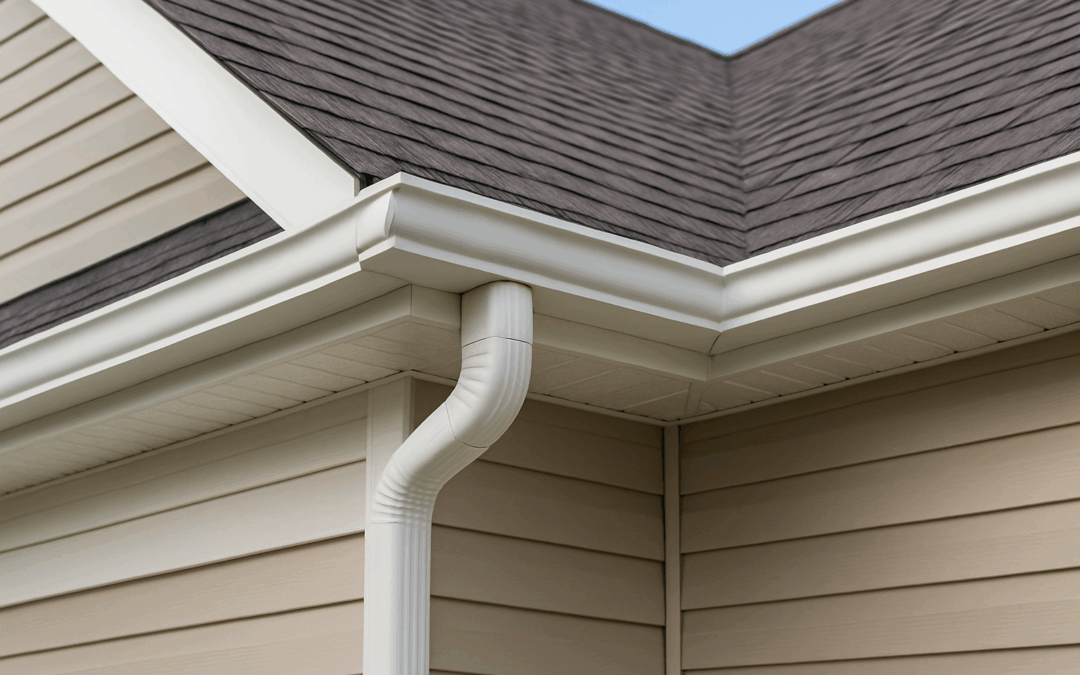
Rain does not reach every gutter at the same speed or in the same pattern. The slope and layout of a roof affect how runoff travels, while valleys, dormers, and adjoining roof sections determine where water becomes concentrated.
For Nashville and Knoxville homeowners, these details can explain why one stretch of gutter overflows during a downpour even though the rest of the system appears to be draining. Roof pitch is not the only factor, but it is an important part of the full water path.
What Roof Pitch Means
Roof pitch describes the steepness of a roof plane. It is typically represented by how much the surface rises across a set horizontal distance.
A steep plane gives water a more direct downhill route. A shallow plane spreads that route over a longer surface. Roof covering, wind, rainfall rate, and surface condition influence the actual speed, so pitch should not be considered by itself.
The gutter must receive whatever the roof delivers. Both the total drainage area and the rate of arrival affect what happens at the eave.
Steeper Slopes May Shed Water Quickly
Once a steep roof is wet, storm runoff can move rapidly toward the edge. During a Tennessee downpour, a concentrated sheet of water may approach the gutter with enough momentum to strike near the front of the channel.
Whether the gutter catches that flow depends partly on its position relative to the roof edge. A channel that is offset from the runoff path may perform differently in heavy rain than it does in a drizzle.
Wind-driven rain can change the trajectory, and debris can alter where the water enters. Overflow during one storm is therefore an observation to document rather than proof of one specific condition.
Shallow Roofs Still Produce Significant Runoff
A low-slope section can cover a large area. Even if water travels more slowly, the volume reaching the eave may still be substantial.
Minor surface variations may have a greater influence on a shallow path. Debris, seams, transitions, and low areas can guide water toward selected points. A broad porch or addition may feed a short gutter run that has different drainage demands than the main roof.
Because low slopes can look easy to access, homeowners may underestimate their risk. Wet roofing remains slippery, and roof-edge inspection is better approached from a safe location.
Valleys Combine Runoff From Multiple Planes
A roof valley is a channel formed where two sloped surfaces meet. It collects water from both sides and directs it toward a narrow point at the eave.
This geometry often explains why splashing is localized. The gutter below the valley receives more water at once than sections serving a single roof plane. A leaf mat or small restriction at that point can further reduce the available opening.
Valley behavior can be important on both Nashville and Knoxville homes. The surrounding terrain differs between the two markets, but the roof geometry works the same way: converging planes create concentrated flow.
Upper and Lower Roofs Create Layered Runoff
Some homes have an upper roof that drains onto a lower section. Water then crosses two surfaces before reaching the final gutter.
The lower roof receives its own rainfall plus the discharge from above. If that added flow enters near a valley or short gutter run, the demand becomes concentrated again.
Dormers, garages, porches, and additions can create similar arrangements. Rather than evaluating only the gutter’s length, it is useful to consider every roof surface feeding that length.
Nashville and Knoxville Rooflines Vary
Middle Tennessee homes may include broad suburban roof planes, historic designs, and complex modern layouts. East Tennessee properties may combine varied architecture with steeper sites and wooded surroundings.
The lot slope affects water after it leaves the downspout, but roof pitch controls the earlier stage above the eave. Keeping those stages separate makes drainage observations more precise.
Local tree cover adds another variable. Needles, leaves, and twigs often collect where roof planes intersect, so the point carrying the most runoff may also be the point most likely to catch debris.
Roof Surface and Edge Details Matter
Asphalt shingles, metal roofing, and other coverings have different textures. Water can travel as a thin film, individual streams, or a broader sheet depending on the surface and rainfall.
At the eave, drip edge or gutter apron helps define how water leaves the roof boundary. The gutter’s height and distance from that edge influence whether it intercepts the runoff.
These factors interact. A steep roof does not by itself explain every overshoot, just as a clean gutter does not confirm that all incoming water follows the intended path.
Do Not Confuse Roof Pitch With Gutter Slope
Roof pitch moves water toward the eave. Gutter slope moves water along the eave toward a downspout.
If the roof delivers a fast stream below a valley, the gutter still needs an open route to the outlet. Sediment, debris, a low section, or a restricted downspout can slow that horizontal movement.
Homeowners may therefore see overflow where incoming runoff is concentrated even though the underlying restriction is farther along the gutter run.
Safe Storm Observations
From the ground or a sheltered window, homeowners can record:
- The rainfall intensity when overflow begins
- Whether the spill occurs below a valley
- Whether water overshoots the outer edge
- Whether it travels behind the gutter
- Whether an upper roof drains onto the same area
- Whether the nearest downspout flows steadily
- Whether visible debris sits at the entry point
Photos or video can preserve the sequence. Climbing during rain introduces risk without being necessary for this first evaluation.
Why the Pattern May Change Between Storms
A gentle all-day rain and a brief thunderstorm can produce similar totals but very different flow rates. Wind direction, dry debris, and changing leaf cover can also alter the route from one event to the next.
Repeated behavior in the same location is more informative than an isolated splash. Homeowners can compare light and heavy events to see whether the system changes only when runoff arrives rapidly.
Seeing the Complete Drainage Route
Roof pitch helps determine how water approaches the eave. Valleys and multi-level roofs concentrate that flow, while surface material and edge details influence its final direction. Gutter slope and downspouts then carry the water away from the roofline.
By examining those stages together, Nashville and Knoxville homeowners can better describe why one section faces more runoff than another. That perspective supports a more accurate understanding of gutter performance during Tennessee’s varied rainfall.