
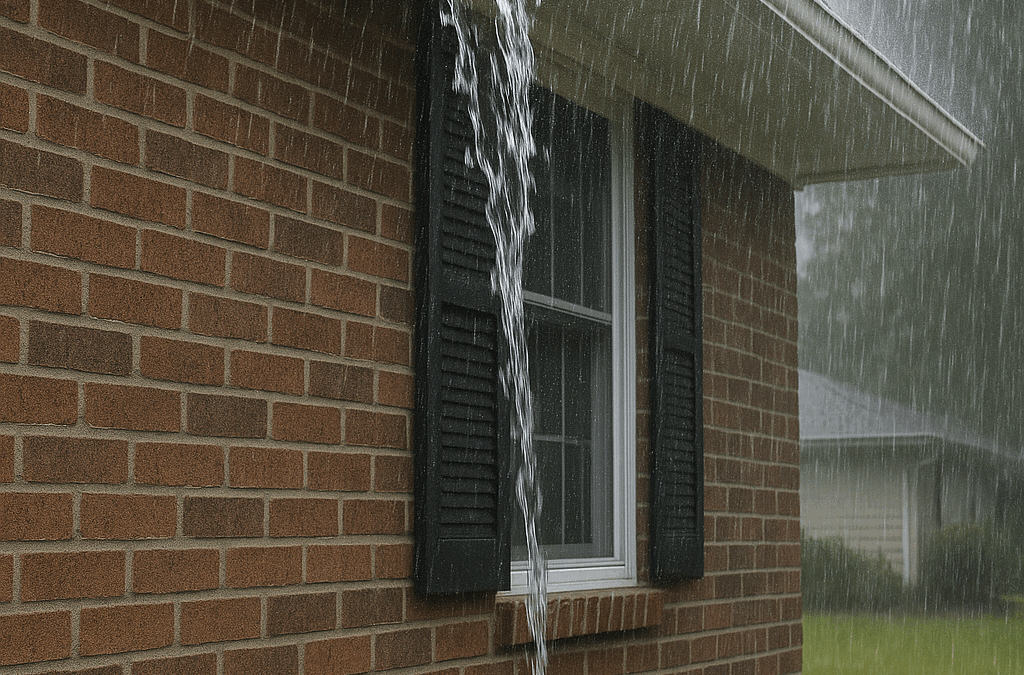
When rainwater slips between a gutter and the fascia, the gutter system is not receiving all of the runoff leaving the roof. Homeowners may notice a steady drip behind the channel, dark streaks on the wood or trim, or water reaching the soffit and siding below. The symptom is easy to see during a Tennessee downpour, but the underlying reason may involve several components at once.
The gutter, roof-edge flashing, fascia, and downspouts function as a connected drainage path. A problem at any transition point can change where water travels. That is why water behind a gutter should not automatically be treated as proof that the entire gutter system needs replacement.
What Is Supposed to Happen at the Eave?
Rain travels down the roof covering toward the eave. At that edge, metal flashing called drip edge is intended to help direct water away from vulnerable roof materials. A gutter apron may also be used to help carry runoff across the roof-to-gutter transition. Water should then enter the gutter, move along its slight pitch, and leave through a downspout.
This path sounds simple, but the tolerances at the roof edge matter. If runoff can cling to the underside of an edge, cross a gap, or pass behind the gutter, it may reach the fascia instead of the channel. The correct relationship depends on the home’s roof construction and existing components, so a solution should be based on the actual water path rather than the appearance of one part alone.
Five Conditions That Can Send Water Behind a Gutter
A gap at the roof-to-gutter transition
If flashing does not carry water far enough toward the gutter, runoff may drop into the space behind it. The gap may be narrow and difficult to see in dry weather. During rain, however, water tracing the face of the fascia can reveal the location.
A gutter that has moved out of position
Gutter hangers and fasteners help the channel remain aligned with the roof edge. A section that has pulled away or dropped lower than intended may no longer catch the same amount of runoff. From the yard, compare the problem area with the rest of the run and look for a changing gap or uneven line.
Restricted flow inside the gutter or downspout
Tennessee trees can contribute leaves, needles, seed material, twigs, and other debris. When that material limits the space available for water, the gutter may fill during a storm. Water can then escape over either edge or around an outlet, sometimes making a clog look like a drip-edge problem.
An uneven pitch or low spot
A gutter normally needs a subtle slope toward its downspouts. A low area can retain water and receive more volume than the surrounding channel. During a fast-moving storm, that concentration may lead to localized overflow. Standing water that remains well after rainfall can be another indication of a low spot or drainage restriction.
Deteriorated fascia behind the gutter
Many residential gutters are secured to wooden fascia. If the wood has been exposed to recurring moisture, it may show staining, peeling paint, softness, or decay. Fasteners seated in weakened wood may loosen, which can allow the gutter to move farther from the roof edge.
The original moisture source still matters. Fascia deterioration may be an effect of water running behind the gutter, a contributor to changing gutter alignment, or both.
Is It Overflow or Water Behind the Gutter?
These two symptoms are easy to confuse, particularly when rainfall is heavy.
Overflow usually means the water level has risen above the edge of the channel. It may appear as a broad sheet over the front, a concentrated spill at a corner, or water pouring near a clogged downspout opening. Water traveling behind the gutter more often appears between the back of the channel and the fascia.
Homeowners in Nashville and Knoxville can gather useful information by watching from a safe location during rain:
- Does the dripping begin before the gutter looks full?
- Is the water concentrated along one short section or the entire run?
- Does water appear to be moving through the nearest downspout?
- Is there a visible gap between the gutter and roofline?
- Are stains present on the fascia when the weather is dry?
Avoid climbing a ladder during rain. A ground-level observation or a photo taken from a safe location may be enough to document when and where the symptom occurs.
What the Visible Pattern May Suggest
Different patterns can point toward different parts of the drainage system, although they do not establish a diagnosis by themselves.
Water behind a relatively empty gutter: The roof-edge transition, drip edge, gutter apron, or channel position may deserve attention.
Water spilling from multiple edges of a full gutter: Debris, downspout flow, capacity, or pitch may be contributing.
A drip beside a visibly sagging section: Attachment, alignment, and the supporting fascia may all be relevant.
Peeling paint or darkened fascia after repeated storms: The area may have experienced recurring moisture and should not be evaluated only by looking inside the gutter.
Water concentrated below a roof valley: A large amount of runoff may be reaching one short section of gutter. The water path and condition of the receiving area both matter.
Different Conditions Call for Different Responses
Water behind a gutter can involve several conditions, and each one raises a different question. Debris-related overflow points toward cleaning and drainage. A gap at the eave points toward the relationship among the roof edge, drip edge or gutter apron, and gutter position. Damaged mounting wood makes fascia condition relevant.
Broader alignment or condition problems may lead a homeowner to consider the gutter system itself. A single drip should not be used to assume that every component needs work or that complete gutter replacement is necessary.
Why Fascia Wrap Is Not a Substitute for Sound Wood
Fascia wrap is an exterior covering, while fascia repair or replacement addresses the wooden board itself. The distinction is important when gutters are attached at the same roofline.
If the underlying wood is deteriorated, adding a covering does not by itself establish that the mounting surface is sound. Likewise, replacing a gutter without considering the supporting fascia may leave an important part of the assembly unaddressed. The roof-edge components should be considered in the correct order for the specific home.
Frequently Asked Questions
Does water behind a gutter always mean the drip edge is missing?
No. Missing, damaged, or poorly positioned flashing may be one possibility, but gutter alignment, debris, downspout restrictions, low spots, roof-edge geometry, and fascia condition can create similar symptoms.
Could cleaning solve the problem?
Cleaning may help when debris is causing the gutter to fill and overflow. It would not necessarily change a gap at the roof edge or strengthen deteriorated fascia. Observing whether the gutter is full during the leak can help separate these possibilities.
Is a small amount of water behind the gutter harmless?
The amount visible during one storm does not show how long the condition has been present or where the moisture is traveling. Recurring stains, peeling paint, soft wood, and a changing gutter position are reasons to give the area closer attention.
Do seamless gutters eliminate every roof-edge leak?
Seamless construction reduces the number of joints along straight gutter runs, but water can still miss a gutter if the roof-edge transition, position, drainage, or supporting materials are not functioning as intended.
Follow the Complete Drainage Path
Whether the home is in Nashville, Knoxville, or a surrounding Tennessee community, water behind the gutter is a reason to look beyond the channel itself. Roof-edge flashing, gutter position, fascia condition, debris, pitch, and downspout flow all influence where runoff goes during a storm.