
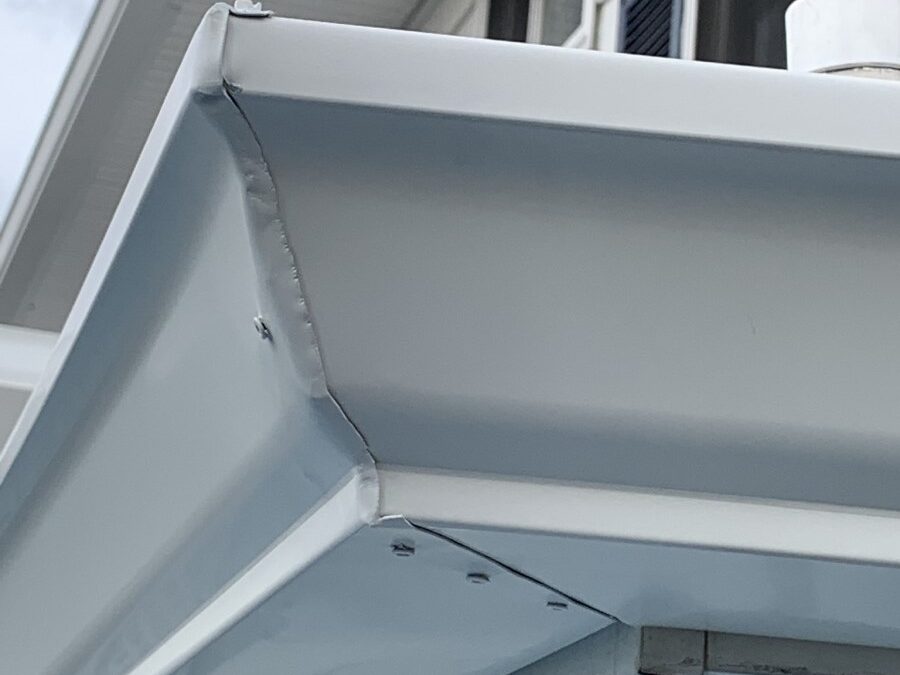
Gutter size is one of the most functionally significant decisions in any gutter installation project, and one of the least discussed in the conversations most homeowners have about their gutter systems. Material selection, color matching, and style preference tend to dominate gutter decision-making, while the dimensional sizing of the channel — the factor that most directly determines whether the gutter system can actually handle the rainfall demands placed on it — receives comparatively little deliberate attention. For homeowners in Nashville and Knoxville, Tennessee, where active convective storm seasons deliver high-intensity rainfall events that place real demands on residential gutter drainage capacity, understanding gutter sizing and the factors that determine it is practical and consequential knowledge. Big Orange Gutters believes that Nashville and Knoxville homeowners benefit from a thorough understanding of how gutter size affects system performance, what factors determine the right size for a specific home, and how Tennessee’s rainfall environment influences sizing decisions across the metropolitan areas of both cities.
What Gutter Size Actually Determines
Gutter size — the dimensional profile of the channel — directly determines the cross-sectional area of the flow path available for water moving through the gutter toward the downspout outlet. This cross-sectional area, combined with the channel’s slope toward the outlet, establishes the maximum flow rate the gutter can carry at any moment without overflowing.
During a rainfall event, water enters the gutter channel from the roof surface at a rate determined by the rainfall intensity and the size of the roof drainage area above. When this inflow rate exceeds the gutter’s maximum flow capacity, water backs up in the channel and overflows — over the front edge, through joint gaps, or around the fascia — defeating the gutter system’s protective purpose at precisely the moment when that protection is most needed.
Appropriate gutter sizing means selecting a channel profile whose drainage capacity matches or exceeds the peak inflow rate that the specific roof drainage area and local rainfall intensity can generate. In Nashville’s and Knoxville’s Tennessee climate — with active convective storm seasons producing rainfall rates that regularly reach one inch per hour or higher during intense events — this capacity matching is a meaningful sizing consideration, not a theoretical exercise.
5-Inch vs. 6-Inch K-Style: The Primary Sizing Decision
The most important gutter sizing decision for most Nashville and Knoxville homeowners is the choice between 5-inch and 6-inch K-style profiles — the two standard sizes that encompass the vast majority of residential gutter installations.
5-Inch K-Style: The 5-inch profile has been the residential standard for decades. For homes with moderate roof drainage areas, relatively low roof pitches, and adequate downspout frequency, 5-inch gutters provide adequate drainage capacity under normal to moderate rainfall conditions. In many Tennessee residential applications — smaller to mid-sized homes with simple rooflines and moderate pitch — 5-inch gutters perform adequately and represent a well-matched size choice.
6-Inch K-Style: The 6-inch profile provides approximately 40 percent more cross-sectional channel area than the 5-inch equivalent — a meaningful capacity increase that translates to higher peak flow handling without overflow. For larger homes, steeper roofs, more complex rooflines with large individual drainage areas, and regions where rainfall intensity regularly produces high peak inflow rates, 6-inch gutters are the appropriate sizing choice. In Tennessee’s convective storm environment, the additional capacity of 6-inch gutters is particularly valuable during the high-intensity events that Nashville’s and Knoxville’s summer seasons deliver.
The trend in residential gutter installation across Tennessee and the broader mid-South has moved meaningfully toward 6-inch profiles over the past decade — a trend that reflects both the growing recognition of high-intensity rainfall demands in the region and the modest cost difference between the two sizes that makes the additional capacity an economically sensible choice for most new installations.
Key Sizing Factors for Nashville and Knoxville Homes
Roof Drainage Area and Pitch
The roof drainage area feeding each gutter section — the sloped surface area of the roof planes above — is the primary determinant of runoff volume per inch of rainfall. Larger drainage areas require greater gutter capacity. Steeper roof pitches increase the actual sloped surface area relative to the plan footprint and accelerate runoff velocity at the gutter, both of which push peak inflow rates higher and favor larger gutter profiles.
Nashville’s residential housing stock includes a wide range of roof configurations — from the relatively low-pitched roofs of ranch-style homes in suburban developments to the steep gable and hip roofs of the craftsman bungalows, colonial revivals, and contemporary custom homes that characterize established Nashville neighborhoods and newer high-end construction. Knoxville’s housing stock reflects the Appalachian region’s architectural traditions — including many homes with moderate to steep gable roofs that create meaningful runoff velocity at the gutters.
For both cities, homes with steep roof pitches are among the strongest candidates for 6-inch gutter profiles, because steep pitch increases both the drainage area and the inflow velocity that the gutter must manage.
Tennessee’s Rainfall Intensity
Tennessee’s rainfall intensity profile is a central factor in gutter sizing decisions across both Nashville and Knoxville. Both cities receive approximately 47 to 50 inches of annual precipitation, with the notable characteristic that a meaningful portion of this total arrives through convective thunderstorm events that deliver high rainfall rates in short periods.
Nashville’s position in Middle Tennessee’s broad basin creates conditions where summer convective storms develop and intensify without the terrain disruption that breaks up storm cells in more topographically varied regions. Peak rainfall rates during Nashville’s summer convective events regularly reach one to two inches per hour, creating high peak inflow demands at residential gutters that favor larger channel profiles.
Knoxville’s Appalachian proximity creates an orographic moisture enhancement that supports active convective storm development and adds to the frequency and persistence of high-intensity precipitation events. The mountains’ influence on moisture loading means Knoxville receives some of its rainfall at sustained high rates that place extended peak demands on gutter drainage capacity — extended high-rate events being particularly demanding on gutter systems because they sustain peak inflow conditions longer than brief convective cells.
Roofline Complexity
Simple rectangular rooflines produce straightforward individual drainage areas that are easily assessed for sizing. Complex rooflines — multiple gables, dormers, valleys, and varying roof levels — create individual drainage areas of varying size and character that should each be evaluated independently. A complex Nashville home with a large primary gable feeding a single gutter run may require 6-inch profile on that run while simpler sections of the same home are adequately served by 5-inch profiles.
Nashville’s architectural diversity — with strong representation of complex rooflines in established neighborhoods and custom construction — and Knoxville’s Appalachian-influenced residential architecture make roofline complexity a relevant sizing factor for a significant portion of the housing stock in both cities.
Downspout Sizing and Placement
Downspout outlet capacity must be matched to the gutter profile serving it. A 6-inch gutter channel paired with undersized or infrequent downspouts cannot drain at the capacity the larger channel provides — the downspout becomes the system’s limiting element. Appropriate sizing considers the complete system: channel size, downspout size, and downspout frequency working together to achieve the drainage capacity that the roof drainage area and rainfall intensity demand.
As a general reference, gutter industry guidance suggests one downspout outlet per 20 to 40 linear feet of gutter run as a baseline, with adjustments for larger drainage areas, steeper pitches, and higher-intensity rainfall regions. For Nashville and Knoxville, where rainfall intensity is meaningful, downspout frequency at the more generous end of this range — and with appropriately sized downspout profiles matched to the gutter size — is the appropriate design direction.
Nashville-Specific Sizing Observations
Nashville’s rapid residential growth has produced a diverse housing stock ranging from modest starter homes to large custom residences, with roofline complexity and roof area varying enormously across the metropolitan area. Several Nashville-specific observations are relevant to sizing discussions:
The large custom homes of Belle Meade, Brentwood, and Franklin — with complex rooflines, steep pitches, and substantial total roof areas — represent the strongest case for consistent 6-inch profile specification throughout. The large drainage areas and high inflow velocities from steep pitches on these homes, combined with Nashville’s convective storm intensity, create peak inflow demands that 5-inch profiles may not manage adequately during the year’s most intense events.
The craftsman bungalows and early twentieth-century homes of East Nashville, Sylvan Park, and the 12 South corridor often have moderate to steep roof pitches with varying roofline complexity that makes section-by-section drainage area assessment the appropriate sizing approach — some sections may warrant 6-inch profiles while others are adequately served by 5-inch.
Knoxville-Specific Sizing Observations
Knoxville’s Valley and Ridge terrain creates a residential context where topographic exposure — the degree to which individual properties are exposed to the orographic precipitation enhancement from the Appalachian terrain — varies somewhat across the metropolitan area. Properties in more exposed positions on Knoxville’s ridges and slopes may experience somewhat higher effective rainfall intensity than valley floor properties, a site-specific consideration that can inform sizing decisions at the more generous end of the capacity range.
Knoxville’s older housing stock — particularly the craftsman and colonial revival homes of established neighborhoods like Fourth and Gill, North Knoxville, and the University of Tennessee surroundings — includes many homes with moderate to steep gable roofs that benefit from careful drainage area assessment and, for larger or steeper sections, 6-inch profile specification.
The Value of Getting Sizing Right
The modest cost difference between 5-inch and 6-inch gutter profiles — the per-foot material cost increment between the two standard sizes — is among the smallest variables in the total cost of a gutter installation project. The consequences of undersizing, by contrast, accumulate over the entire service life of the system: repeated overflow events during Nashville’s and Knoxville’s most intense storms, the fascia moisture exposure those overflow events create, the foundation perimeter moisture deposition, and the compounding damage that follows. Getting sizing right at installation time is the most economical path to adequate drainage performance — far more economical than the combination of undersized performance consequences and eventual replacement with appropriately sized profiles.
Conclusion
Gutter size is a foundational decision in any residential gutter system — the factor that determines whether the system can actually handle the drainage demands that Nashville’s and Knoxville’s Tennessee rainfall environment places on it during the peak intensity events of the convective storm season. The key sizing factors — roof drainage area, roof pitch, local rainfall intensity, roofline complexity, and downspout configuration — interact to establish the peak demand that the selected profile must manage without overflow. Big Orange Gutters recognizes that Nashville and Knoxville homeowners who understand these sizing factors and apply them to their specific homes are better equipped to evaluate gutter sizing decisions, appreciate why appropriate sizing matters in Tennessee’s active storm climate, and ensure that the gutter system on their home is genuinely matched to the drainage demands that the Volunteer State’s weather delivers.