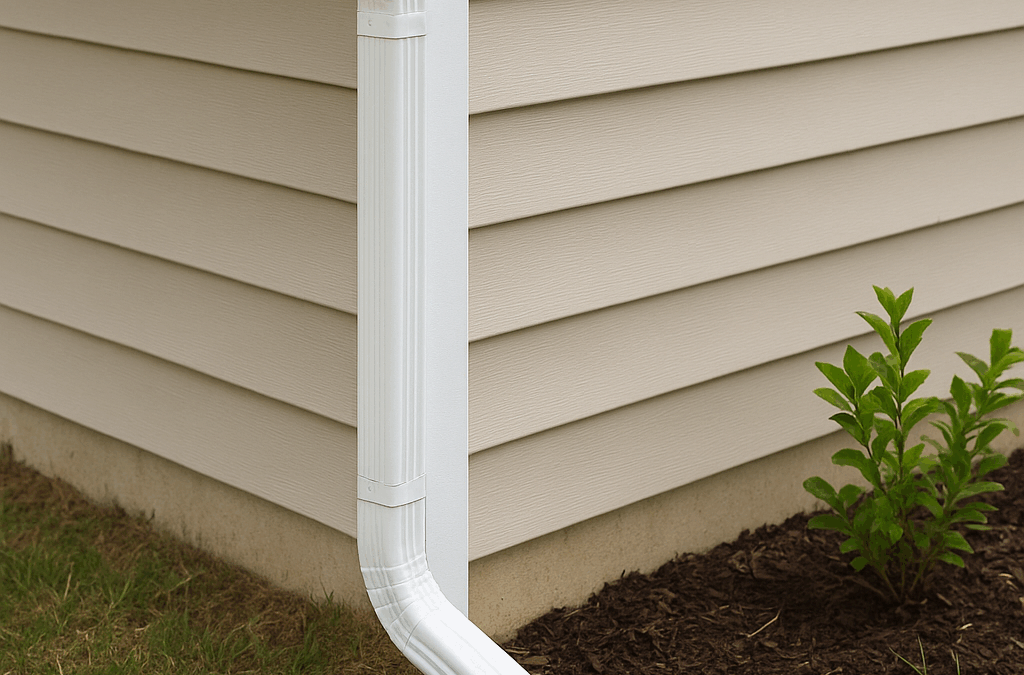
When Nashville and Knoxville homeowners evaluate their gutter systems, attention almost always focuses on the gutters themselves — the channels, the hangers, the joints, the downspouts. The ground-level drainage component — what happens to water after it exits the downspout at grade — receives comparatively little deliberate attention, yet it is the component that ultimately determines whether all of the water management work done at the roof level translates into genuine foundation protection. A gutter system that collects and channels roof runoff perfectly but deposits it directly at the foundation perimeter has completed only half of its intended job. Big Orange Gutters believes that Nashville and Knoxville homeowners benefit from a thorough, practical understanding of downspout extensions, ground-level drainage management, and why proper discharge direction matters enormously in Tennessee’s active rainfall climate and geologically varied residential environment.
The Function of Ground-Level Discharge Management
The purpose of a complete residential gutter system is to intercept roof surface runoff and convey it away from the home — not simply to move it from the roof to the ground adjacent to the foundation. This distinction matters enormously because the foundation perimeter is precisely the location where concentrated water deposition causes the most consequential damage to residential structures.
Nashville and Knoxville both receive approximately 47 to 50 inches of annual precipitation distributed across all seasons, with active spring thunderstorm seasons delivering the year’s most intense single-event rainfall rates. During a significant storm event, a typical Tennessee home’s roof surface generates hundreds of gallons of runoff per inch of rainfall. Without discharge management directing this runoff away from the foundation, every downspout concentrates this volume at the foundation perimeter — in high-velocity streams that erode soil, saturate the ground adjacent to foundation walls, and drive the foundation moisture dynamics that produce the cracking, movement, and water intrusion that Tennessee homeowners encounter in homes with inadequate surface drainage management.
In Nashville’s limestone karst geology and Knoxville’s Valley and Ridge terrain, the specific foundation moisture dynamics driven by ground-level drainage affect homes in site-specific ways that make understanding and managing downspout discharge a practical priority for homeowners across both cities.
Types of Downspout Extensions
Rigid Extensions: Rigid aluminum or vinyl extension sections attach to the downspout elbow at grade and direct discharge horizontally away from the foundation before releasing water at ground level. These extensions are simple, durable, and effective — provided they are long enough to create meaningful separation between discharge and the foundation perimeter on the specific site conditions of each installation. A minimum of four to six feet is a commonly referenced guideline, though site conditions in both Nashville’s and Knoxville’s topographically varied residential landscapes frequently call for longer extensions or alternative discharge management solutions.
Flexible Corrugated Extensions: Corrugated plastic flexible extensions can be routed around landscaping features and directed toward specific discharge targets. Their adaptability to complex site conditions is their primary advantage; their susceptibility to displacement by foot traffic, lawn equipment, and storm events is their primary limitation. Homeowners using flexible extensions should verify their position and direction after lawn maintenance and storm events.
Hinged Flip-Up Extensions: Hinged extensions fold flat during dry conditions and open to discharge position during rainfall, reducing the above-grade obstruction that fixed extensions present during lawn maintenance and dry-season outdoor activity. Their automatic deployment during rainfall makes them lower-maintenance than flexible extensions while providing similar reduction of ground-level obstruction between storms — a practical advantage in Nashville’s and Knoxville’s active outdoor living seasons.
Underground Drainage Systems: Permanently installed underground piping connected to downspout outlets carries discharge water completely below grade to a remote discharge point — a lawn pop-up emitter, a connection to site drainage infrastructure, or discharge at the property perimeter. Underground systems eliminate above-grade extension hardware entirely, providing clean aesthetics while delivering effective long-distance water routing. For Nashville homes in established neighborhoods where landscape aesthetics are a priority, and for Knoxville properties where topographic complexity makes surface extension routing challenging, underground systems offer the most permanent and unobtrusive discharge management solution.
Rain Harvesting Systems: Rain barrels and cisterns connected to downspouts capture discharge for landscape irrigation reuse. While these systems redirect water away from the foundation during the initial filling of their capacity, overflow management — routing barrel overflow to an appropriate discharge location away from the foundation when capacity is exceeded — is essential to ensure that rain harvesting systems do not become foundation moisture contributors during significant storm events that exceed barrel capacity.
Nashville-Specific Ground-Level Drainage Considerations
Nashville’s residential landscape spans a wide range of topographic conditions — from the relatively flat lots of suburban developments in Brentwood, Franklin, and the outer metro to the significantly sloped lots characteristic of Nashville’s inner neighborhoods, hillside communities, and the rolling terrain of Middle Tennessee’s suburban edge. This topographic diversity creates site-specific downspout extension requirements that vary considerably across the metropolitan area.
On Nashville’s sloped lots — particularly those where grade slopes toward the home from the street or adjacent properties — standard short extensions may discharge water at a point where topographic slope carries it back toward the foundation rather than away from it. On these sites, longer extensions that reach truly level or outward-sloping ground, underground systems that carry water past the topographic convergence point near the foundation, or graded drainage swales that intercept and redirect surface flow are more effective solutions than standard short extensions.
Nashville’s limestone karst geology creates an additional consideration for underground drainage systems in certain areas of the metropolitan area. In areas with karst subsurface features, the appropriate design and outlet configuration of underground downspout drainage should account for local drainage characteristics — directing discharge to appropriate surface outlets rather than to locations where water entry into karst features near the foundation could create subsidence or drainage complications.
Knoxville-Specific Ground-Level Drainage Considerations
Knoxville’s position in the Tennessee Valley and Ridge creates a topographic environment where residential lots frequently have meaningful grade changes and where site drainage patterns are influenced by the alternating ridges and valleys that define East Tennessee’s landscape. This topographic complexity makes downspout discharge management a particularly important and site-specific consideration for Knoxville homeowners.
On Knoxville properties located on ridge slopes — common throughout the metropolitan area — downspout discharge management must account for the direction of slope at each downspout location. Downspouts on the uphill face of a home on a slope may discharge to grade that naturally carries water away from the foundation; downspouts on the downhill face may discharge to grade that converges toward the foundation from both the downspout discharge and the natural uphill drainage. Identifying the topographic drainage behavior at each downspout location is an important site-specific step in designing effective discharge management for Knoxville homes with significant grade.
Knoxville’s proximity to wooded areas — many properties adjacent to or within forested areas of the Tennessee ridge terrain — means that underground drainage systems on Knoxville properties may be subject to root intrusion from the diverse root systems of the surrounding wooded landscape, making root-resistant pipe specifications and outlet protection relevant considerations for underground systems in wooded Knoxville locations.
The Role of Foundation Grading
Downspout extensions function most effectively when they work in concert with proper foundation grading — the consistent slope of soil away from the foundation for the first several feet around the home’s perimeter. This outward grade ensures that surface water arriving near the foundation — whether from downspout discharge, precipitation falling directly adjacent to the home, or surface runoff from adjacent areas — drains away from the foundation rather than pooling against it.
In both Nashville and Knoxville, soil settling adjacent to foundations is a common condition in homes of any significant age — particularly after wet seasons that consolidate soil, after tree root activity that disrupts adjacent soil, or after landscaping work that may have altered original grading. Restoring proper outward foundation grading in areas where settling has created flat or inward-sloping conditions is an important complement to downspout extension management, because even perfectly extended downspouts discharging to a grade that slopes back toward the foundation may result in discharge water returning to the foundation perimeter along the topographic slope.
Common Ground-Level Drainage Problems
No Extensions Installed: Downspouts terminating without any discharge management — discharging directly against the foundation — are among the most common and easily corrected deficiencies in residential drainage systems. Extensions may be missing from original installation, may have been removed during renovation or landscaping work, or may have been lost to displacement or damage and not replaced.
Extensions Too Short: Extensions that technically direct discharge away from the downspout but terminate within one to two feet of the foundation — particularly on flat lots or lots with inward topographic slope — may not create meaningful separation between discharge and the foundation perimeter. The four-to-six-foot minimum guideline is a starting point; site conditions may call for greater distance in specific Nashville and Knoxville installations.
Extensions Directed Incorrectly: Extensions that have been repositioned — by lawn equipment contact, foot traffic, or freeze-thaw movement — to discharge toward the foundation, against the home, or into a topographic depression near the foundation have lost their protective function and may be actively directing discharge to harmful locations. Regular position checks after lawn maintenance and storm events maintain the directional function that extensions are installed to provide.
Blocked Underground Outlets: Underground systems that have developed root intrusion, sediment blockage, or outlet obstruction may back water up through the downspout and into the gutter during heavy rainfall — creating overflow at the roof level that results from a ground-level blockage. Periodic outlet inspection and flushing maintains the open function of underground systems through the changing seasons.
Practical Maintenance Recommendations
Post-Lawn Maintenance Checks: After each significant lawn maintenance session — mowing, trimming, edging — a quick visual check of extension position and direction confirms that maintenance equipment has not displaced extensions from their proper orientation.
Post-Storm Assessments: Following significant Nashville or Knoxville rainfall events, checking that extensions remain properly positioned and that discharge locations show appropriate water dispersal rather than concentrated pooling near the foundation confirms that the discharge management system is functioning as intended.
Underground System Outlet Inspection: Periodic inspection of underground system outlets — pop-up emitters, outlet pipes at the property perimeter — confirms that outlets are open and discharging freely. Clogged outlets that prevent system drainage back water into the system and eventually into the downspout and gutter above.
Seasonal Position Confirmation: A systematic check of all extension positions and outlet conditions at the beginning of spring storm season — before Nashville’s and Knoxville’s most active rainfall months — is a practical annual maintenance step that confirms the complete discharge management system is ready for the year’s most demanding precipitation period.
Conclusion
Downspout extensions and proper ground-level discharge management are the critical final step in a complete residential gutter system — the component that translates roof-level water collection into genuine foundation protection for Nashville and Knoxville homes. Without effective ground-level discharge management, the most well-maintained gutters cannot fully protect the foundation, the landscape, or the below-grade spaces of Tennessee homes from the concentrated moisture deposition that inadequately managed downspout discharge creates. Big Orange Gutters recognizes that Nashville and Knoxville homeowners who understand the importance of proper downspout discharge management — and who maintain effective extensions, appropriate discharge distances, proper foundation grading, and functional underground systems where installed — are providing their foundations and landscapes with the complete protection that a fully functional gutter system from roofline to discharge point is designed to deliver.